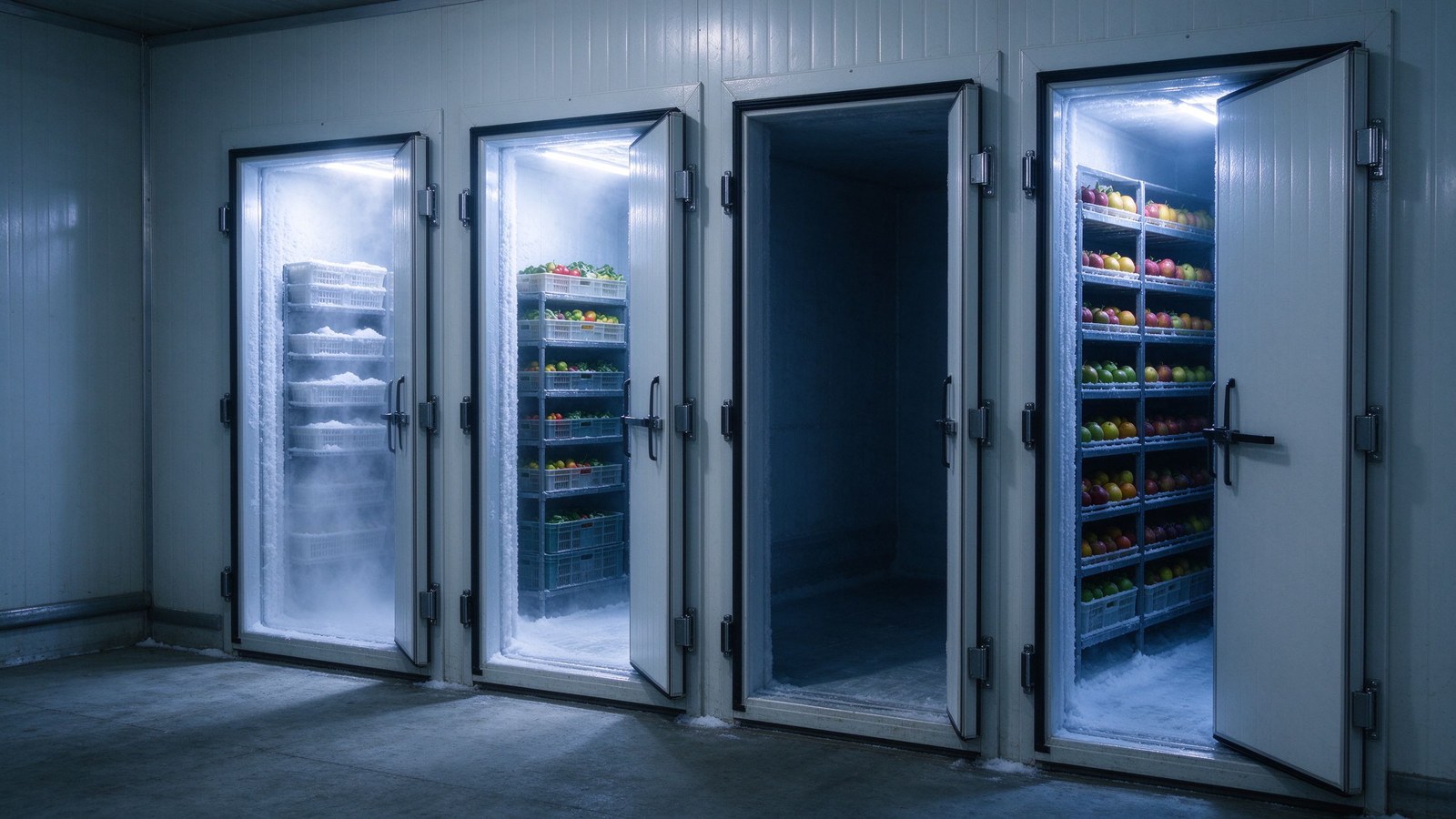
Many owners building a fresh-keeping room ask: what exactly is the difference between a controlled-atmosphere (CA) room and a fresh-keeping room, and which should I build for my products? A cold room is not a single kind of room but several types distinguished by temperature, humidity and gas composition. Choosing the wrong type either spoils goods or wastes budget. This article compares the common four types at once.
1. Core Differences Among the Four Types
By industry convention, common cold room types include high-temperature fresh-keeping rooms, low-temperature chilled rooms, freezer rooms and blast freezers, plus CA rooms that add gas regulation on top of fresh-keeping rooms. Their differences in temperature, humidity, gas composition and typical products are shown below:
| Room Type | Temperature | Humidity | Gas Control | Typical Products |
|---|---|---|---|---|
| Fresh-keeping | 0–5°C | 85–90% | None | Fruit, vegetables, flowers, dairy |
| Controlled atmosphere | 0–5°C | 90–95% | 2–5% O₂, 2–5% CO₂ | Apples, pears, kiwifruit |
| Freezer | -25 to -18°C | Not controlled | None | Frozen meat, seafood, frozen food |
| Blast freezer | -35°C and below | Not controlled | None | Freshly processed meat, pastries, seafood |
2. Fresh-keeping Rooms: The Basic Temperature-and-Humidity Model
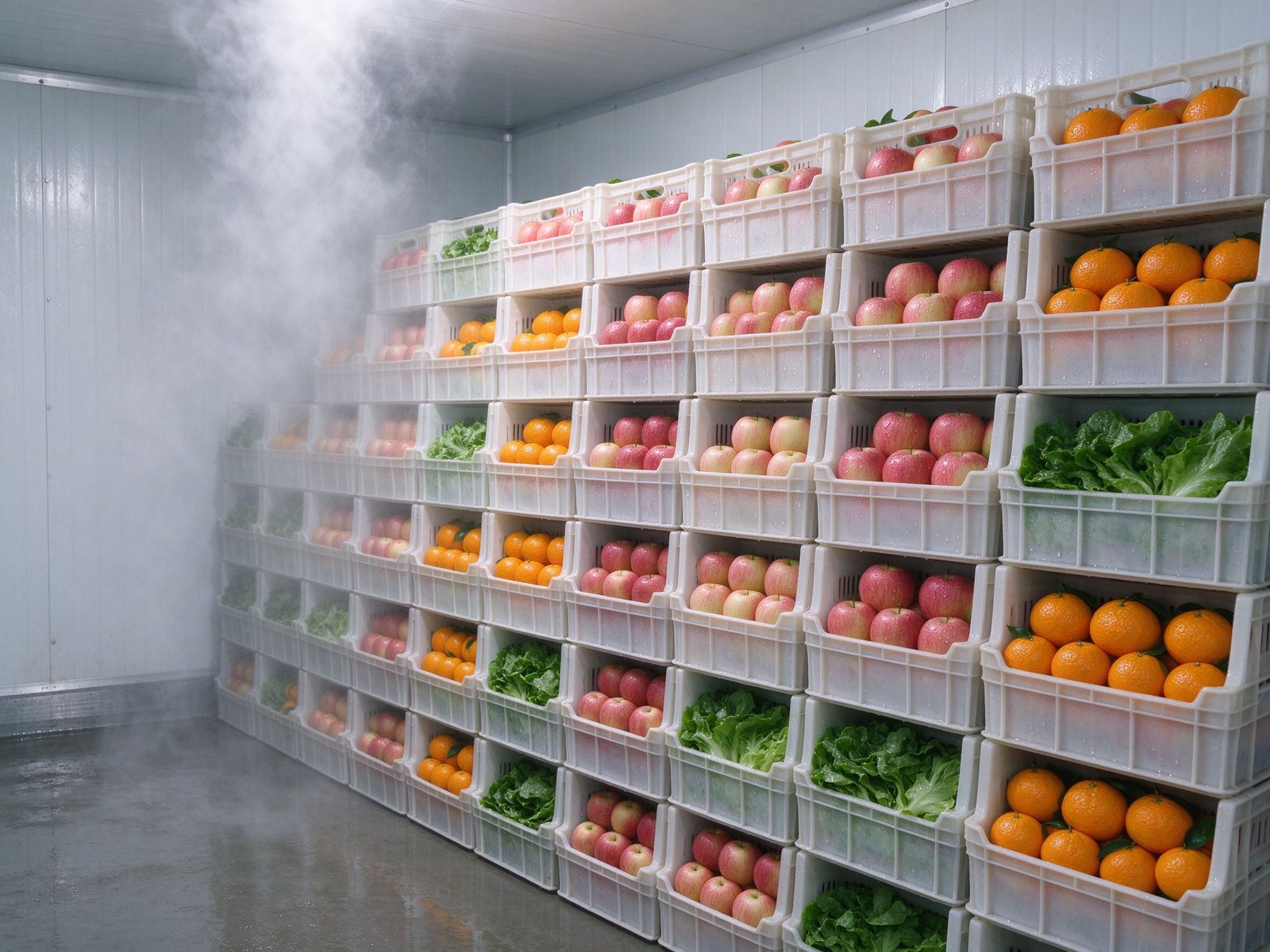
Fresh-keeping rooms are common high-temperature rooms that use 0–5°C and over 85% humidity to slow respiration and microbial growth. They do not regulate gas composition, cost relatively little, and suit short-term turnover, fresh e-commerce front warehouses and central kitchens.
Construction points: 100mm panels are enough, with air-cooled units and humidification; pay attention to ventilation and drainage to avoid ceiling condensation. For a typical project, see our fruit fresh-keeping room.
3. Controlled-atmosphere Rooms: Adding Gas Regulation
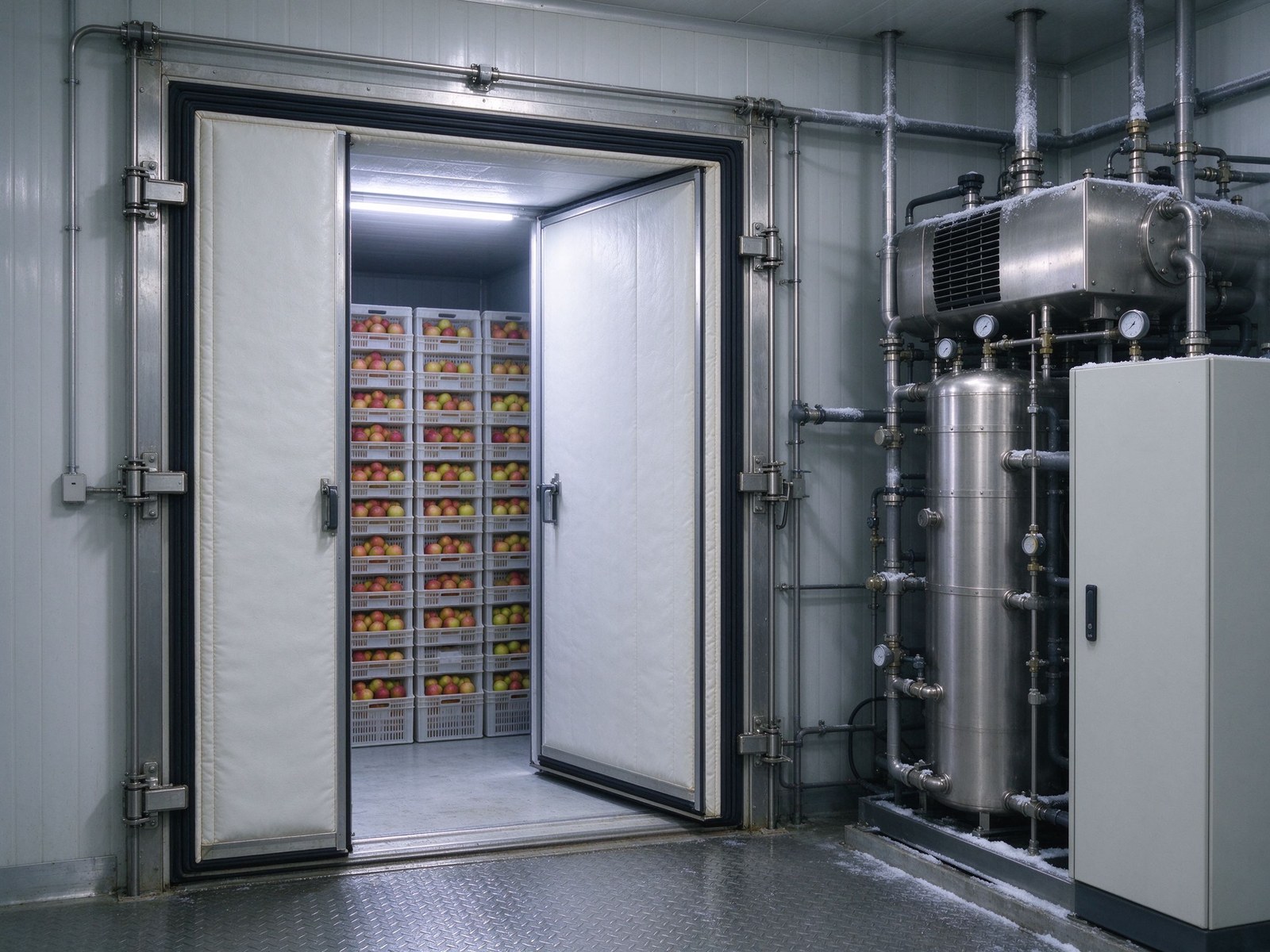
A CA room uses a nitrogen generator to reduce oxygen from 21% to 2–5% and a CO₂ scrubber to hold CO₂ at 2–5%, while maintaining high humidity. The low-oxygen, high-CO₂ environment significantly suppresses respiration and ethylene release, allowing apples, pears and kiwifruit to be stored over six months while retaining crispness.
The extra cost of CA rooms comes from three units: nitrogen generator, CO₂ scrubber (or catalytic combustion) and humidifier, plus airtightness retrofitting of the room body—all seams sealed airtight, airtight doors, and regular pressure leak tests. For a typical project, see our controlled-atmosphere room.
4. Freezer and Blast Freezer Rooms: Two Low-temperature Stages
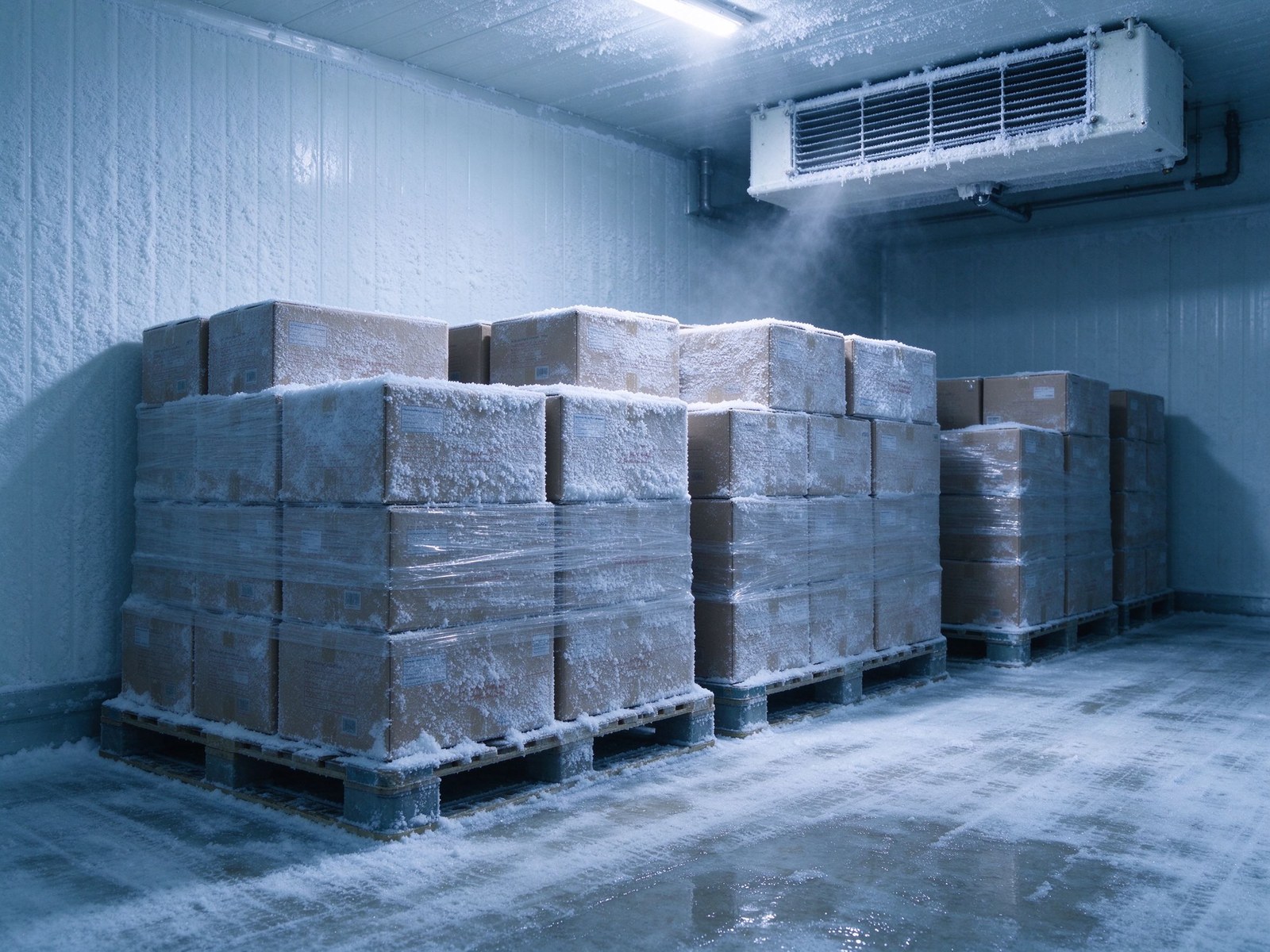
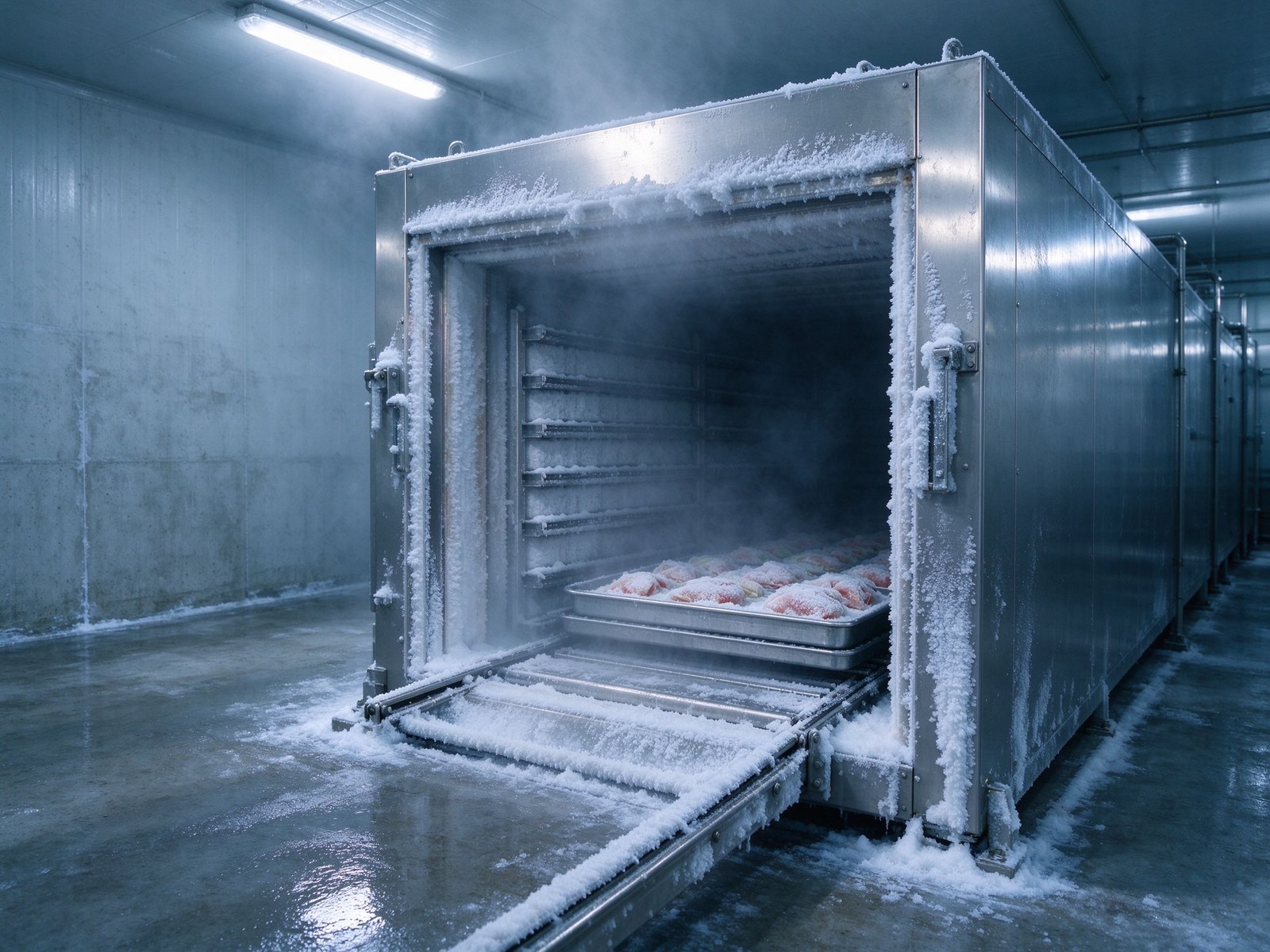
Freezer rooms hold below -18°C long-term to store already frozen goods. Blast freezers differ: they must move the product core temperature through the -1 to -5°C dense ice-crystal zone to -18°C in a short time (usually within 30 minutes), minimizing cell damage and juice loss after thawing.
In practice, blast freezing and frozen storage work together: goods first cool rapidly in the blast freezer, then move to the freezer room for long-term storage. Blast freezers have higher-air-volume evaporators and thicker panels, and cost clearly more than ordinary freezer rooms.
5. How to Choose a Room Type by Product
- Leafy vegetables, flowers, cooked foods: a fresh-keeping room is enough, no need for CA.
- Apples, pears, kiwifruit, cherries: CA is recommended for long-term off-season sales.
- Frozen meat, seafood, frozen pastries: freezer storage with a blast freezer upstream.
- Vaccines and biological products: a separate constant-temperature room under pharmaceutical cold chain standards.
Before choosing, think through three things: how long goods are stored, how often they turn over, and whether the sales premium covers the extra investment in CA or blast freezing.
6. Design Approach for Combined Multi-temperature Rooms
Large projects commonly arrange fresh-keeping, freezer and blast freezer zones in one building, sharing one machine room with multi-circuit units controlling each zone separately. This is flexible and raises equipment utilization. Reserve piping interfaces and electrical points for each zone at design.
Different room types differ greatly in panel thickness and unit horsepower; see panel thickness selection and refrigeration unit selection; for overall cost estimates see how much a cold room costs; for scheduling see the construction process. For initial cooling calculations, use the online selection tool.
7. Decision Points Before Building
Before construction, owners should answer three questions. First, are goods short-turnover or long-storage? Short turnover uses fresh-keeping or freezer rooms, while long storage considers CA. Second, is inlet temperature ambient or pre-cooled? Ambient intake needs a larger capacity margin, while pre-cooled intake uses standard configuration. Third, are there plans to expand products in the next year or two? Reserving a backup unit and piping interfaces is far cheaper than modifying the machine room later.
An often overlooked factor is local summer extremes and winter cold. High southern summer temperatures raise the condensing pressure of air-cooled units, while northern winters require attention to low-temperature startup and defrost efficiency. These affect unit selection and panel thickness and should be written into the design at survey.
Besides the four types above, the industry also has constant-temperature rooms (15–25°C, for tea, alcohol and pharmaceuticals) and explosion-proof cold rooms (for chemical materials and special gases). These have dedicated rules for temperature control and electrical explosion protection; owners should define product attributes at project initiation to avoid rework after designing as ordinary cold rooms.
FAQ
What exactly is the difference between a CA room and an ordinary fresh-keeping room?
An ordinary fresh-keeping room controls only temperature and humidity, while a CA room additionally regulates oxygen, CO₂ and nitrogen ratios to suppress respiration. CA rooms cost more and require strict airtightness, but apples, kiwifruit and pears stay fresh for months, whereas ordinary fresh-keeping rooms usually store them for only weeks.
For fruit and vegetable storage, should I build a fresh-keeping or CA room?
Short turnover (within two weeks) only needs a fresh-keeping room; long-term off-season sales or long-distance export transport favor CA. Apples, pears, kiwifruit and cherries suit CA; leafy vegetables and strawberries respire strongly with limited CA benefit, so fresh-keeping rooms are more economical.
What is the difference between a blast freezer and a freezer room?
A freezer room usually holds -18°C for long-term storage of already frozen goods; a blast freezer holds -35°C or below and must bring the product core to -18°C within a short time (30 minutes), passing through the dense ice-crystal zone to reduce cell damage. Goods move to the freezer after blast freezing, so the two are often used together.
How much more does a CA room cost than a fresh-keeping room?
At equal volume, a CA room costs about 30–50% more due to the nitrogen generator, CO₂ scrubber, humidifier and airtight doors. But given off-season sales premiums and lower losses, cash-crop projects usually recover the difference within one or two harvest seasons. Figures vary by configuration and are for reference.
Do different cold room types require the same panel thickness?
No. Fresh-keeping and CA rooms commonly use 100mm panels; freezer rooms use 120–150mm; blast freezers need 150–200mm due to low temperatures, plus floor frost protection. CA rooms additionally emphasize seam airtightness and require pressure leak tests.
Can one project include multiple room types at once?
Yes, and it is common. Large cold chain projects usually arrange fresh-keeping, freezer, blast freezer and sorting zones sharing one machine room, with multi-circuit units controlling each zone. This is flexible and raises equipment utilization; reserve piping and electrical interfaces for each zone at design.
Frequently Asked Questions
What exactly is the difference between a CA room and an ordinary fresh-keeping room?
An ordinary fresh-keeping room controls only temperature and humidity, while a CA room additionally regulates oxygen, CO₂ and nitrogen ratios to suppress respiration. CA rooms cost more and require strict airtightness, but apples, kiwifruit and pears stay fresh for months, whereas ordinary fresh-keeping rooms usually store them for only weeks.
For fruit and vegetable storage, should I build a fresh-keeping or CA room?
Short turnover (within two weeks) only needs a fresh-keeping room; long-term off-season sales or long-distance export transport favor CA. Apples, pears, kiwifruit and cherries suit CA; leafy vegetables and strawberries respire strongly with limited CA benefit, so fresh-keeping rooms are more economical.
What is the difference between a blast freezer and a freezer room?
A freezer room usually holds -18°C for long-term storage of already frozen goods; a blast freezer holds -35°C or below and must bring the product core to -18°C within a short time (30 minutes), passing through the dense ice-crystal zone to reduce cell damage. Goods move to the freezer after blast freezing, so the two are often used together.
How much more does a CA room cost than a fresh-keeping room?
At equal volume, a CA room costs about 30–50% more due to the nitrogen generator, CO₂ scrubber, humidifier and airtight doors. But given off-season sales premiums and lower losses, cash-crop projects usually recover the difference within one or two harvest seasons. Figures vary by configuration and are for reference.
Do different cold room types require the same panel thickness?
No. Fresh-keeping and CA rooms commonly use 100mm panels; freezer rooms use 120–150mm; blast freezers need 150–200mm due to low temperatures, plus floor frost protection. CA rooms additionally emphasize seam airtightness and require pressure leak tests.
Can one project include multiple room types at once?
Yes, and it is common. Large cold chain projects usually arrange fresh-keeping, freezer, blast freezer and sorting zones sharing one machine room, with multi-circuit units controlling each zone. This is flexible and raises equipment utilization; reserve piping and electrical interfaces for each zone at design.