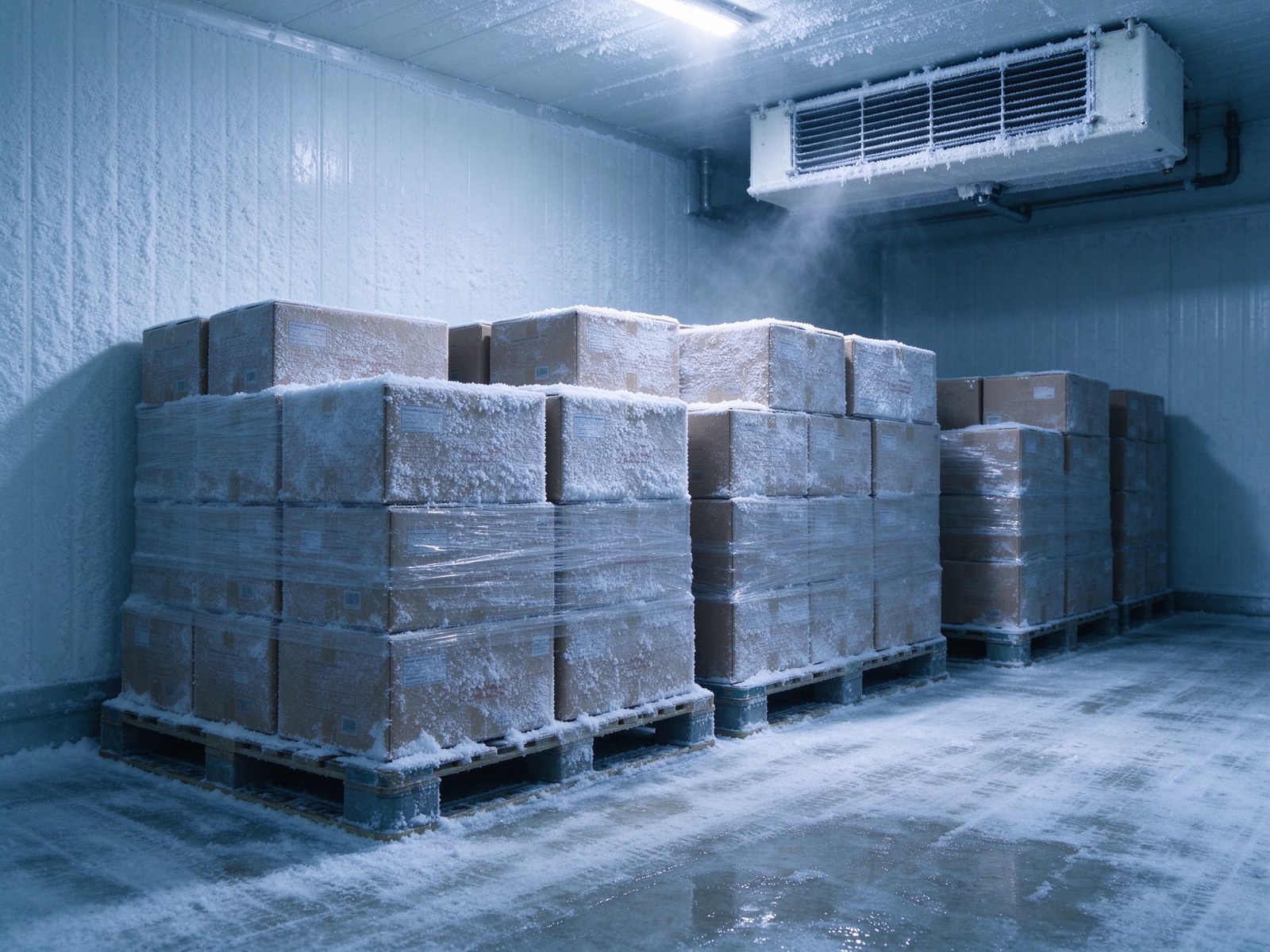
A tropical-climate cold room is a refrigerated room built for sites where outside air stays above 30 C for most of the year and relative humidity stays above 80 percent, so the room has to fight heat and moisture at the same time. Indonesia, Malaysia and Vietnam all sit in this band, and the design problems there are different from a cold room in Europe or northern China.
This page covers what changes in the equipment selection, the panels, the defrost cycle and the door design when the room runs in this climate. The notes come from rooms we have supplied and from jobs quoted for contractors in Jakarta, Ho Chi Minh City and Johor Bahru. Where a number depends on the project, we say so instead of guessing.
What changes when the ambient air stays hot
The first number to fix is the design ambient temperature, not the average. A room sized on 32 C will run short on capacity at 3 pm in April. For most of Indonesia, Malaysia and southern Vietnam, we size condensing units on 38 to 43 C ambient air, and we ask the client for the highest local temperature recorded on site for the last few years.
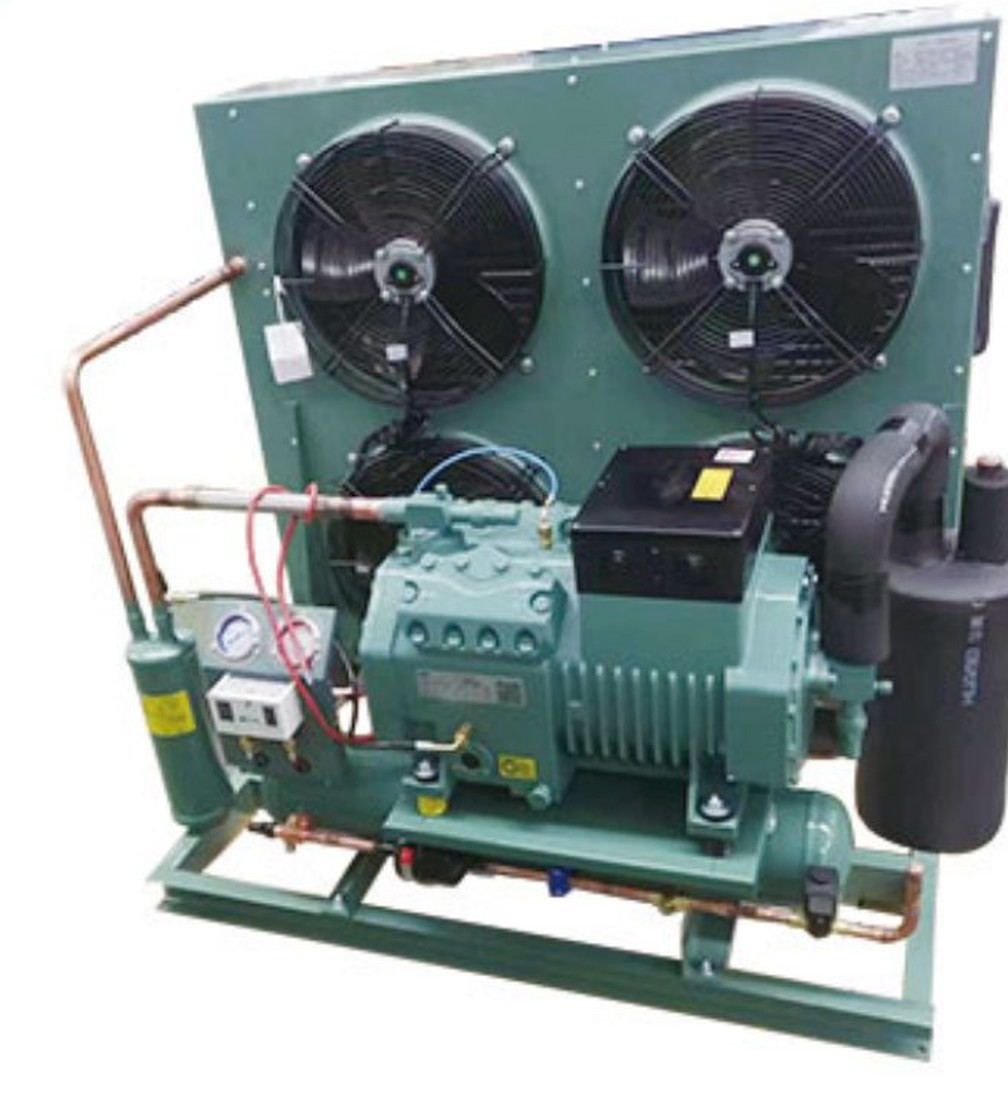
Capacity falls as ambient rises. A condensing unit that gives its rated capacity at 32 C will give less at 43 C, because the compressor runs at a higher condensing temperature and each kilogram of refrigerant moves less heat. Instead of derating a catalogue figure by hand, ask the supplier for the capacity table at the real ambient and check the pull-down time against the load.
High ambient also pushes the condensing temperature up. Air-cooled units in the Gulf and in Southeast Asia often run at 45 to 50 C condensing in the hot part of the day. That raises discharge pressure and compressor load, and it is the reason a unit selected for a temperate site looks oversized on paper and still runs hot here. Shading the condenser and keeping it out of a closed plant room matter as much as the model number.
Panels, vapour barrier and condensation
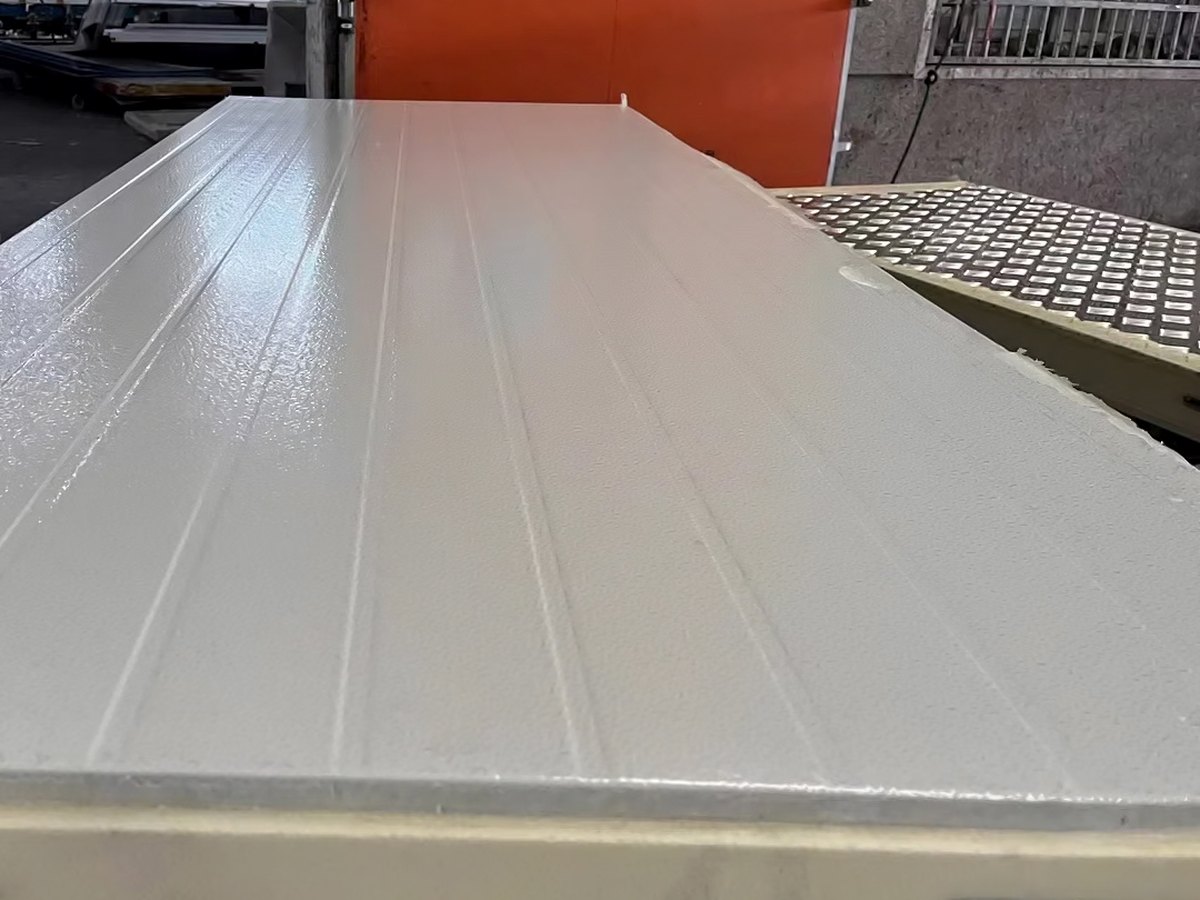
The panel is the other half of the load. In a tropical room the temperature difference across the wall is often 30 to 40 K, and the outside air carries a lot of water. A 100 mm PU panel is normal for chilled rooms at 0 to 5 C. For freezer rooms at -18 to -25 C we use 150 mm, and 200 mm where the room is small and the surface area per unit of volume is high.
The joints matter more than the thickness. Warm humid air finds every gap in the panel lock, every unsealed penetration and every cable entry. Once it reaches the cold face it condenses, the insulation wets, and the room starts to ice at the panel line. Seal the joints with the panel supplier's gasket and mastic, and seal pipe and cable penetrations with a proper sleeve, not foam alone.
A vapour barrier on the warm side is standard in cold store construction, and in this climate it earns its cost. Roof panels also take direct sun. A light-coloured roof, a shaded plant area and a roof that does not trap water all reduce the load and the condensation risk. Our cold storage panels page lists the panel types we supply, including the colour-coated steel face used where a clean, washable wall is needed.
Defrost, doors and daily operation
Defrost in high humidity
Humidity is what makes defrost the busiest part of the design. Every time the door opens, moist air enters, and it freezes on the coil. In a dry climate a coil may need two defrosts a day. In a tropical market room with constant door traffic, four to six is normal, and the number has to come from the real traffic pattern, not from a catalogue.
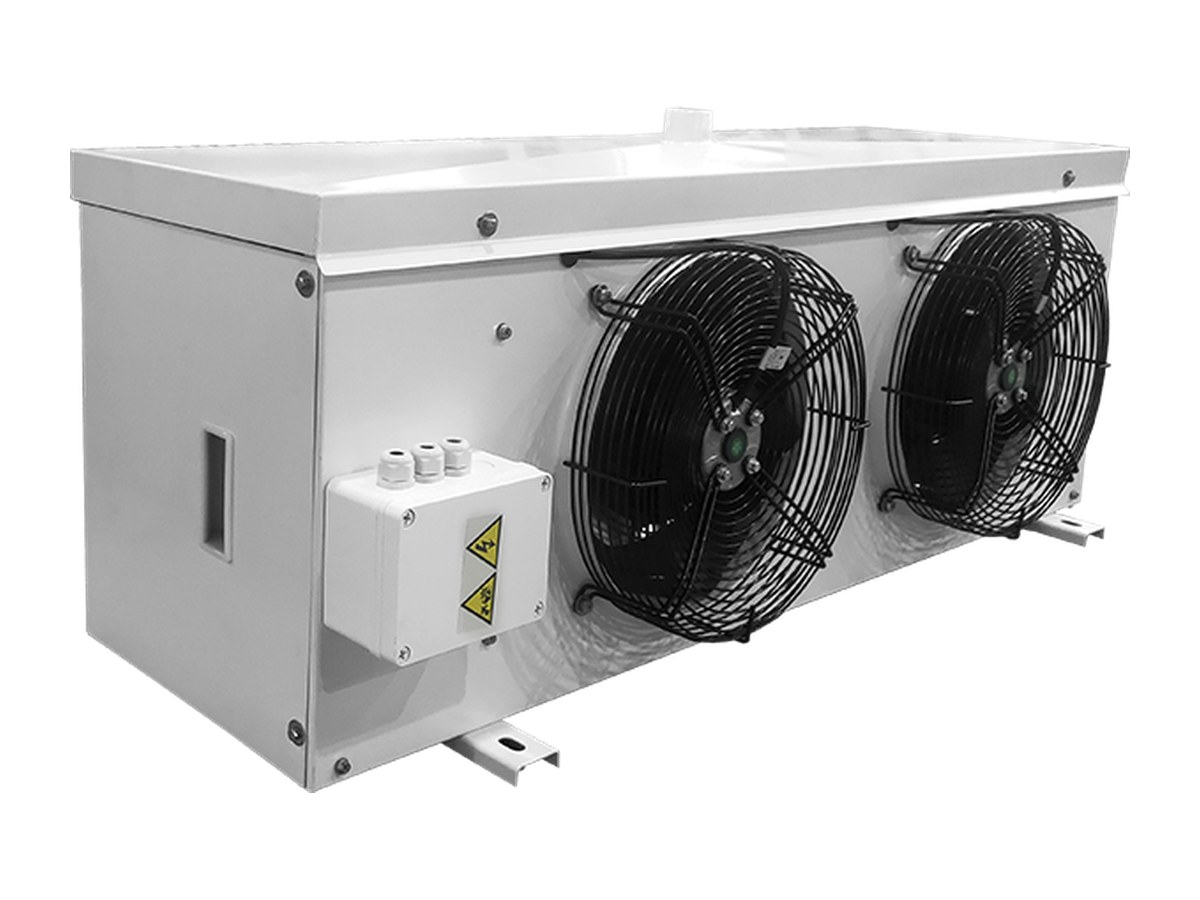
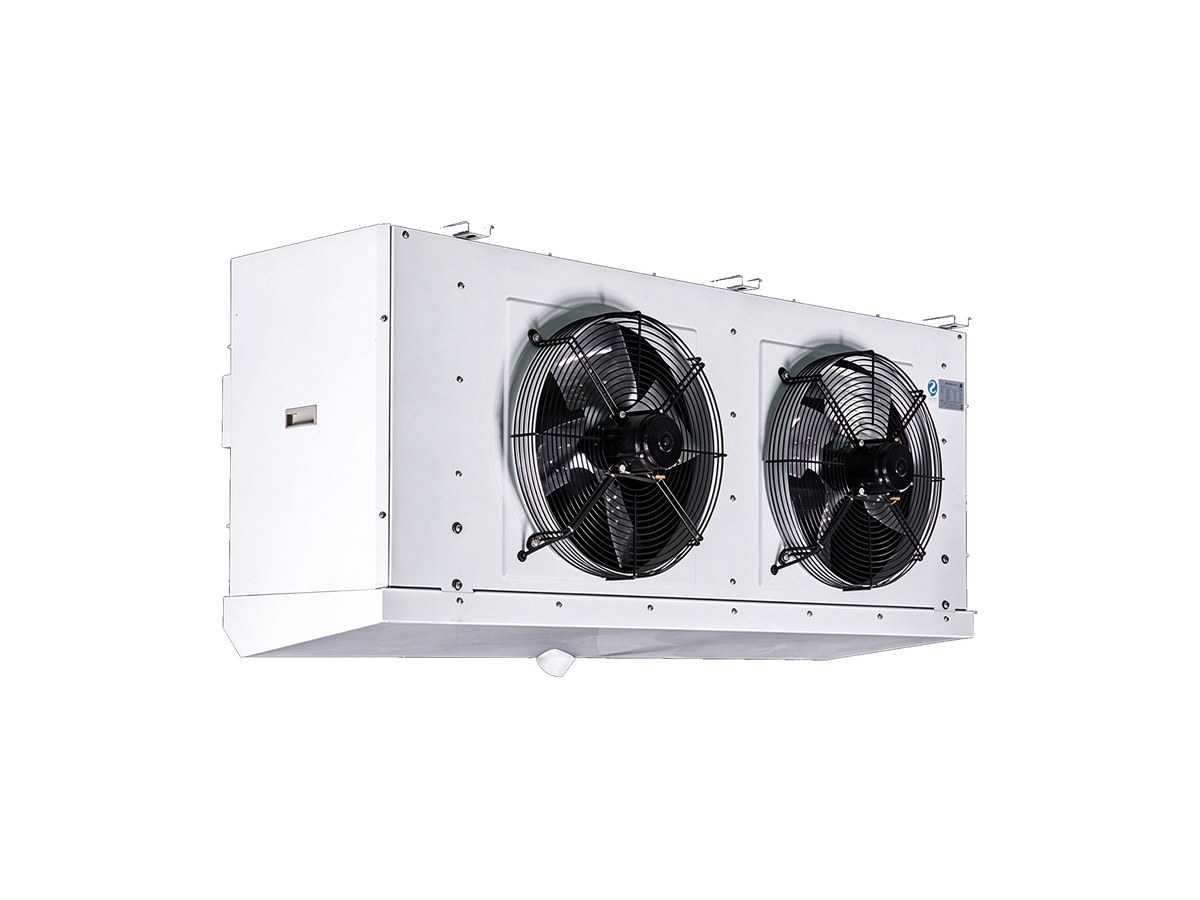
Electric defrost suits freezer rooms and low-traffic chilled rooms. Water defrost suits larger chillers where water is cheap and drainage is good, because it clears the coil fast and uses less compressor heat. Hot gas defrost is worth the extra piping on bigger systems where pull-down time matters. Whichever type you choose, the drain is part of the defrost design. The drain pan has to slope, the line has to be traced or insulated, and the outlet has to end somewhere the water can actually go, which is a real question during the rainy season.
We supply both water defrost evaporators and electric defrost evaporators, and the choice is usually settled by the room size, the water supply and how often the door opens.
Doors, traffic and sweating
Doors sweat in this climate. The cold face of a door frame sits at room temperature, the warm face sits at 30 C with high humidity, and water collects on the frame, the gasket and the floor. The fix is not a stronger heater alone. It is a combination: a door with a heated frame or an anti-sweat heater where the traffic is heavy, a fast closing action, and a strip curtain or a PVC impact door on the busiest openings.
For a chilled room with forklift traffic we usually propose a sliding door with a heated frame, plus a colour-coated steel panel wall finish that can be washed without rusting. For a processing room where pallets pass all day, a PVC impact traffic door saves more cold air than a heavier insulated door that stays open longer.
Power, service and the real operating picture
Grid quality is part of the design in all three countries. Voltage swings and short outages are common outside the main cities, and a room that loses its compressor for an hour in a 35 C ambient will lose temperature fast. A standby generator sized for the compressors, or at least a control system that restarts in sequence instead of pulling every compressor at once, is worth specifying at quotation stage.
Service access matters too. A unit mounted against a wall with no room to pull the fan guard, or a control panel in a locked office, adds days to every repair. Leave 600 mm clear at the service side and put the panel where the operator can reach it.
Frozen seafood in Vietnam and chilled dairy in Malaysia sit in the room for weeks, so the temperature record matters more than the nameplate. Our notes on refrigeration unit selection cover the capacity check.
Temperate practice compared with tropical practice
| Item | Typical temperate design | Typical tropical design |
|---|---|---|
| Design ambient air | 32 C | 38 to 43 C, taken from local records |
| Condensing temperature, air cooled | 40 to 45 C | 45 to 50 C in the hot part of the day |
| Evaporator to room temperature difference | 6 to 8 K | 8 to 10 K, with a larger coil face |
| Panel thickness, chilled room | 100 mm | 100 mm, 150 mm on small rooms or hot walls |
| Panel thickness, freezer room | 150 mm | 150 to 200 mm |
| Defrost cycles per day, market room | 2 to 3 | 4 to 6, set by door traffic |
| Vapour barrier and joint sealing | Good practice | Mandatory, checked on site |
| Roof and condenser exposure | Sheltered | Shaded, light colour, ventilated plant area |
| Door type on busy openings | Insulated sliding door | Sliding door with heated frame plus impact door or strip curtain |
| Power supply | Stable grid | Generator or sequenced restart allowed for |
The table is a starting point for a quotation, not a specification. Two rooms of the same size in the same city can need different equipment because one has a loading dock in full sun and the other sits inside a shaded warehouse.
Local rules and what to send for a quotation
Local rules that touch the design
Food room approvals in this region follow national rules, and the rules change. In Indonesia, halal certification for food premises is handled by BPJPH under Law No. 33/2014, and the scheme has been mandatory for listed product categories since October 2019. Malaysia issues halal certificates through JAKIM and recognises some foreign bodies. Vietnam and Indonesia both apply food safety requirements for export plants, and buyers usually name the standard in the enquiry.
We design the room and supply the equipment. We do not certify a plant, and we do not advise on which certificate a specific product line needs. Confirm the current requirement with your importer or the local authority before the shipment, because the rules do change. If a halal-compliant layout matters for your market, the notes in halal cold storage design cover the separation, cleaning and record points that auditors usually ask about.
What to send us for a quotation
A useful quotation needs a few facts, and quotes built without them are guesses. Send:
- Room size: length, width and height, inside clear dimensions.
- Product and target temperature: chilled, frozen, or both, and the temperature the buyer requires.
- Site location and the highest local ambient temperature you know of.
- Door traffic: how many pallets or trolleys pass per hour, and whether a forklift enters.
- Power supply: voltage, phases, and whether a generator is available.
- Any drawing, room schedule or bill of materials you already have.
With those six points we can size the panels, doors, evaporators and condensing units, list the bill of materials line by line, and give a price. Installation and commissioning abroad are handled by trusted installation teams, and technical support and spare parts stay with us after handover. Rooms of this type are quoted case by case, so the numbers here are typical ranges and the final selection is confirmed against your drawing.