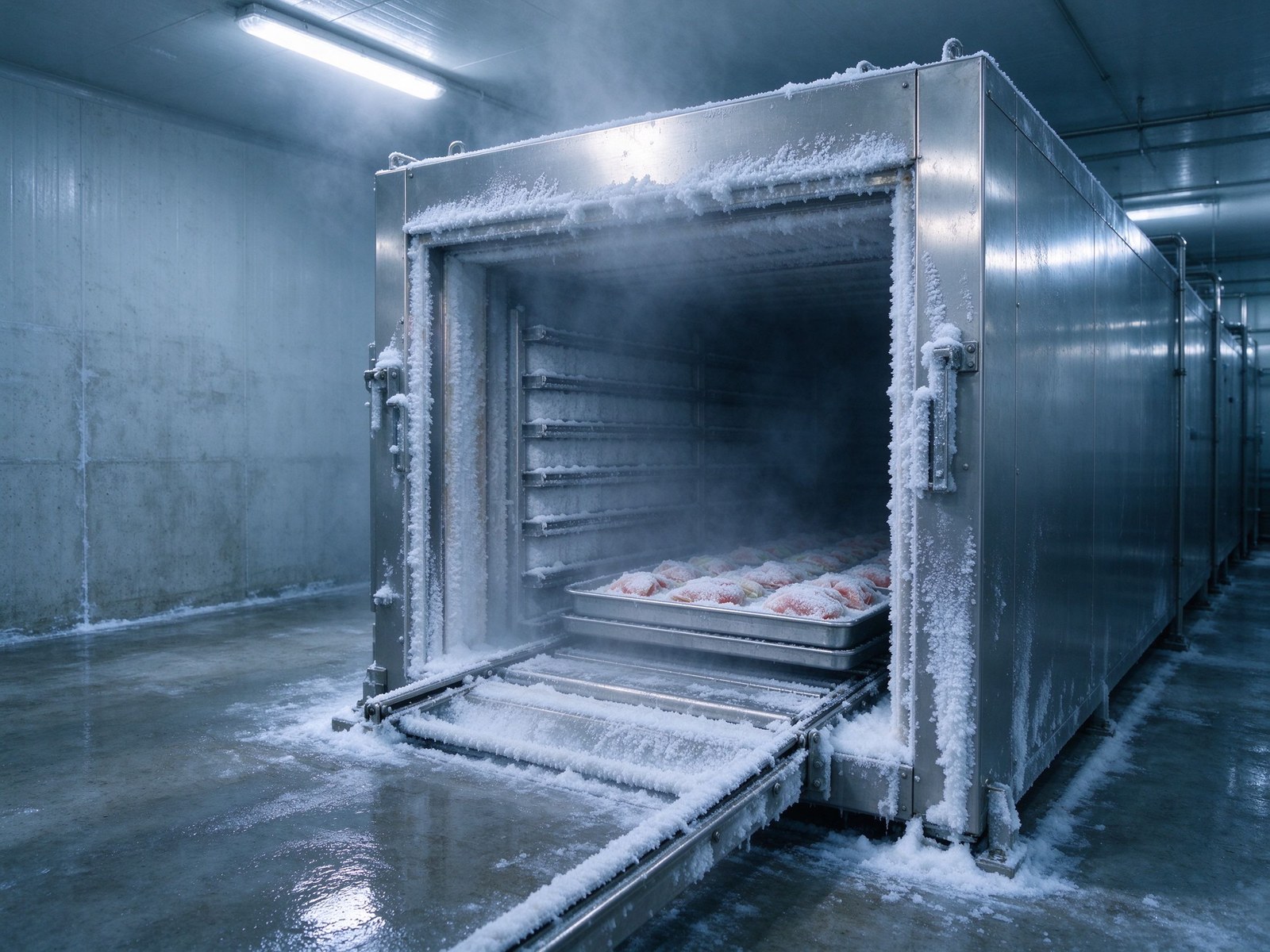
A blast freezer removes heat fast enough to push product through the freezing zone in a few hours, while a cold storage room keeps product that is already frozen at a steady -18 C or lower for weeks. The two rooms look similar from outside. They are sized, built and run on different logic, and mixing them up is one of the common reasons a new cold store underperforms in its first season.
What each room is for
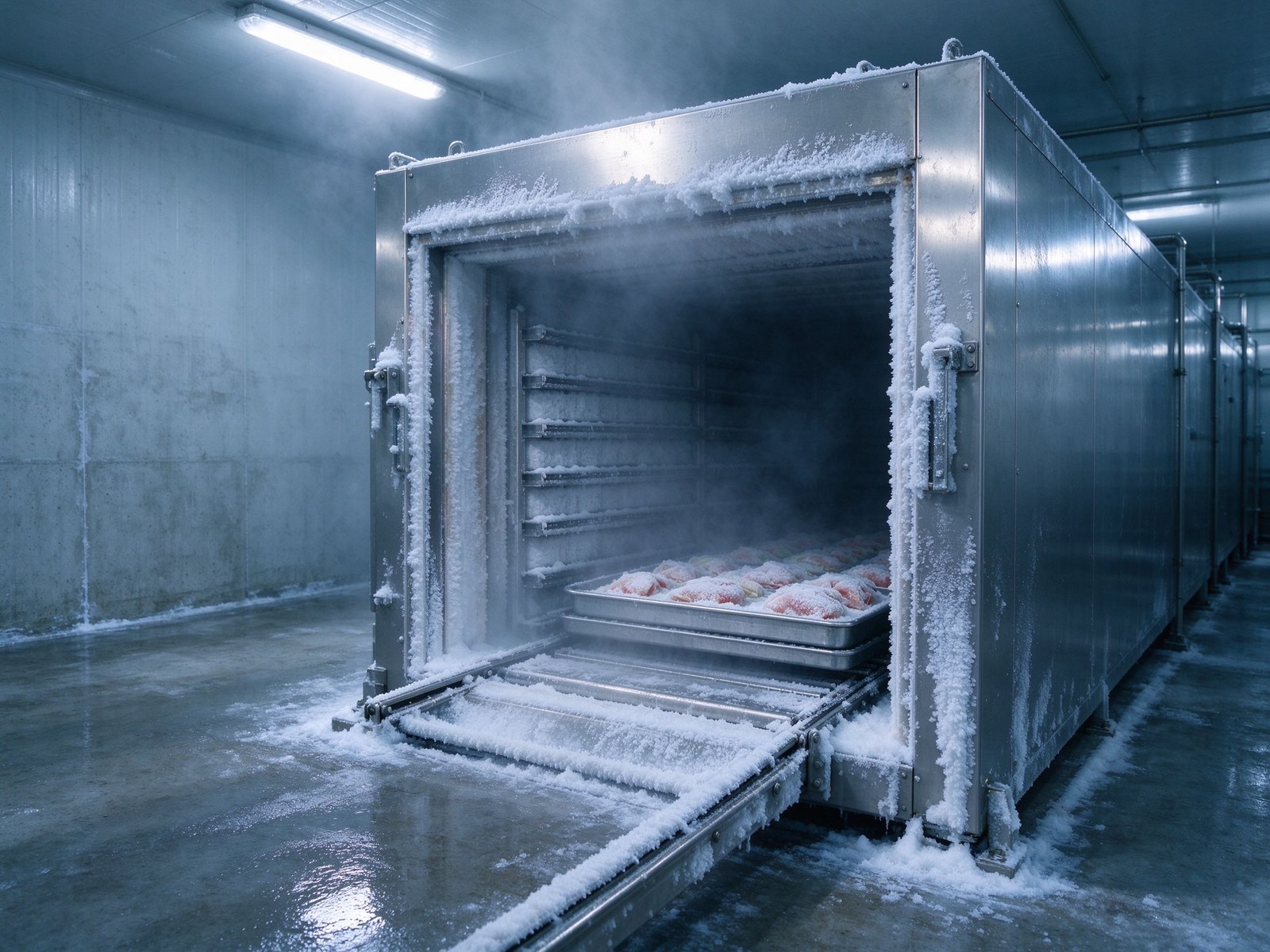
A blast freezer, also called a shock freezer or a quick freezer, is a batch tool. Product goes in unfrozen, the room pulls the core temperature down through the freezing zone as fast as the equipment allows, and the batch leaves to be packed or moved into storage. Air temperature in the room usually sits between -30 C and -40 C, air moves fast across the product, and the refrigeration load is large for the room volume.
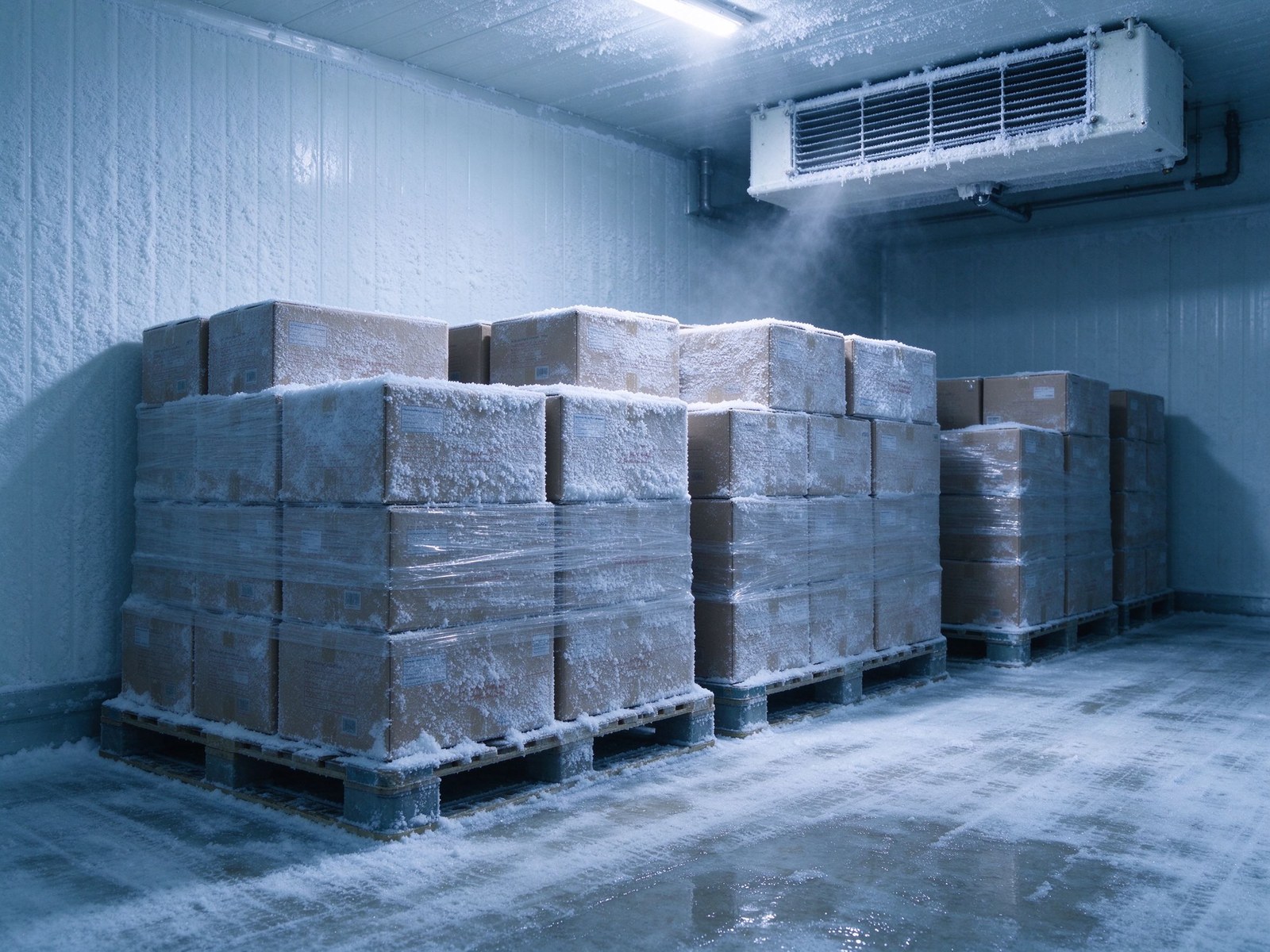
A cold storage room is a holding tool. It receives product that is already at temperature, and its job is to keep it there through door openings, defrost cycles, power dips and a hot afternoon outside. Air temperature is typically -18 C to -22 C for frozen goods, air movement is gentle, and the load is sized around transmission gains and door traffic rather than around a product pull-down.
You can see the difference in what the two rooms are sized on. A blast freezer is sized in kilograms per batch and hours allowed. A cold store is sized in cubic metres and pallet positions. That single difference drives the rest: coil surface, fan power, panel thickness, door type, defrost method and the size of the condensing unit.
Side by side: the design numbers
The table below is the short version we use in first meetings. Values are typical ranges, not a specification. Final figures depend on product, pack size, batch weight and ambient conditions.
| Item | Blast freezer | Cold storage room |
|---|---|---|
| Job | Freezes product fast, in batches | Holds frozen product at temperature |
| Room air temperature | about -30 C to -40 C | about -18 C to -22 C |
| Air movement | high, several metres per second across the load | low, just enough to keep the room uniform |
| Time in the room | 3 to 8 hours for most packed food | days to weeks |
| Sizing basis | kg per batch, core temperature drop, hours allowed | m3, pallet positions, door traffic |
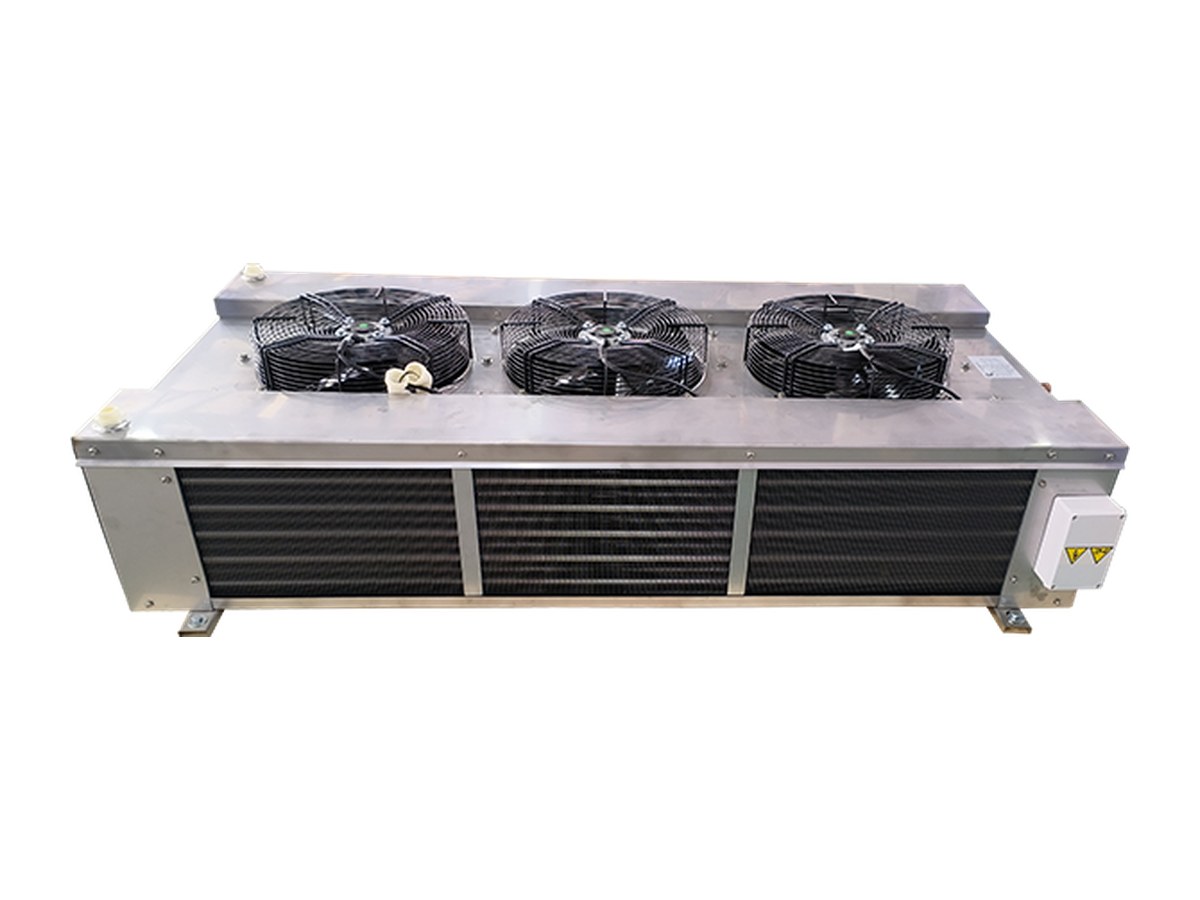
| Evaporator | large coil surface, wide fin spacing, high fan power | smaller coil, tighter fin spacing, low fan power |
| Defrost | frequent, often water or hot gas, electric on small units | two to four electric defrosts a day is common |
| Panel thickness | 150 to 200 mm is usual | 100 to 150 mm is usual |
| Doors | wide access, often a fast or double-leaf sliding door | standard sliding or hinged door with strip curtain |
| Refrigeration load | high per m3, steady during the batch | moderate, peaks at door openings |
| Main risk | slow pull-down, frosting, poor airflow around stacked product | temperature rise at doors, ice on the floor, defrost water |
Why the freezing speed matters
Crystals and cell damage
Water in food does not freeze at one temperature. It turns to ice over a band, roughly from 0 C down to -5 C, and that band is where texture is decided. Fast passage through it keeps ice crystals small and mostly inside the cells. Slow passage lets crystals grow in the spaces between cells and pushes water out of them. For meat, fish and fruit the result shows up later as drip loss, softer texture and a product that looks tired after thawing.
Drip loss and yield
Yield is money. A processor packing five tonnes a day and losing an extra two percent to drip loss is giving away 100 kg of product daily. Blast freezing does not remove all drip loss, it reduces it. That is the commercial argument, and it usually lands better with an owner than any general claim about quality.
What fast actually requires
Speed is not only a thermostat setting. Four things decide it: the temperature difference between air and product, the air velocity across the surface, the thickness of the pack, and how the load is stacked. A room set to -40 C with product stacked against a wall in 200 mm cartons will freeze slowly, and no compressor size will fix that. Air has to reach the surface. That means gaps between pallets, no product tight against the evaporator, and batch weights that match the coil.
Our blast freezer page shows the room build, and the dual side discharge evaporator is the usual choice when the load sits on both sides of the coil.
One room or two
Batch freezing in a holding room
Small operations often ask whether one -25 C room can do both jobs. It can, within limits. If you freeze a few hundred kilograms a day and the pack is thin, a holding room with strong fans will pull the product through overnight. What you lose is control. The room temperature climbs when warm product goes in, other pallets in the room see that rise, and the compressor runs hard to recover. Above small volumes the two functions start to fight each other.
Two-stage layouts
The common layout is a blast cell next to a holding room, with the cell sized for the peak hour of the day rather than the peak day of the year. Product moves from the cell to the store on racks or in bins. This keeps the store stable, and it lets the blast coil run at its design duty instead of chasing a moving target.
Shared condensing unit
One condensing unit can serve both rooms if the two never peak together, but the control logic has to be written for it: priority for the blast cell, a suction pressure that suits the lower temperature, and a clear rule for what happens when both call for cooling. It is cheaper on capital and less forgiving in operation. On hot sites, where the condensing unit already works hard, we usually keep them separate.
Cost, power and what to send for a quote
Capital and running cost
The blast freezer costs more per cubic metre than the store: bigger coil, more fan power, heavier panels, stronger doors, and a compressor sized for a batch load that may run only part of the day. The store costs less to build but runs continuously. In a hot climate the store's running cost is driven by ambient temperature and door discipline, not by the compressor brand. For a site in the Gulf or in Southeast Asia, plan the condensing side for 45 C to 50 C ambient and read the capacity tables at that condition, not at 32 C.
Operating discipline
Both rooms reward boring habits. Defrost water drains clear, strip curtains stay intact, product never sits in front of the evaporator, and the batch weight stays inside the number the room was designed for. Records matter as much: a core temperature log and a room temperature chart are the first things a buyer or an auditor asks for.
What to send us
To price a blast freezer or a frozen store properly we need: product type and pack size, since thickness matters most; kilograms per batch and per day; inlet core temperature and target core temperature; available room dimensions or a drawing; power supply with voltage, phase and frequency; site ambient conditions; destination port; and whether you want equipment only or installation and commissioning as well. With those we can put a model list and a layout in front of you. Anything missing we mark as to be confirmed rather than guess.
If you are still comparing room types, our notes on cold room types and on cold rooms in tropical climates cover the wider picture. The frozen storage cold room page shows the holding room build, and refrigeration units covers the condensing side.