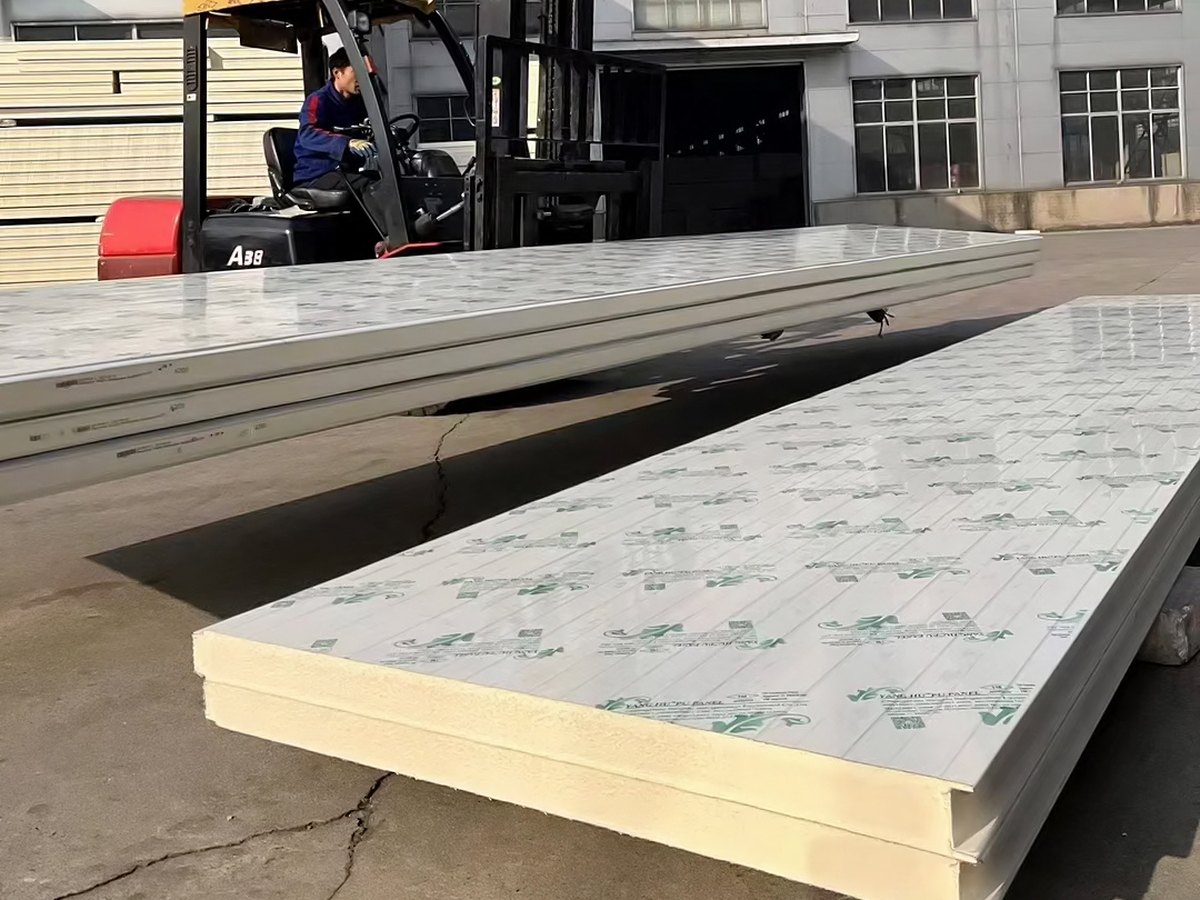
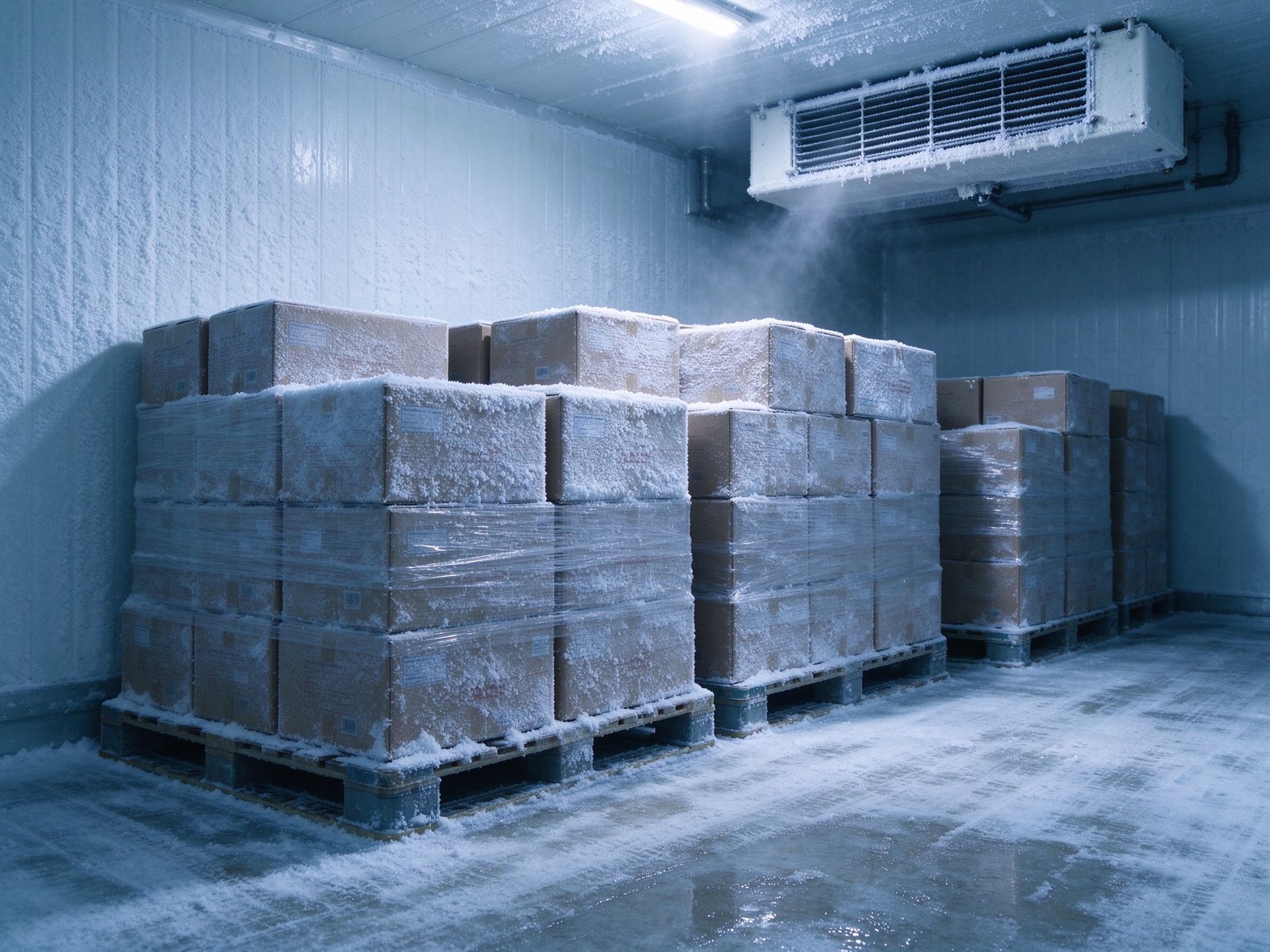
Cold room panel thickness is the nominal thickness of the insulated sandwich panel that forms the walls, floor and ceiling of a cold room, and it sets how much heat passes through the envelope at a given temperature difference. Buyers usually arrive with one of three numbers in mind: 100 mm, 150 mm or 200 mm. The number matters, but not for the reason most people think. This guide maps thickness to room temperature, shows what an extra 25 mm actually changes, and lists the details that decide whether a room holds temperature for ten years or starts sweating in the first summer.
What panel thickness actually controls
A polyurethane (PU) sandwich panel is a layer of rigid foam bonded between two steel skins. Its insulating performance is described by the U-value, the heat flow through one square metre at one kelvin difference. You can estimate it from the foam conductivity divided by the thickness:
U = λ / d, where λ is about 0.023 W/mK for closed-cell PU foam and d is the panel thickness in metres.
That gives the following figures, before joints, thermal bridging and steel skins are taken into account:
| Panel thickness | Calculated U-value (λ = 0.023 W/mK) | Heat flow through 20 m² wall at 45 K difference | Where it is normally used |
|---|---|---|---|
| 75 mm | 0.31 W/m²K | about 279 W | Chill rooms above +10 °C, partitions inside a tempered building |
| 100 mm | 0.23 W/m²K | about 207 W | Fresh rooms at 0 to +5 °C, fruit and vegetable storage, small distribution rooms |
| 120 mm | 0.19 W/m²K | about 173 W | Fresh rooms in hot climates, dairy and meat chillers |
| 150 mm | 0.15 W/m²K | about 138 W | Frozen storage at -18 to -20 °C, most export freezers |
| 180 mm | 0.13 W/m²K | about 115 W | Low temperature rooms at -25 °C, blast freezer ante-rooms |
| 200 mm | 0.12 W/m²K | about 104 W | Blast freezers at -30 to -35 °C, ice cream, tuna and ultra-low rooms |
The table is a calculation, not a catalogue. Real panels lose some performance at joints, at panel-to-floor connections and around pipe penetrations, and every one of those details is worth more attention than the last 25 mm of foam.
Thickness by room temperature
Temperature is the first filter. The ranges below are common practice in export projects, not a code requirement, and a supplier who quotes very different numbers is not automatically wrong. Ask for the heat load calculation behind the number.
| Room duty | Typical room temperature | Wall and ceiling thickness in common practice | Reason |
|---|---|---|---|
| Banana or vegetable ripening and conditioning | +13 to +18 °C | 75 to 100 mm | The difference to ambient is small, so the envelope carries little load |
| Fresh keeping, dairy, meat chiller | 0 to +5 °C | 100 to 120 mm | Needs a stable surface temperature on the outside skin in humid weather |
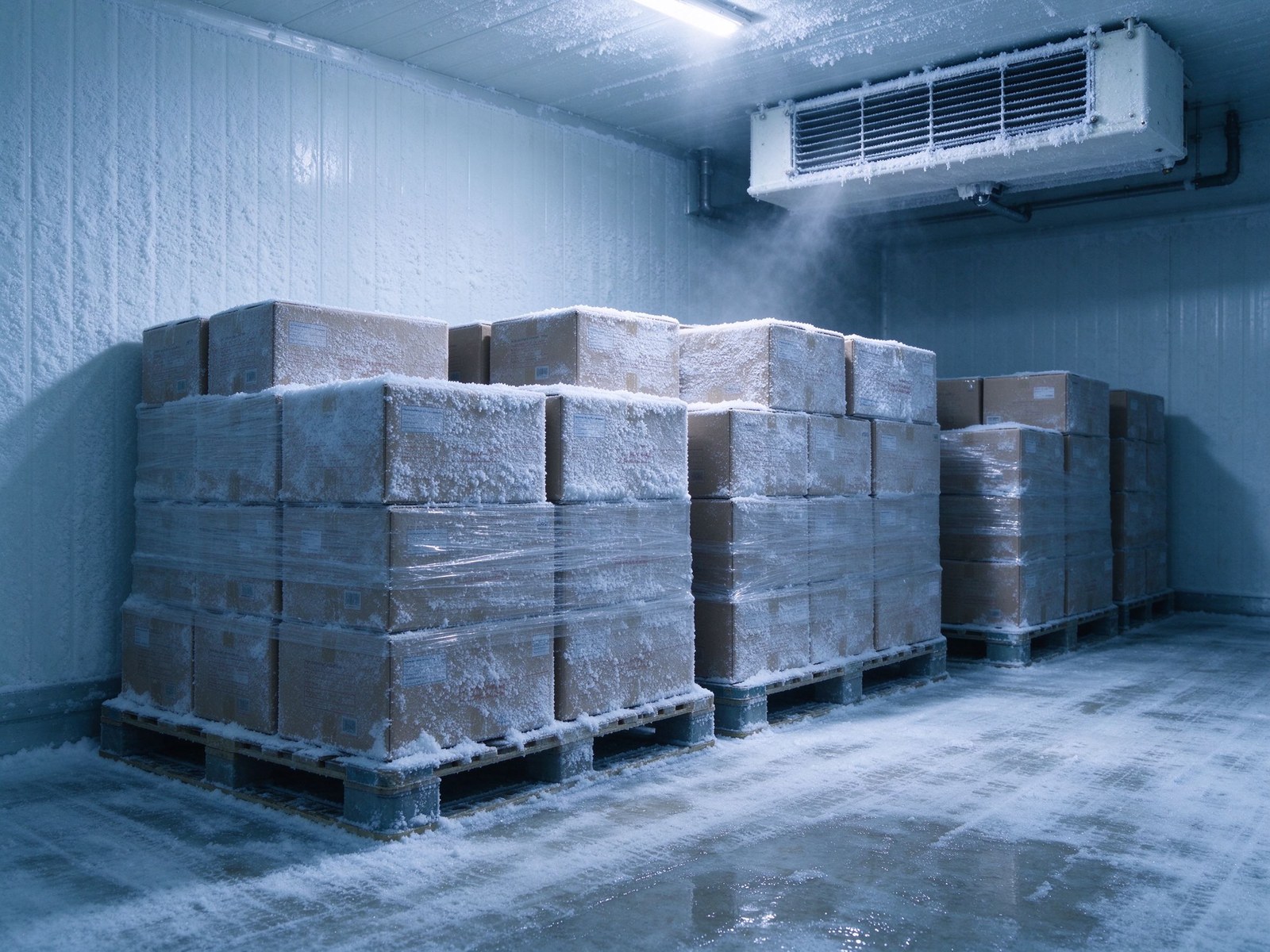
| Frozen storage | -18 to -20 °C | 150 mm | The standard export freezer figure, balances cost and heat gain |
| Low temperature storage | -25 °C | 150 to 180 mm | Higher difference, and doors and penetrations become critical |
| Blast freezing and ice cream | -30 to -35 °C | 180 to 200 mm | Short cycles with high load, surface condensation easily visible |
| Tuna and special low temperature rooms | -40 °C and below | 200 mm and above, often in two layers | Envelope losses dominate, and joint quality decides the result |
What 25 mm actually changes
Going from 100 mm to 150 mm cuts transmission through the wall by about a third. On a 20 m² wall at 45 K difference that is roughly 70 W, or 1.7 kWh of heat gain per day. A freezer compressor running at a typical COP of 1.5 in hot ambient needs a bit over 1 kWh of electricity to remove that, so the saving is around 400 kWh a year for that single wall. On a real room with four walls, a ceiling and a floor, the figure is bigger, but it still competes with door openings, defrost cycles, air infiltration and condenser condition, which usually cost more.
So thickness is rarely justified by energy payback alone. It earns its place for three other reasons:
- Surface temperature. The outer skin has to stay above the dew point of the surrounding air. In a Gulf site at 45 °C and 60 percent humidity, a thinner panel on a freezer gives a cold outer skin, and water starts collecting at joints and fixings.
- Safety margin. Panels lose performance as foam ages, as joints open, and as doors get used. A room designed exactly to the limit has no margin left after five years.
- Structural behaviour. Thicker panels are stiffer, which matters for long ceiling spans and for walls that carry door frames and impact loads from pallet trucks.
Details, climate and fire rating
Details that matter more than thickness
Two panels of the same thickness can perform very differently. When you compare offers, look at these points:
- Foam density. Structural PU panel is commonly 38 to 42 kg/m³. A density figure without a test report is a claim, so ask for one.
- Joint design. Cam locks and a continuous gasket, with no visible gap after assembly. Butt joints sealed with silicone only are a weak point in a freezer.
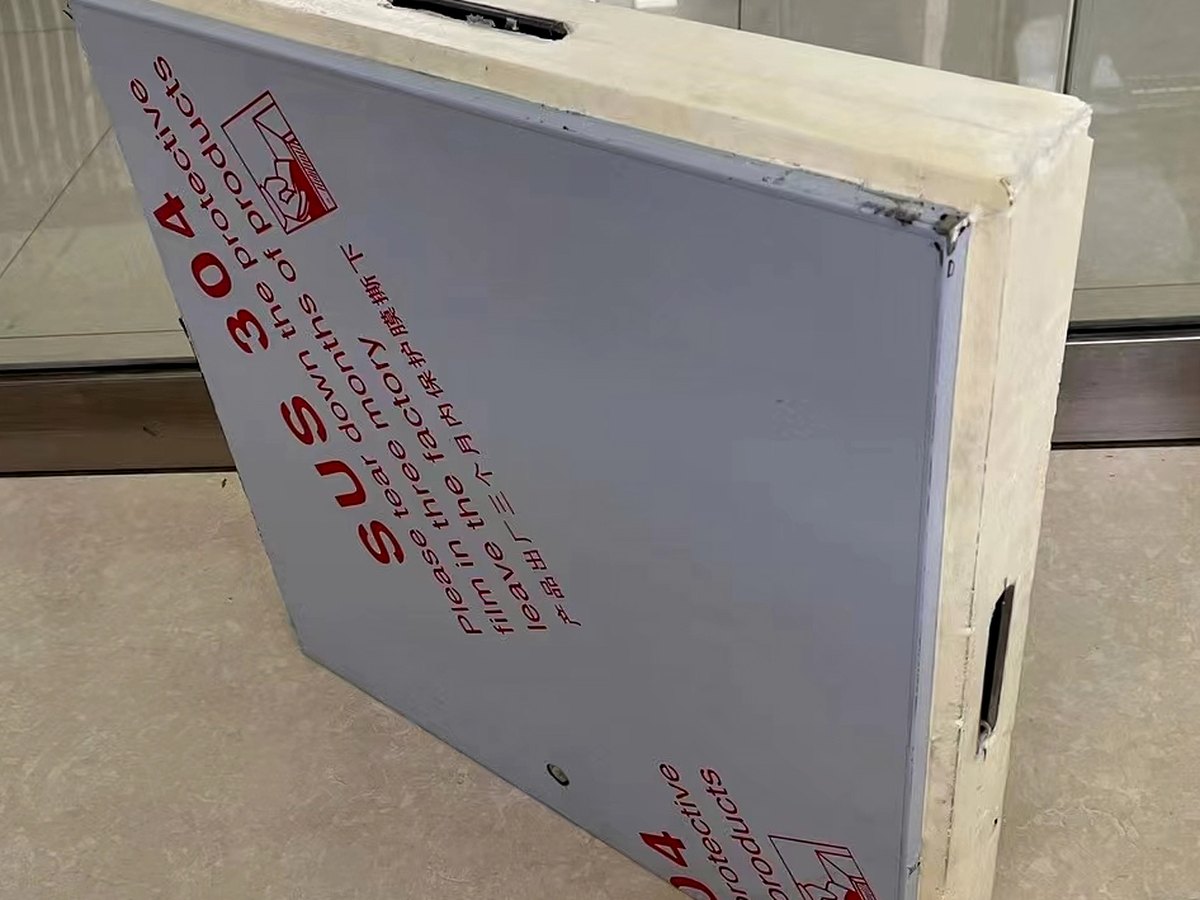
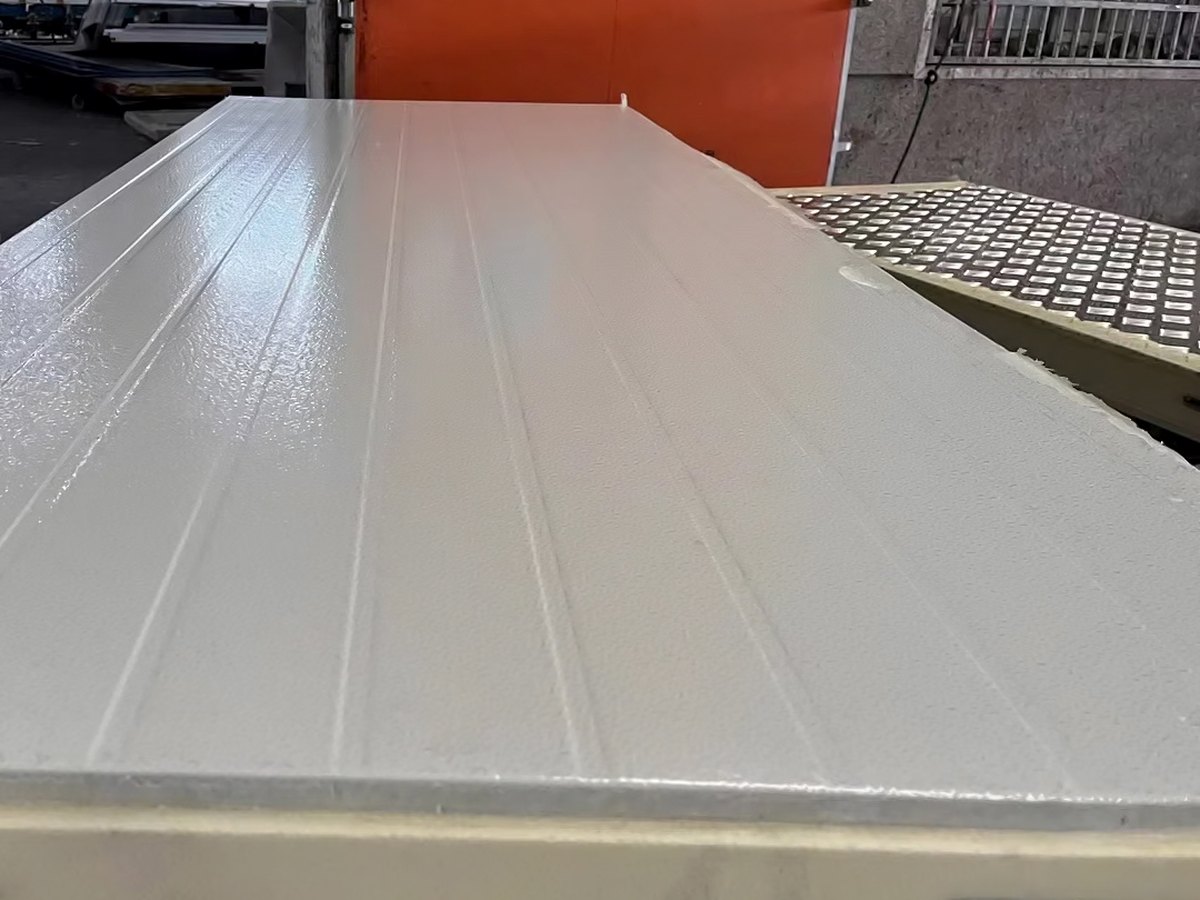
- Panel finish. Stainless steel for washdown areas and food contact, colour-coated steel for storage rooms where appearance and corrosion resistance matter, embossed anti-slip steel for floors.
- Floor build-up. Insulation, load slab and finish are a separate design. Forklift traffic and freezer heave need under-floor heating or a ventilated void, and that decision is independent of wall thickness.
- Penetrations. Every pipe, cable and drain passing through a panel is a thermal bridge and a vapour path. Sleeves and sealant are cheap at build stage and expensive later.
- Ceiling support. Ceiling panels need a support grid or hangers at a spacing that the panel supplier and structural engineer confirm, not a number chosen on site.
Climate corrections for the Gulf and Southeast Asia
In Kuwait, Saudi Arabia, the UAE and Qatar, design ambient for condensers is often 45 to 50 °C. The panel has to survive that on one side and -20 °C on the other. Freezers in these sites usually start at 150 mm, and rooms below -25 °C go to 180 or 200 mm. The junction between the cold room and the ambient building is where condensation shows first, so the vapour seal at the floor and at door thresholds deserves more attention than the panel itself.
In Indonesia, Malaysia, Vietnam, Thailand and the Philippines, the problem is humidity rather than peak temperature. A cold outer skin in 85 percent humidity collects water, and mould follows. Colour-coated steel with a sound coating system, sealed joints, and a panel thick enough to keep the outer surface above the dew point solve most of it. The climate-specific points are covered in Cold Rooms in Tropical Climates.
Fire performance is a separate question from thickness. Panels are classified B1 or B2 under GB 8624 in China, and destination countries apply their own rules. Insurance and local authority requirements often decide the class before the thickness is discussed. Rules change, so confirm the requirement with your importer or local authority before the order is placed.
How ANCOLD specifies panel thickness
ANCOLD is a cold room engineering and supply company working with a network of vetted manufacturing partners. We do not default to the thickest panel on the market, and we do not default to the cheapest. We calculate the heat load, check the surface temperature against the site climate, then pick a thickness and a panel build that the room can live with. Panels come from partner factories in stainless steel, colour-coated steel and embossed floor grades, and doors, evaporators and control panels are matched to the same enclosure.
For a wider view of how panels are chosen alongside density and fire rating, see How to Choose Cold Room Panels.
Panels we supply for these duties
Three panel families cover most thickness requests:
- Stainless steel PU sandwich panel for food processing, washdown and export plants.
- Colour-coated steel PU sandwich panel for storage rooms, distribution centres and retail back rooms.
- Machine-made PU insulated panel for standard rooms where consistent foam density and joint geometry matter more than finish.
Frozen rooms built from these panels are usually paired with a frozen storage cold room layout and an electric defrost evaporator, because defrost water and panel joints interact.
What to send for a panel quotation
Send these points and the answer comes back with a thickness recommendation and a price, instead of a guess:
- Room dimensions, internal length, width and height, and whether the floor is included.
- Product stored, incoming temperature and daily turnover.
- Target room temperature and acceptable fluctuation.
- Design ambient temperature and humidity at the site.
- Power supply, voltage, frequency and phase.
- Floor loading, forklift type and whether the room sits on ground or on an upper floor.
- Door type expected, hinged, sliding or high-speed, and traffic frequency.
- Panel finish, stainless or colour-coated, and colour preference.
- Fire class required by the insurer or local authority.
- Destination country and port, and whether installation and commissioning are in your scope.
Anything not yet decided can stay open. We mark it to be confirmed and quote the options rather than filling the gap with an assumption.