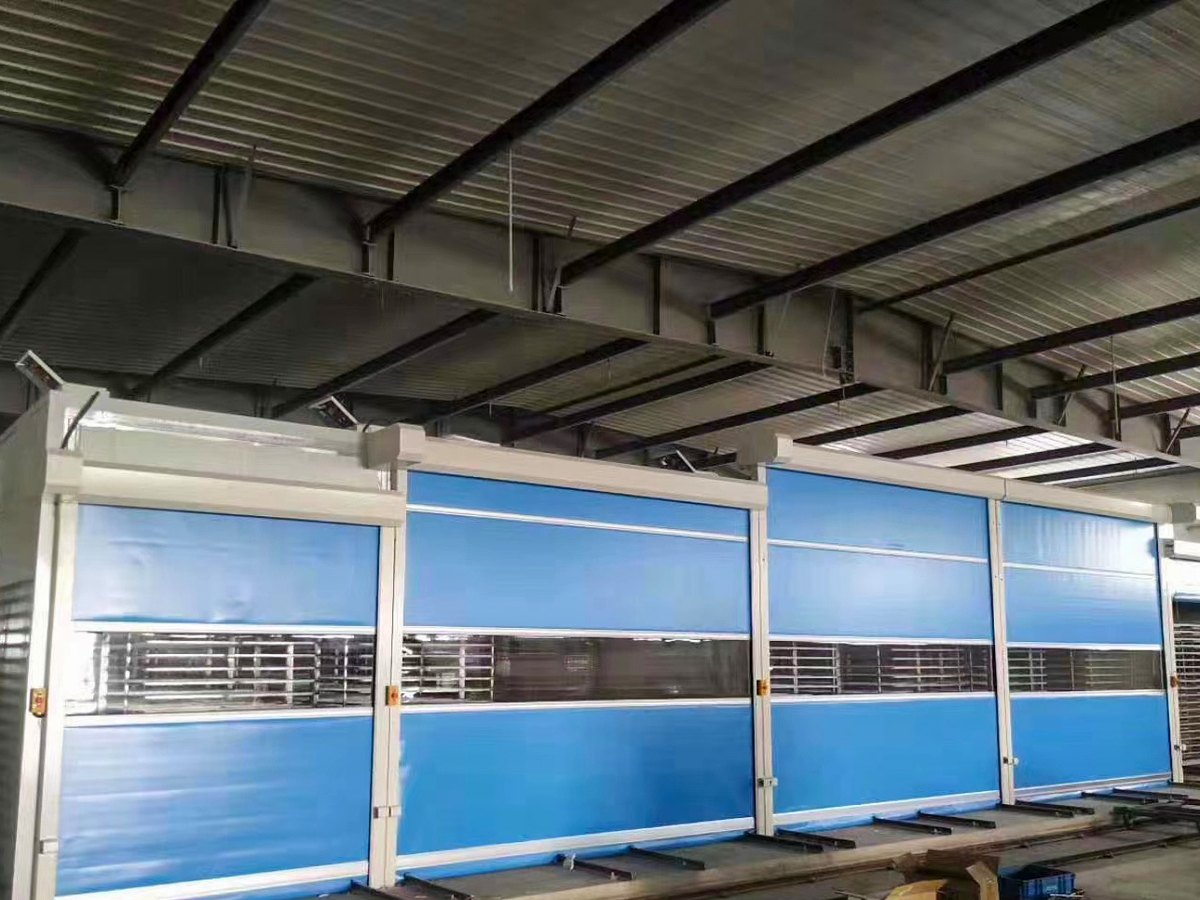
A cold room door is the insulated, sealed opening that lets people and pallets in and out of a refrigerated room while keeping cold air inside and warm, humid air outside. Door choice decides more of a project than most buyers expect. It sets how much moisture enters the room, how often the evaporator runs a defrost cycle, how much ice builds at the threshold, and how long staff stand in a cold draft while a pallet is moved.
This note compares the four families used in most cold stores, sliding, hinged, PVC impact and high-speed roll-up, and explains where each one earns its cost. It also lists the details that separate a door that works for ten years from one that freezes shut in the first winter.
What a door costs you in energy, ice and labour
Every opening exchanges air. Cold, dry air flows out along the floor, warm humid air flows in along the top, and the moisture in that incoming air turns into frost on the evaporator and ice at the threshold. The evaporator then spends part of its running time melting that frost instead of cooling product. A door that stays open longer, or opens more often, pushes all three costs up at the same time.
The table below compares the common types on the points that matter in daily operation. Cost bands are relative, not absolute, because a door price depends on size, frame, automation and destination.
| Door type | Opening speed | Insulated | Air and moisture entry | Relative cost | Where it fits |
|---|---|---|---|---|---|
| Manual sliding, medium duty | Slow, pulled by hand | Yes | Low to medium | Low | Small and medium stores, staff traffic, rooms up to about 20 pallets |
| Electric sliding, single leaf | Fast, motor driven | Yes | Low | Medium | Main store entrance with forklift traffic |
| Electric sliding, double leaf | Fast | Yes | Low | Medium to high | Wide openings, dock access, high pallet volume |
| Hinged insulated | Slow, swing | Yes | Medium | Low | Small chillers, washdown rooms, staff-only access |
| PVC impact strip | Fast for people, no door to open | No | High | Low | Ambient to tempered separation, not freezer rooms |
| High-speed roll-up | Very fast, cycles in seconds | Insulated versions available | Low | High | Blast freezers, busy forklift routes, airlocks between zones |
A fruit or vegetable room at +2 °C tolerates a slower door. A blast freezer at -35 °C does not, because the room loses its temperature in the time a manual door stays open, and the next batch pays for it. The door and the duty have to match.
Sliding doors: the default for pallet traffic
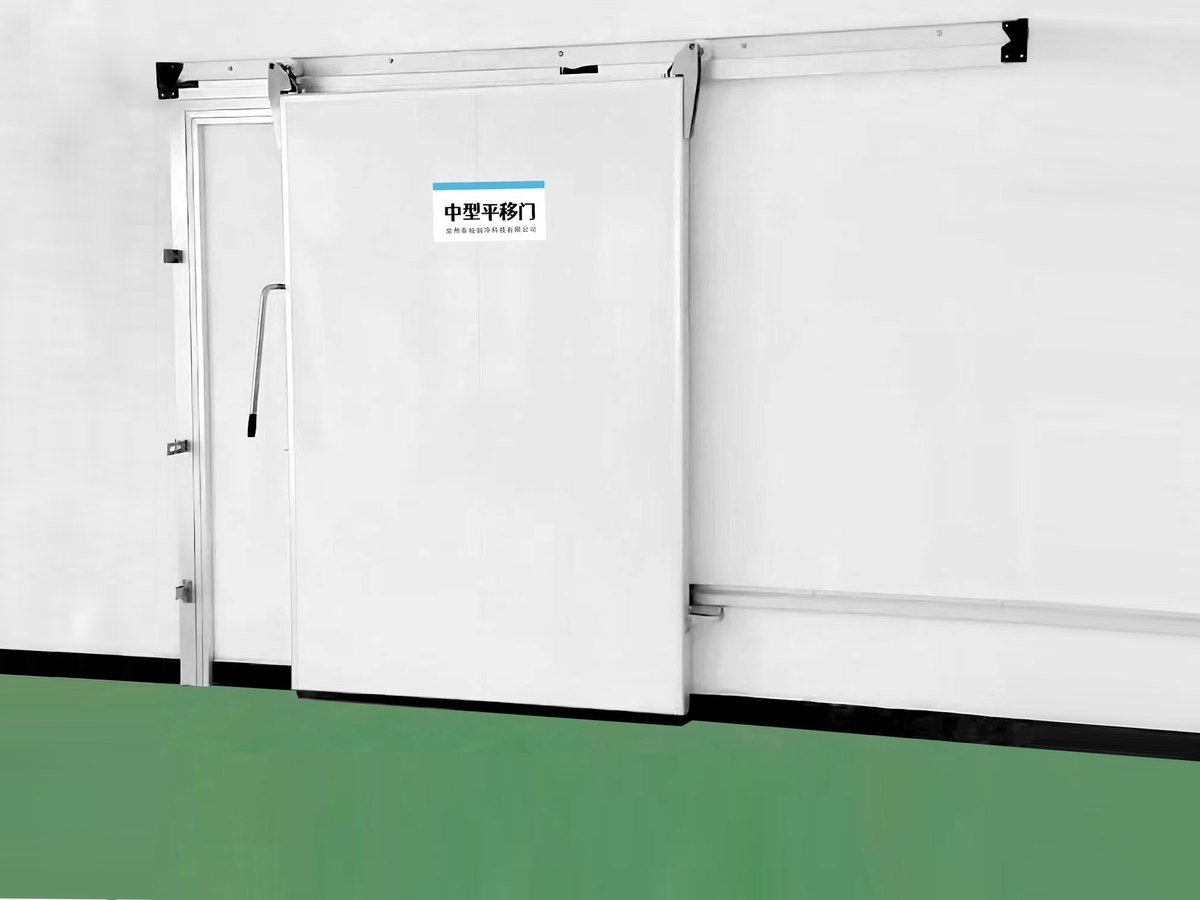
Most cold stores use sliding doors because a pallet can pass straight through without the door swinging into the aisle. A medium-duty sliding door suits staff and small pallet trucks, and a heavy-duty version with a stronger frame and heavier leaf suits forklift traffic and larger openings.
Electric sliding doors add a motor, a belt or chain drive and a control unit. The extra cost buys speed and consistency, since a motor opens at the same rate every time while a person holding a pallet opens slowly or leaves the door part open. On a busy store that difference shows up in the defrost count and in the ice at the threshold.
Three details decide whether the installation works. First, opening size: measure the pallet, the forklift and the load, then allow clearance on both sides and above, rather than ordering a nominal size and hoping. Second, the track and rail need a level fixing and enough room for the leaf to travel clear of racking. Third, the threshold: an insulated threshold with a heater cable is standard on freezer doors, because the alternative is a growing ridge of ice that eventually stops the leaf.
A medium-duty sliding cold room door covers most small to medium rooms. Wide openings and high pallet volume usually point to a double leaf.
Hinged doors and PVC impact doors
Hinged doors win in small rooms where a swing does not block anything and where staff enter by hand. They are simple, cheap to service, and easy to seal with a gasket and a self-closing hinge. A freezer hinged door needs a heated frame or a heated threshold, otherwise the gasket freezes to the frame and the door is pulled apart rather than opened.
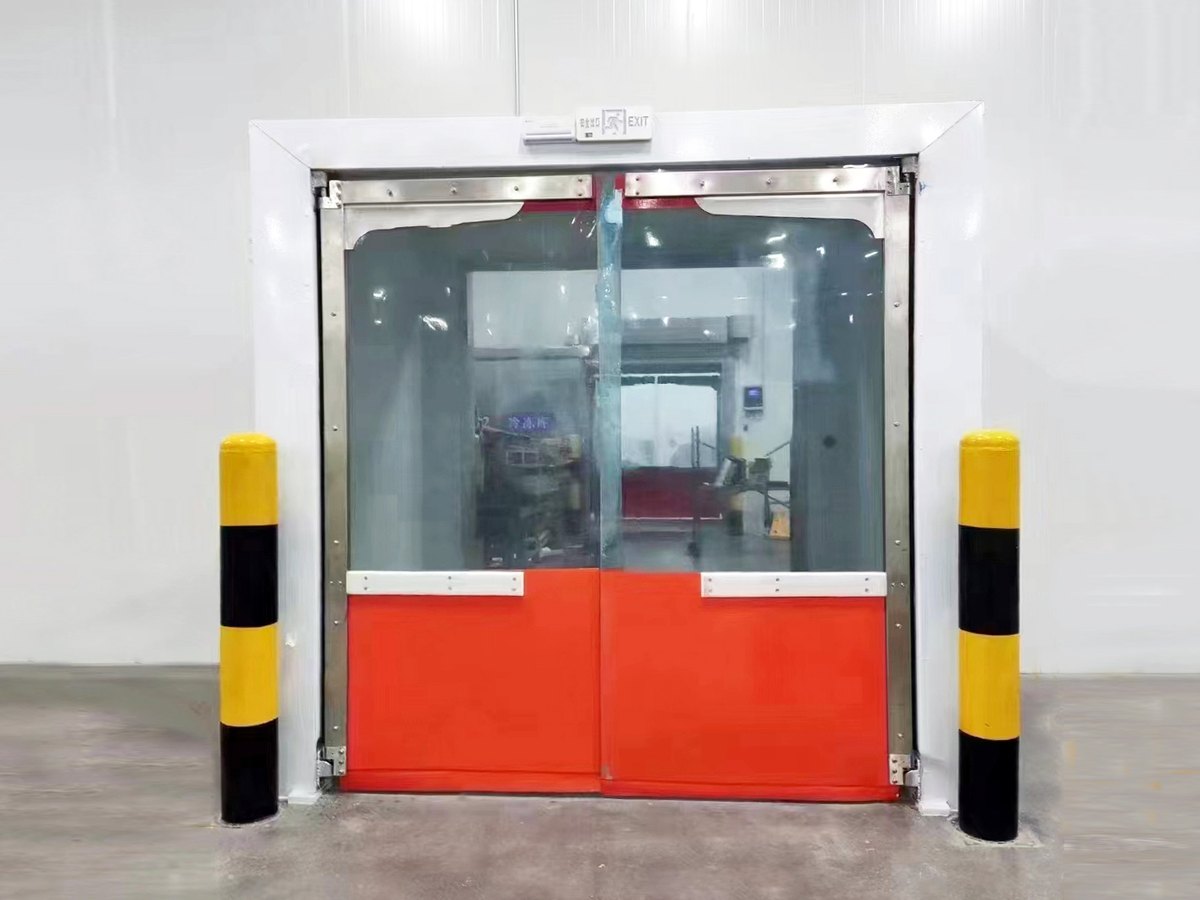
PVC impact strips are a different product. They hang in an opening and people walk through them, which makes them ideal between an ambient corridor and a chilled packing area where staff move constantly. They are not a freezer door: at -18 °C the strips stiffen, frost over and crack, and they do nothing about air exchange. Use them where the temperature difference is modest and the traffic is people, not pallets.
For washdown areas, stainless frames and hinges resist corrosion and cleaning chemicals better than coated steel, and the door should be detailed so water does not sit in the frame profile. A PVC impact traffic door is the usual answer for a high-traffic people route in a tempered zone.
High-speed doors and the details that decide the result
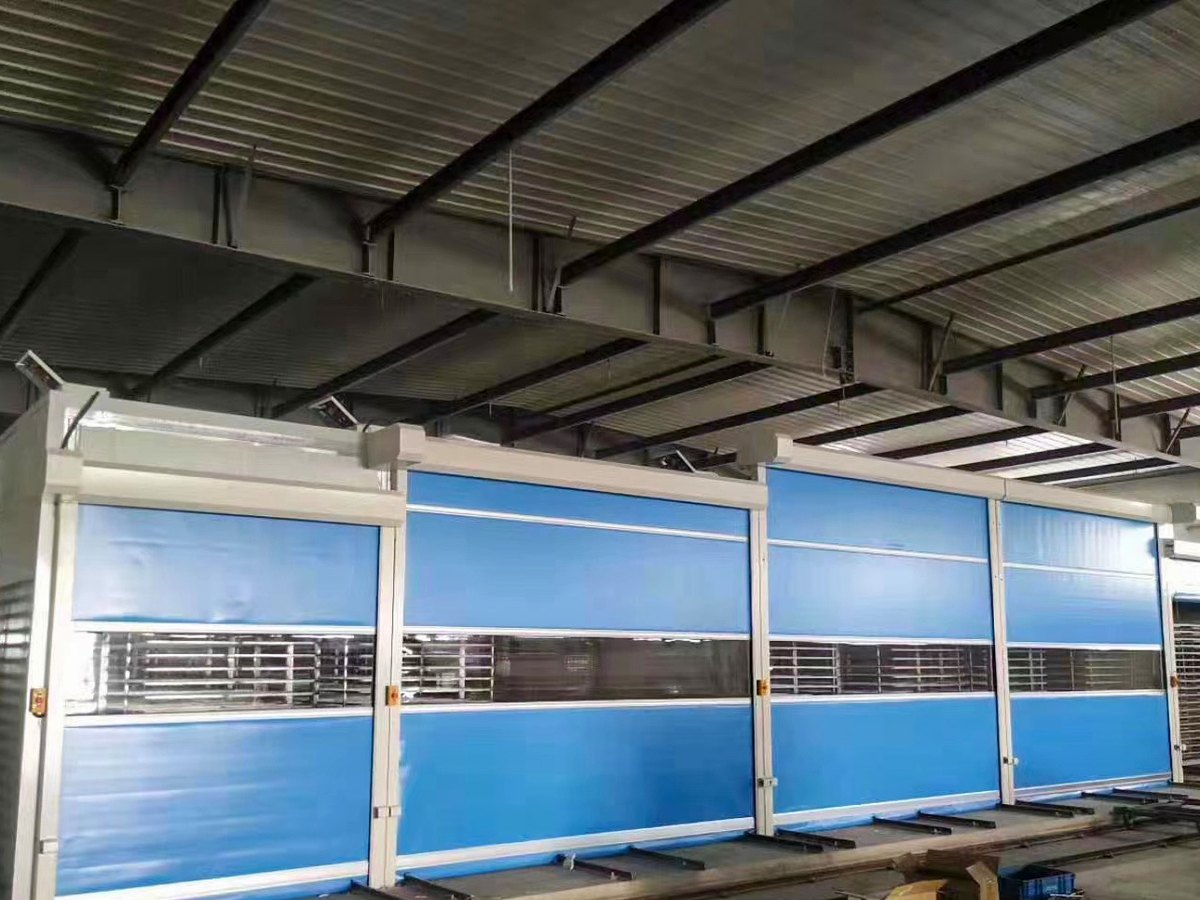
A high-speed roll-up door cycles in seconds, which is the point when a forklift enters a blast freezer twenty times an hour. The door becomes part of the refrigeration design rather than an accessory: with fast cycling, the room holds temperature, the evaporator defrosts less often, and product quality stops depending on how quickly a driver happens to move.
High-speed doors cost more and need more maintenance, with a drive unit, a curtain that has to be replaced when damaged, and safety sensors. They make sense where traffic is frequent or where the temperature difference is large. On a small store entered a few times a day they are hard to justify.
A high-speed roll-up door suits blast freezers, busy forklift routes and airlocks between temperature zones.
Details that matter on every door
- Safety release. Anyone locked inside must be able to open the door. An internal release handle or a break-out function is a basic requirement, and local rules on it change, so confirm the requirement with your local authority before the order.
- Seals and frames. A gasket that is compressed evenly along the whole frame, with no gap at the corners, stops the small permanent leak that never shows on a drawing.
- Condensation in hot and humid climates. In the Gulf and in Southeast Asia the warm side of a freezer door sits in 45 °C air with high humidity, and the frame becomes the coldest visible surface. Frame heaters, sealed pockets and a design that keeps the frame out of the cold are what stop water and mould. The wider climate points are in Cold Rooms in Tropical Climates.
- Fire rating. A door in a fire-rated wall usually has to match the wall class. Panels and doors are classified B1 or B2 under GB 8624 in China, and destination countries apply their own rules. Rules change, so confirm with your importer or local authority before shipping. A B1 fire-rated sliding door is the usual match for a rated compartment wall.
- Traffic and air interaction. Where a door opens directly into a freezer, an air curtain or an airlock costs less than the energy a plain opening loses. The door choice and the defrost strategy of the room are linked, as covered in Blast Freezer vs Cold Storage Room.
What to send for a door quotation
Door prices vary with size, frame, automation and destination, so a useful quote needs these inputs:
- Clear opening width and height, and the panel thickness of the wall the door sits in.
- Room temperature on both sides, and whether the door opens to ambient or to another cold zone.
- What passes through: staff only, hand trolley, pallet truck or forklift, and the largest load dimensions.
- Traffic frequency per hour, and whether the door has to close automatically.
- Power supply at the site, voltage, frequency and phase, for an electric or high-speed door.
- Frame and leaf finish, stainless, colour-coated or galvanised, and colour preference.
- Whether a fire rating is required by the insurer or local authority.
- Destination country and port, and whether installation and commissioning are in your scope.
Anything not decided can stay open. We mark it to be confirmed and quote the options rather than filling the gap with an assumption.