A cold room quotation is a priced scope document: it should say what equipment you are buying, what conditions that equipment was sized for, what the price includes and what it leaves out. Most arguments between a buyer and a supplier start not from the price but from a quote that never answered those three questions.
Buyers who compare cold room quotes per line, and who ask for the missing numbers before they compare totals, usually end up with a room that performs as expected. Buyers who compare a single total figure end up choosing between two documents that describe different rooms. This note lists what a complete quotation contains, which four inputs drive the price, how to compare two offers on the same basis, and the lines that signal a quote is hiding something.
What a complete quotation contains
A cold room is a package, and the quotation should be priced by package rather than as one number. The table below is the checklist we use when we read someone else's quote, and the one we follow when we write our own.
| Line item | What it should state | What goes wrong when it is vague |
|---|---|---|
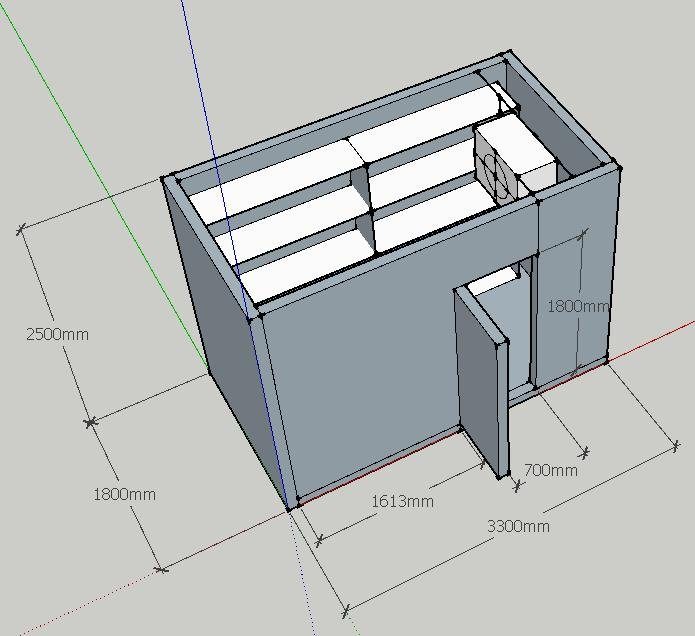
| Room dimensions and volume | External and internal size, internal volume, ceiling height | Panel area and unit capacity cannot be checked |
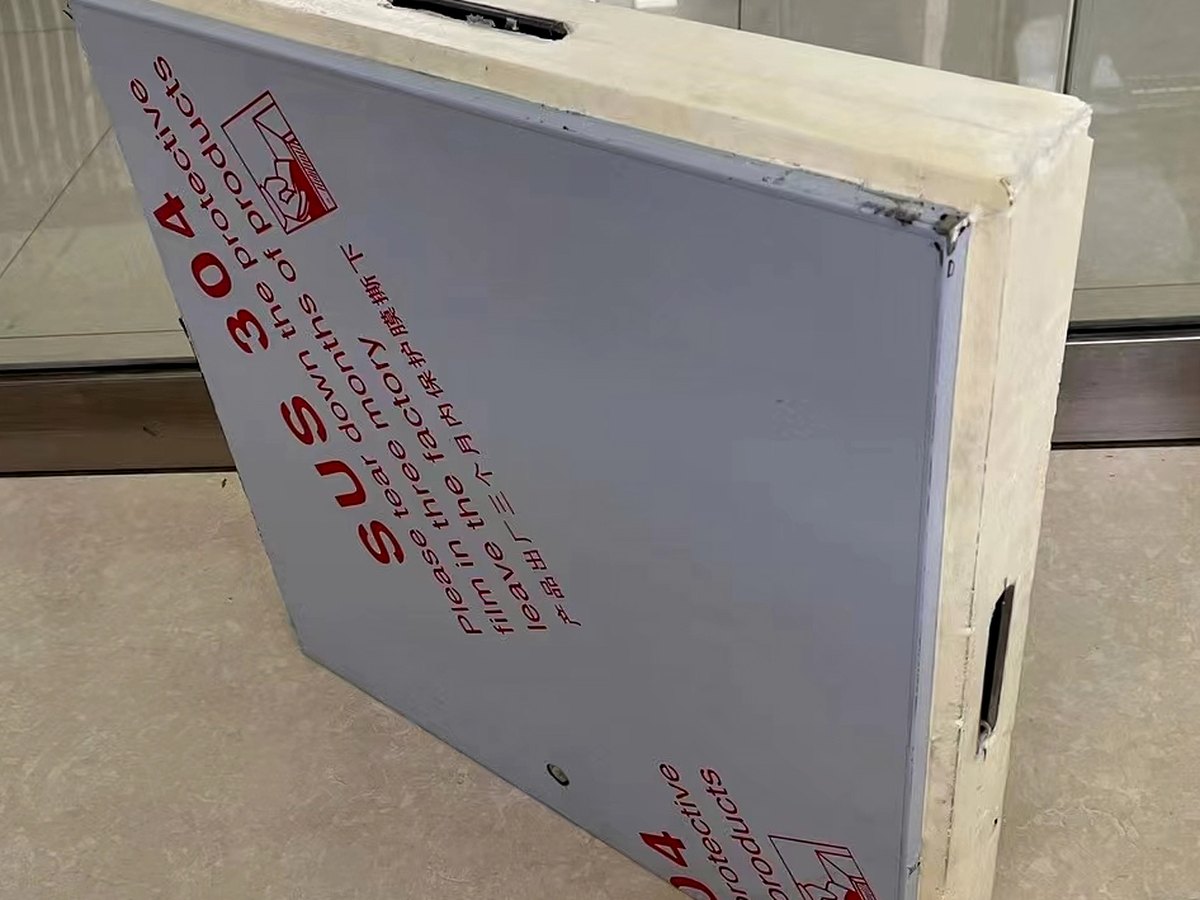
| Panel specification | Thickness, density, surface material, fire class | A 100 mm quote compared against a 150 mm quote at the same temperature |
| Design temperature | Room temperature and product entering temperature | Capacity quoted at a condition that does not match your use |
| Ambient design condition | Summer ambient and condensing temperature the unit is sized for | A standard condenser sold into a 48 °C site, running hot all summer |
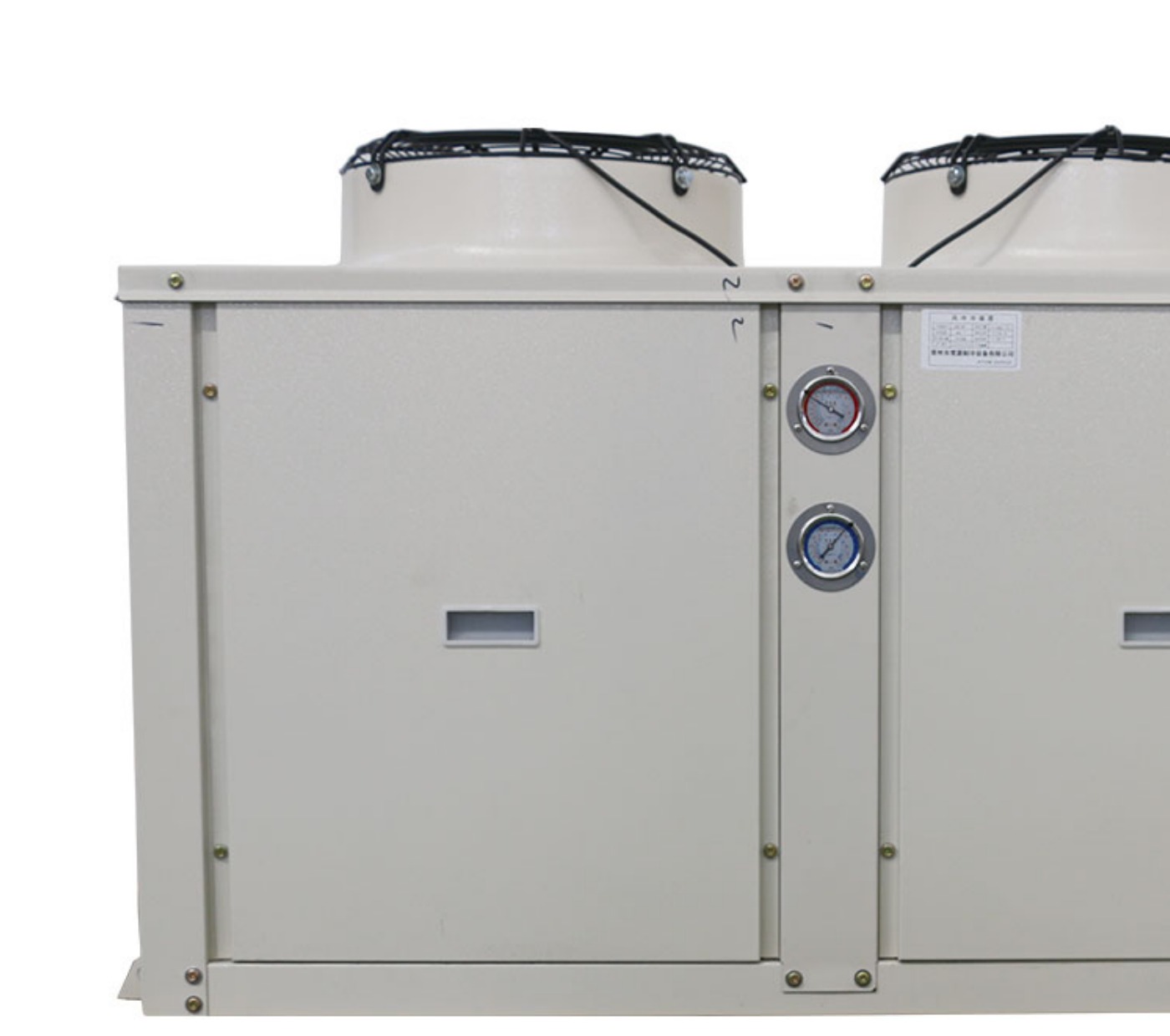
| Refrigeration unit | Model, compressor, nominal capacity at the stated condition, refrigerant | "5 HP unit" with no model and no capacity figure |
| Evaporator | Model, capacity, fin spacing, defrost method, fan count | Wrong fin spacing for a room that handles loose product or heavy frost |
| Doors | Type, size, number, heater, frame | No threshold heater on a freezer door, then ice at the sill |
| Controls and alarms | Controller model, temperature alarm, remote alarm option | No alarm on a room holding high-value stock |
| Electrical data | Voltage, frequency, phase, total connected load | A unit ordered for 380 V/50 Hz into a 415 V or 60 Hz site |
| Scope split | What the supplier supplies, what the buyer or installer supplies | Two parties each assuming the other provides the drain line or the base |
| Commercial terms | Incoterm, packing, lead time, payment, validity, spares | A price that turns out to be ex-works after you budgeted for delivery |
A quote that lists only rooms, panels and "one set of refrigeration equipment" is not a quote yet. It is a budget indication, and it should be labelled as one.
The four inputs that decide the price
Prices move for reasons, and almost all of them come back to four inputs. When two quotes differ by 40 percent, the difference is usually visible in one of these.
Room size and panel thickness. Panel is priced by area, and thicker panel for a colder room means more insulation and more money. A 45 m³ chiller and a 45 m³ freezer do not cost the same.
Temperature and product load. A room holding already-cold product needs far less capacity than a room pulling warm product down every morning. Daily turnover in kilograms and the entering product temperature change the unit size, and the unit is the largest single line in most quotations, and the evaporator has to match the room it sits in.
Ambient design condition. A condensing unit sized for 32 °C ambient and one sized for 48 °C with a larger condenser are different products at different prices. In the Gulf and in parts of Southeast Asia, the second one is the correct choice, and a quote that does not state its ambient figure cannot be compared with one that does. Our notes on cold room engineering components show the range of condensers used for this.
Power supply. 380 V/50 Hz, 415 V/50 Hz, 440 V/60 Hz and single phase for small rooms all lead to different motors, controls and protection. A supplier who asks for your site voltage before quoting is doing it correctly.
Two smaller inputs matter as well: defrost method, which is electric on most small and medium rooms and hot gas on some industrial systems, and whether the room needs a floor, a ramp or a drain.
How to compare two quotations
Put both quotes on the same basis before you look at the total. The second table is the normalisation step we recommend to buyers who send us two offers and ask which is better value.
| Question to ask both suppliers | Why it changes the comparison |
|---|---|
| Is the price ex-works or delivered, and to which port? | Freight and insurance can be a real part of the landed cost, and some quotes hide it in the payment terms |
| What capacity does the unit have at my design condition? | Capacity quoted at a colder evaporating temperature or a lower ambient can look larger on paper |
| What panel thickness and density are priced? | Same room volume, different insulation, different running cost for ten years |
| Which ambient is the condenser sized for? | A condenser matched to a mild climate will run at high pressure and short life in a hot one |
| What is excluded? | Installation, commissioning, drain, electrical work and civil base are the usual gaps |
| Is the room price per m² or per m³, and does it include doors and floor? | Per m² figures that exclude doors or floor are not comparable with all-in figures |
After normalisation, a price per m² of room volume and a price per kW of capacity at the same design condition give you two numbers you can defend. Neither is a final answer on its own, but both stop a comparison from becoming a guess.
Lines that should make you ask a question
"One set, cold room 100 m³." No model, no capacity, no condition. Ask for the equipment list with models before you discuss price.
Capacity with no condition. A capacity figure means nothing without the evaporating temperature and the ambient it was measured at. Ask for both, in writing.
A standard condenser for a hot site. The condenser should be sized for your summer ambient, not the factory default. Ask for the design ambient in writing, and compare it with the record high where the room will run.
Panel thickness missing, or density missing. Thickness alone is not enough. A cold room panel is priced on thickness and density together. Density decides the panel's strength and its insulation value over time.
Electrical data missing. Motors and controllers are built for a voltage and frequency. A mismatch is not a small site problem, it is a failed startup.
No spares or technical support line. Ask what is supplied with the first order, what is available later, and how a replacement compressor or controller is shipped. We list spare parts and technical support rather than a warranty promise, because the useful question is what happens in year three, not what the certificate says.
A price far below the others. It is usually thinner panel, a smaller condenser, no door heater, or a cheaper controller. None of those show on a quotation unless you ask.
The cheapest way to test a quote is to send back two questions: what is excluded, and at what ambient and evaporating temperature is the capacity stated. A supplier who answers both clearly is usually also the one who delivers what was ordered.
What to send, and what comes back
A quotation is only as good as the inputs it was built on. To get one that can be compared, send these:
- Room size, or the space available and the product to be stored.
- Required room temperature, and the temperature of product entering the room.
- Daily turnover in kilograms or pallets, and how many times a day the door opens.
- Site ambient summer temperature and altitude, if it is unusual.
- Site power: voltage, frequency, phase.
- Door traffic and load size, if pallets or forklifts are involved.
- Destination port, and whether you want installation and commissioning included.
- Any local requirement that affects the build, such as a fire class for the panel. Rules change by country, so confirm with your importer or local authority before the order.
What comes back from us is a scope matrix, an equipment list with models and capacities at the stated condition, an ex-works price with wood packing for export, freight quoted separately, lead time, payment terms and validity. Anything that is still open is marked to be confirmed, and quoted as an option rather than filled with an assumption.
If you have two quotes in hand and want a third opinion, send both. Reading them against each other is usually faster than starting again. For the cost structure behind the numbers, see How Much Does a Cold Room Cost, and for the insulation side of the same decision, panel thickness explains why the thickness line matters more than it looks.