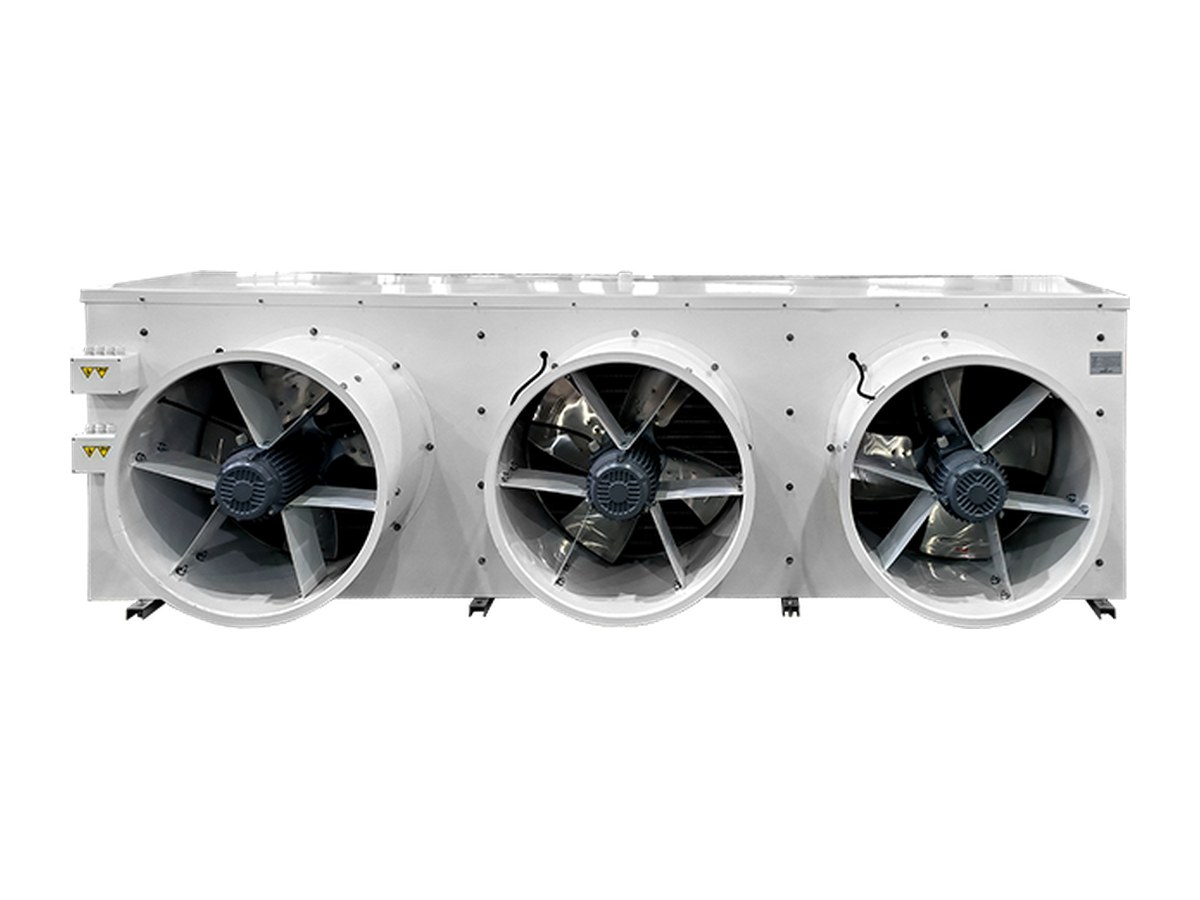
Cold room defrost is the cycle that melts frost off an evaporator coil so the coil can keep taking heat out of the room. Frost is not a fault on its own. It becomes a problem when the layer stays on the coil, the fans push less air, and the compressor runs longer to hold a temperature it used to reach without effort.
Most cold rooms use one of three methods: electric, water or hot gas. Each has a temperature band where it works, parts that have to be built around it, and a failure mode that shows up in the first year. The choice is settled by room temperature, evaporator count, drainage and how much the room can afford to drift during a cycle.
Why frost forms and what it costs
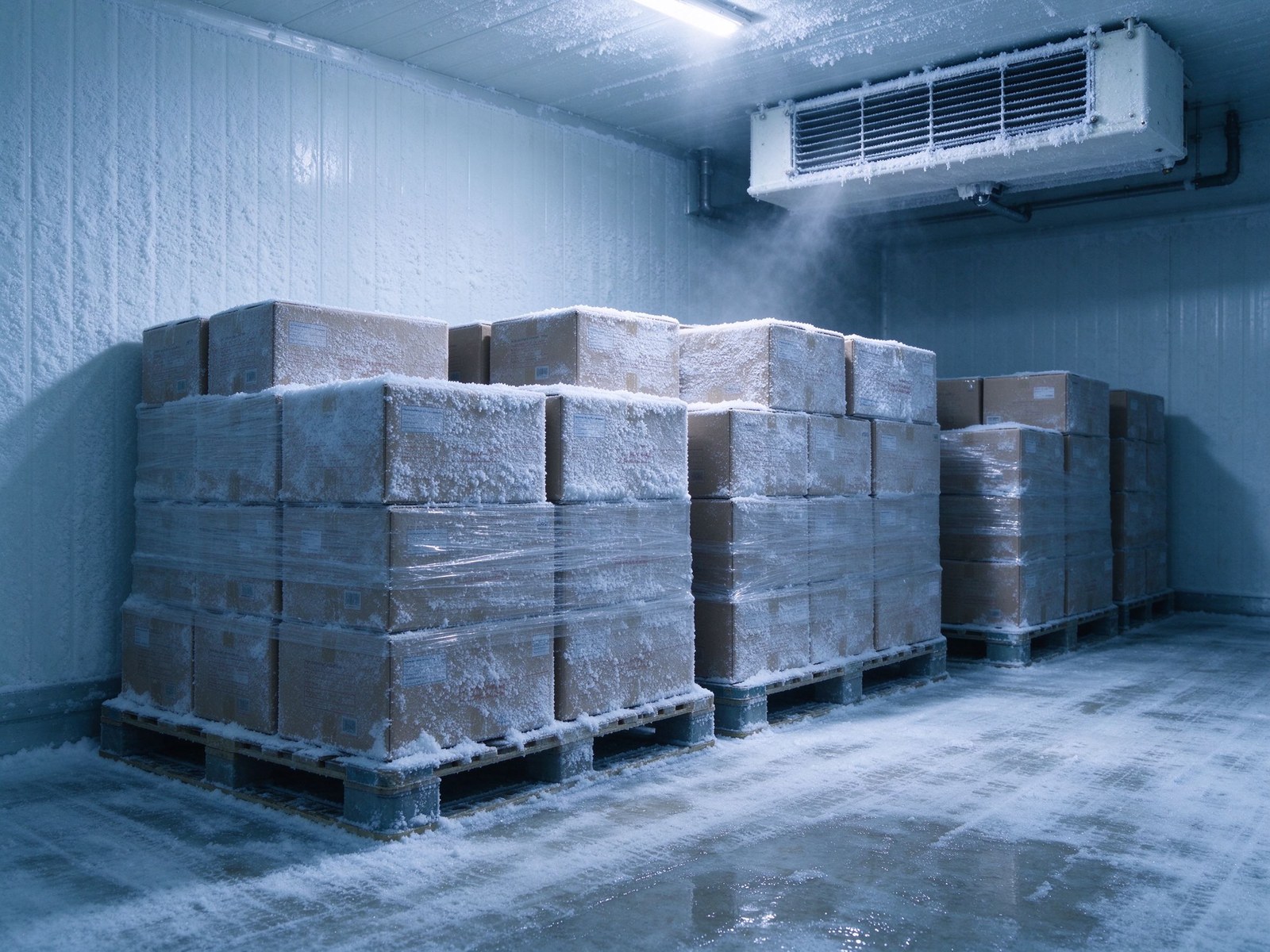
Frost comes from water vapour. Every door opening, every pallet of warm product and every gap in a panel joint brings moisture in, and a coil at -25 °C pulls it out of the air as ice. Fresh produce adds moisture through respiration. A room that handles unpacked product and opens ten times an hour frosts faster than a sealed frozen store.
The cost shows up in three places. Airflow drops as the gaps between fins fill. Suction pressure falls because the coil is insulated from the air it should be cooling. Defrost cycles get longer, and the room temperature climbs during each one. Left alone, ice reaches the fan blades, the drain pan overflows, and melt water freezes on the floor where forklifts run.
Defrost is a compromise. Every cycle adds heat that has to be pulled out again. A cycle that runs longer than it needs to costs energy twice: once to melt the ice, and again to remove the heat it added.
The three methods in plain terms
Electric defrost uses resistance heaters in the coil and the drain pan. Water defrost sprays water over the coil. Hot gas defrost sends discharge gas from the compressor into the coil. All three do the same job. They differ in where the heat comes from and what has to be built around them.
Electric defrost
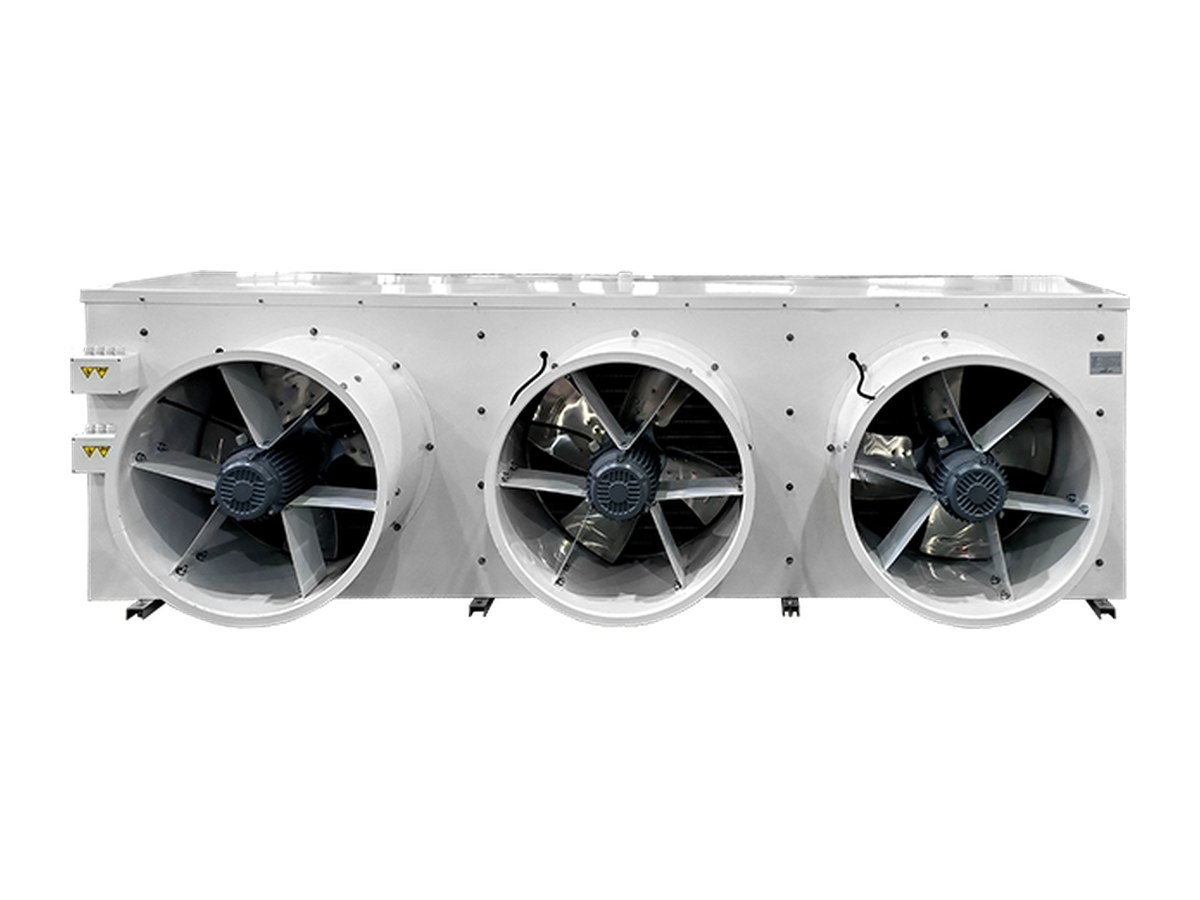
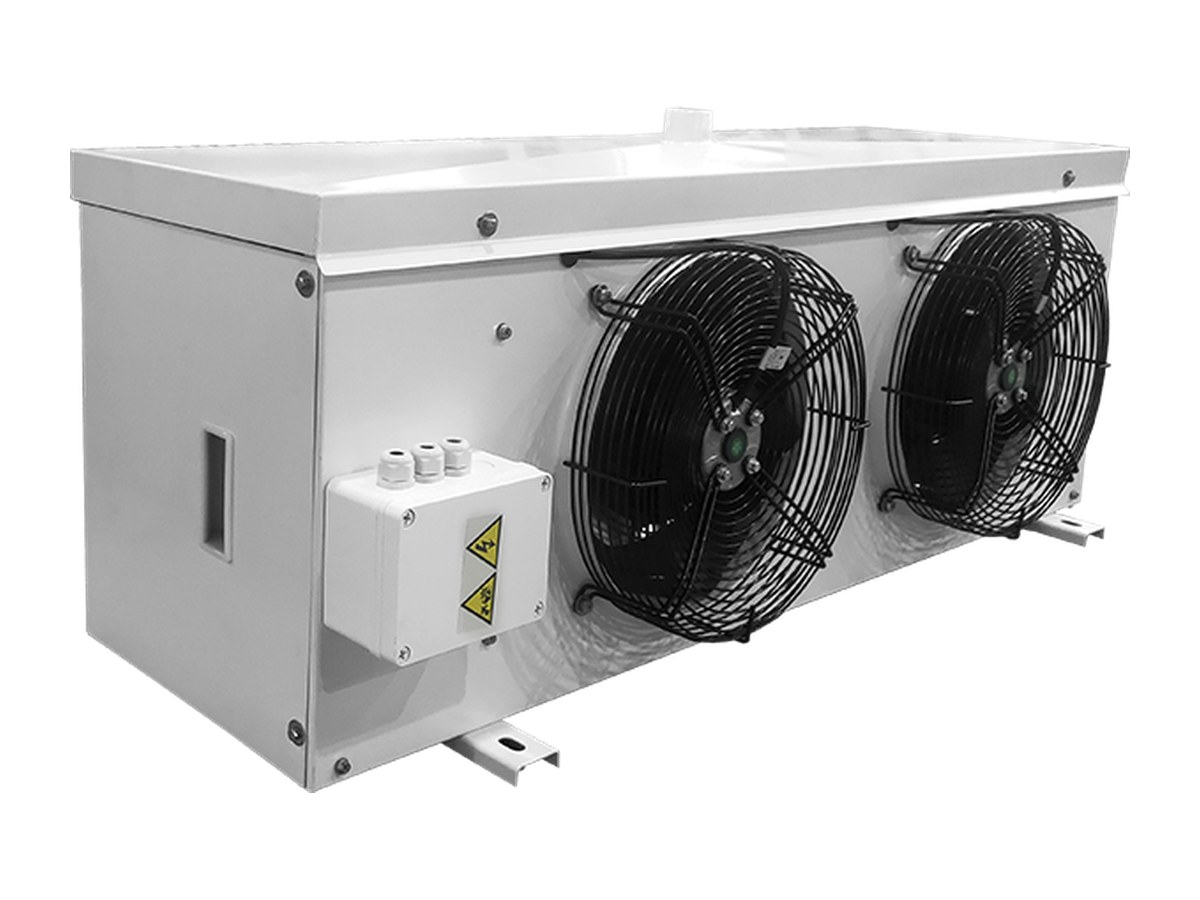
This is the standard for freezer rooms from about -18 to -25 °C, and the usual choice for small and medium rooms because it needs no extra piping. Heaters sit inside the electric defrost evaporator, a contactor switches them on, and the fans normally stop during the cycle. The pan has its own heater, and the drain line is heated where it passes through the cold envelope.
Electric defrost is simple to control and simple to service. The trade-off is energy: resistive heaters put every kWh into the room as heat. A typical cycle runs 15 to 30 minutes, two to four times a day, started by a time clock and ended by coil temperature or a pressure switch.
Water defrost
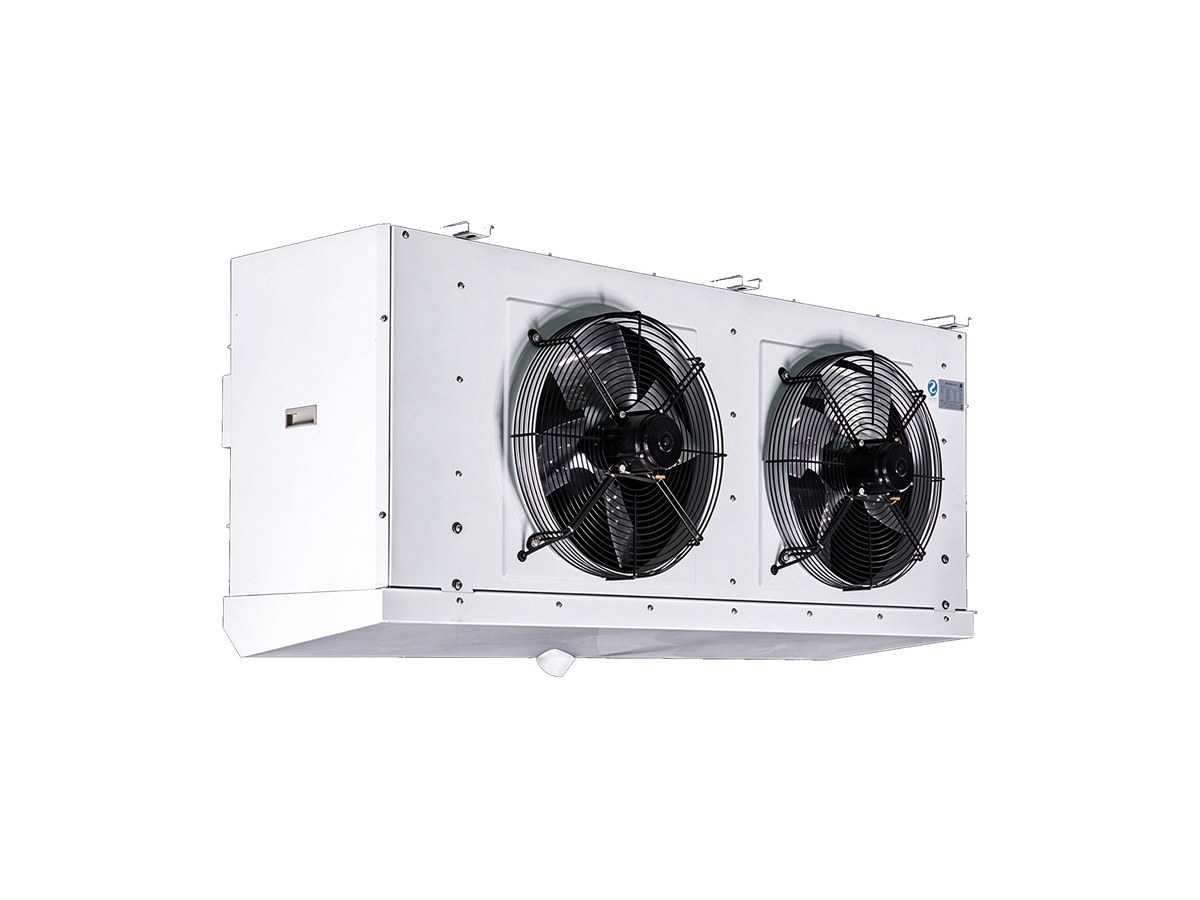
Water defrost is used in rooms above 0 °C, typically 0 to +12 °C, where the coil never gets cold enough to freeze the spray water. Water costs less per cycle than electric heat, and the melt is fast. The room needs a supply, a drain sized for the spray flow and a floor that slopes toward it. Some designs reuse the water.
This method suits vegetable and fruit stores, chillers and processing rooms with heavy door traffic. It does not suit freezer rooms. Spray water on a -20 °C coil freezes on contact and makes the problem worse. In a mixed building, a water defrost evaporator on the chilled side and electric or hot gas on the frozen side is a normal split.
Hot gas defrost
Hot gas routes compressor discharge through the coil, so the heat comes from the refrigeration cycle instead of a heater. It is the usual choice for large low-temperature plants with several evaporators, where energy cost and cycle time both matter. It needs valves, a regulator, a correctly sized line and a control sequence that protects the compressor.
The hardware cost is higher and the piping design has to be right. On a single small evaporator in a 30 m³ room, the extra valves rarely pay back. On a 500 tonne frozen store with six evaporators, shorter cycles and lower energy use usually do. Evaporators with inner grooved tubes, such as our high efficiency evaporator, hold a smaller charge, which makes the hot gas cycle easier to control. Hot gas arrangements are quoted per project.
| Method | Heat source | Typical room temperature | Cycle length | Extra requirements | Best fit | Watch for |
|---|---|---|---|---|---|---|
| Electric | Resistance heaters in coil and drain pan | -18 to -25 °C, also chillers | 15 to 30 min, 2 to 4 cycles per day | Heater contactor, pan heater, heated drain line | Small and medium freezer rooms, retrofits | Energy cost, long cycles when ended on time only |
| Water | Spray water over the coil | 0 to +12 °C | 5 to 15 min | Water supply, large drain, sloped floor | Fruit and vegetable stores, chillers, processing rooms | Never in freezer rooms, drain capacity |
| Hot gas | Compressor discharge gas | -25 to -40 °C | 10 to 20 min | Hot gas line, valves, regulator, control sequence | Large low-temperature plants, multiple evaporators | Piping design, compressor protection |
The figures above are indicative ranges. Cycle length and frequency depend on door traffic, product load and local humidity, and the final settings belong in the commissioning report.
Matching the method to the room
Room temperature is the first filter. A fresh room at +2 °C has options that a frozen store at -25 °C does not. Above 0 °C, off-cycle defrost is common: the compressor stops, the fans keep running and room air at a few degrees above zero passes through the coil until the ice clears. It uses no heaters and no water. It works because the room itself carries enough heat, and it fails in a freezer room where the air is far below zero.
Evaporator count and pipe run decide hot gas. A single unit in a small room has no discharge line to spare. A plant with a central compressor room, a liquid header and four to eight frozen storage evaporators has what hot gas needs, and cycles can be sequenced so one evaporator defrosts while the others carry the load.
Drainage decides water defrost. A water cycle can produce a large volume of melt water in a few minutes. If the drain is undersized, water backs up into the pan, overflows and freezes on the floor. If the floor has no fall to the outlet, the water sits and the problem repeats every cycle. We ask for the drain diameter, route and outlet before recommending water defrost.
How the room is controlled matters as much as the method. A time clock alone will start a cycle in the middle of a busy loading period. A controller that reads coil temperature, or the pressure drop across the coil, starts only when there is frost to clear. On a room with variable traffic, demand defrost usually beats a fixed schedule.
Controls and drainage decide reliability
End the cycle on coil temperature, with the timer as a backup. A timer that runs the full 30 minutes either wastes heat or leaves ice at the bottom of the coil, and both outcomes repeat every day. The usual setting is to stop when the coil sensor reads a few degrees above 0 °C. On electric defrost, the pan heater should stay on briefly after the coil heaters stop, so melt water leaves the pan instead of refreezing in the drain.
Drains need a trap and heat where they leave the cold space. A drain that freezes shut turns a normal defrost into a flood. Water defrost makes this critical because the flow is high, while electric defrost gives the drain more time.
Ice on the floor under an evaporator is usually a drain or pan problem, not a defrost setting. Check the pan heater, the drain trap and the fall of the pipe before changing the cycle. Ice on the ceiling around the unit often points to air leakage through panel joints or cable entries, which no defrost method fixes.
Fans are part of the same system. A cold air fan that runs during defrost blows melt water onto the product and walls. Most controls stop the fans during the heating phase and restart them after a short drip time, and that sequence belongs in the commissioning settings. The cold room maintenance schedule covers where defrost checks fit into daily and monthly rounds.
What to send us before we specify defrost
We size defrost from the room, not from a catalogue page. To quote an evaporator and a defrost arrangement we need the room dimensions and volume, the product and its packing, the holding temperature, the refrigerant and compressor type, the number of evaporators and their layout, the power supply, whether water is available, the drain diameter and route, the door type and traffic, and the ambient conditions at the site.
Send drawings if they exist. A section through the room showing the evaporator position and the drain route saves a round of questions. For a retrofit, photos of the coil, pan and drain help more than a description. We reply with the evaporator selection, the defrost method, the control sequence and the parts that have to be added, and the price follows once scope is fixed. Energy use over a year is covered in where cold room energy actually goes, which helps when comparing electric and hot gas on a larger plant.
Frequently Asked Questions
How often should a cold room defrost?
A frozen room typically runs two to four cycles a day. A chilled room above 0 °C often defrosts off-cycle, when the compressor stops and the fans keep air moving through the coil. Door traffic, product load and local humidity move the number up or down, so the schedule is set at commissioning and checked against the coil after the first month.
Can I use water defrost in a freezer room?
No. Spray water on a coil at -20 °C freezes on contact and adds ice instead of removing it. Water defrost is for rooms at 0 to +12 °C. Freezer rooms use electric or hot gas defrost.
Why is there ice on the floor under the evaporator?
Usually the drain or the pan, not the defrost setting. Check the pan heater, the drain trap and the fall of the drain pipe first. If the drain is frozen shut, melt water backs up into the pan and then onto the floor, and a longer defrost cycle makes it worse.
Is hot gas defrost worth it for a small cold room?
Rarely. A single small evaporator needs extra valves, a regulator and a hot gas line, and the saving per cycle is small. Hot gas pays back on large low-temperature plants with several evaporators, where shorter cycles and lower energy use apply across the whole plant.
How should defrost termination be set?
End the cycle on coil temperature, a few degrees above 0 °C, with the timer as a backup. Leave the fans off for a short drip time after heating so melt water leaves the coil and pan before air starts moving again.
How long should a defrost cycle take?
Indicative ranges are 15 to 30 minutes for electric, 5 to 15 minutes for water and 10 to 20 minutes for hot gas. If every cycle runs the full timer length, the coil is either heavily frosted, the termination sensor is misplaced, or the drain and pan heaters are not doing their job.