Seafood export cold storage is a temperature-controlled chain that takes fish and shellfish from landing or processing at 0 °C or below, freezes them fast enough to hold texture and weight, and keeps them at -18 °C or colder until the reefer container is loaded. In Southeast Asia the hard part is not the setpoint. It is the heat and humidity outside the door, the volume of product arriving in a short window, and the buyer's audit trail.
Vietnam, Indonesia, Thailand, the Philippines and Malaysia all ship fish, shrimp and tuna into the EU, Japan, Korea and the US. Each buyer sends a specification with holding temperatures, glaze limits and records. The room has to meet that specification every day of the year, including the week when the boats come in together and the loading bay never empties.
Temperature bands decide the whole design
One cold store rarely covers every product a processor handles. Chilled fish for a short sea leg, frozen fillets for a long container run and sashimi-grade tuna sit in three different temperature bands, and mixing them in one room means the coldest product suffers or the warmest one freezes too hard. Most plants we work on split the building into a chilled area, a freezing area and one or two frozen stores.
| Product | Holding air temperature | Air temperature during freezing | What it changes in the design |
|---|---|---|---|
| Chilled whole fish, gutted, on ice | 0 to -1 °C | Not frozen | High humidity, fast door traffic, drainage for melt water |
| Frozen white fish fillets and blocks | -18 to -20 °C | -35 to -40 °C | Blast capacity in kg per hour, block thickness, plate or air freezing |
| Shrimp, glazed and packed | -18 to -25 °C | -35 to -40 °C | Glaze water, IQF handling, short freezing time to limit weight loss |
| Tuna for sashimi | -55 to -60 °C | -55 °C or lower | Two-stage or ultra-low system, thicker panels, specialist buyers only |
| Cooked and value-added seafood | -18 to -20 °C | Chilled first, then frozen | Separation from raw product, hygiene zoning, labelling records |
The figures above are indicative ranges used across the region. The number that matters is the one in your buyer's specification or your own HACCP plan, and the two should agree before the panels are ordered.
Freezing capacity is the number that sizes the plant
Processors usually know the tonnage they handle per day but not the freezing load per hour. That gap causes most of the trouble we see. If 20 tonnes of fillets arrive between 14:00 and 22:00, a blast freezer rated for 2 tonnes per hour will not clear the queue before the next landing, and the product sits in a chiller waiting.
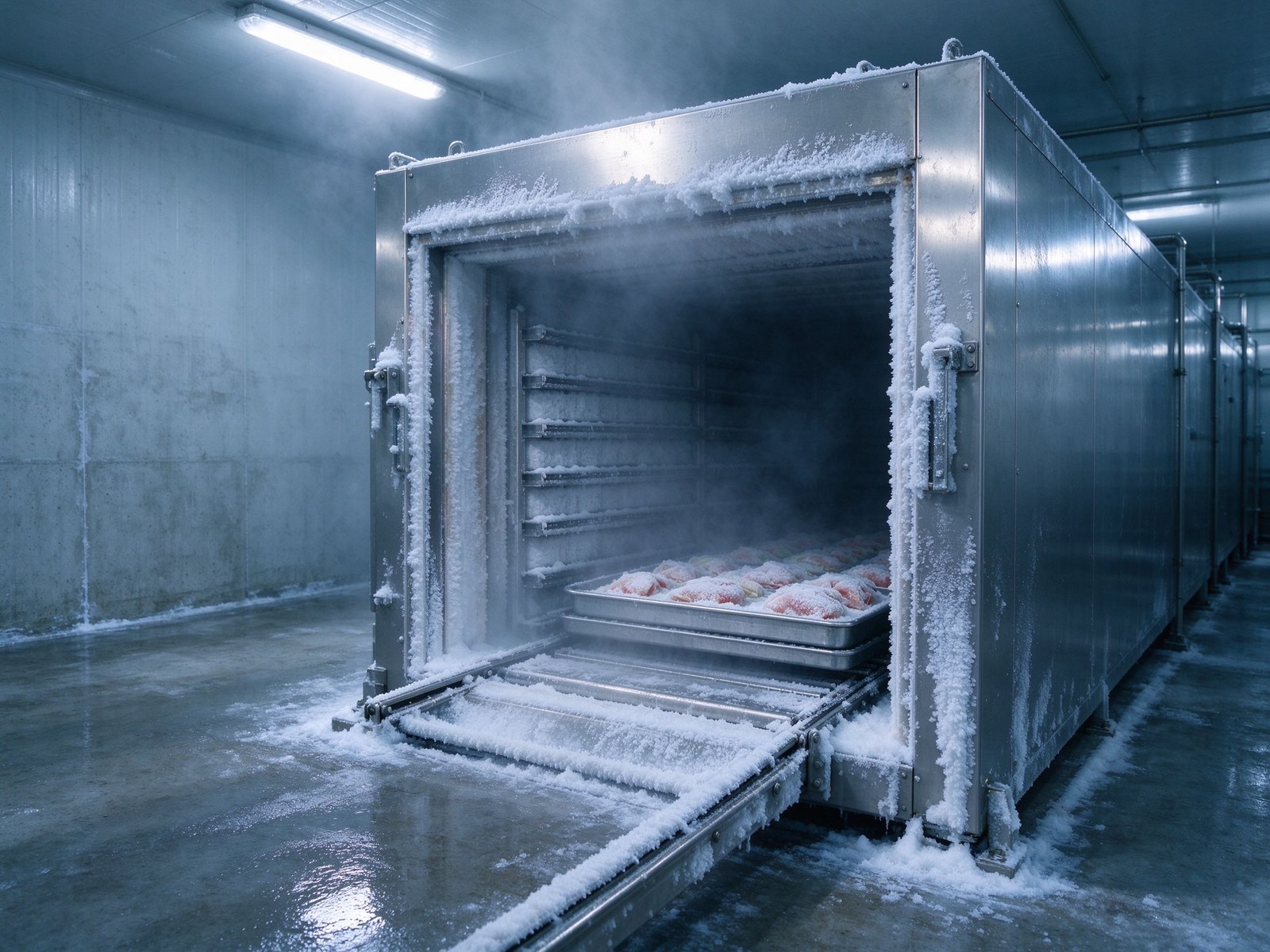
The calculation starts with three inputs: product weight per batch, the thickness of the piece or block, and the core temperature you need at the end of the cycle. Thin fillets on trays freeze in about 2 to 4 hours. A 100 mm block needs 12 hours or more in still air. Shrimp for IQF runs through a tunnel in minutes, and that is why tunnel freezers and plate freezers exist next to each other in the same plant.
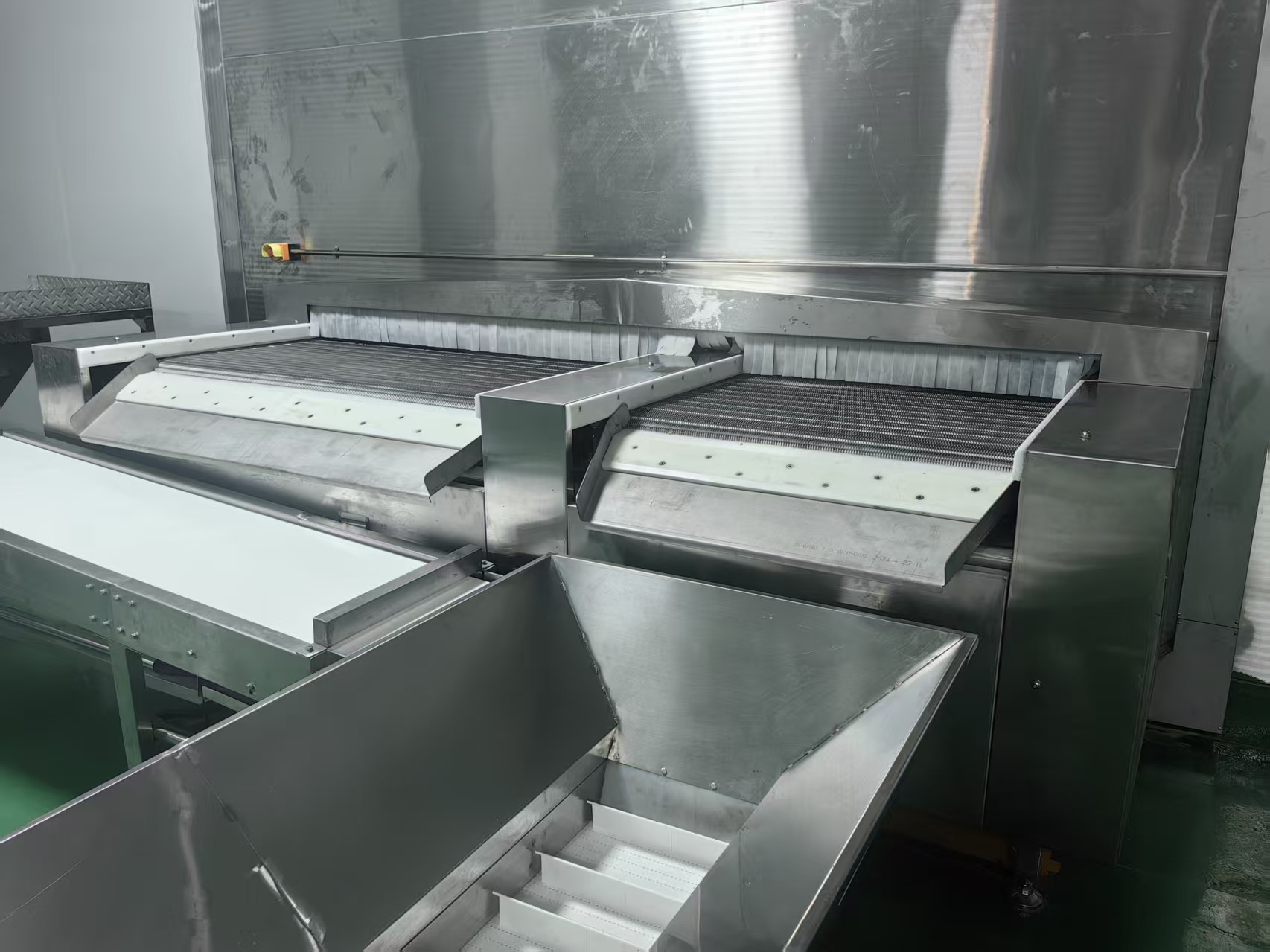
We size blast rooms and tunnel freezers from the batch load and the cycle time rather than from a nameplate tonnage. A blast freezer for palletised cartons and a plate and mesh belt tunnel freezer for loose product use different evaporator arrangements, different fan pressures and different defrost cycles. Getting the freezing method right first makes the refrigeration selection simple.
Layout and building fabric for a wet, salty, high-traffic room
Seafood rooms are wet rooms. Water comes off melt ice, off glazing tanks, off hosed floors and off the product itself, and salt comes with it. That points to a few practical choices:
- Panels of 150 mm for frozen stores and 100 to 150 mm for chilled rooms, with a food-grade liner and sealed joints. In a 35 °C ambient the surface condensation load on the outside face is heavy, so joint detail matters more than the nominal thickness.
- Stainless steel or food-grade finish on walls up to about 1.5 m in the wet areas, and a floor with falls to trapped drains outside the room.
- Insulated floors with a load-bearing slab, and a heated or ventilated sub-floor where the ground below stays warm and wet all year.
- Doors that open fast and close faster. A strip curtain helps, but a well-set sliding door with a sealed threshold does more for the ice on the floor than another curtain.
- An ante-room or airlock between the outside and the frozen store, so the tropical air does not enter with every pallet.
The tropical climate work is covered in more detail in Cold Rooms in Tropical Climates. For seafood the extra item is corrosion: hinges, frames, drain trays and evaporator coils all sit in salt air, and a coated coil with a proper drain slope lasts years longer than an uncoated one.
The cold chain from landing to the reefer container
A cold store is one link. Exporters lose claims at the other links, so the design should protect them:
Landing to processing. Fish should go under ice or into a chiller within minutes, not hours. For scombroids such as tuna, mackerel and sardines, warm holding is a food safety issue, not just a quality issue, because histamine forms when the fish sits above about 4 °C. Your buyer's plan will state the limit, and it is usually stricter than the general rule.
Freezing. The product leaves the freezer at the core temperature in the specification, and the cycle is logged. A blast room that is loaded beyond its design tonnage stretches the cycle and pushes the core temperature up, even though the room air reads -35 °C.
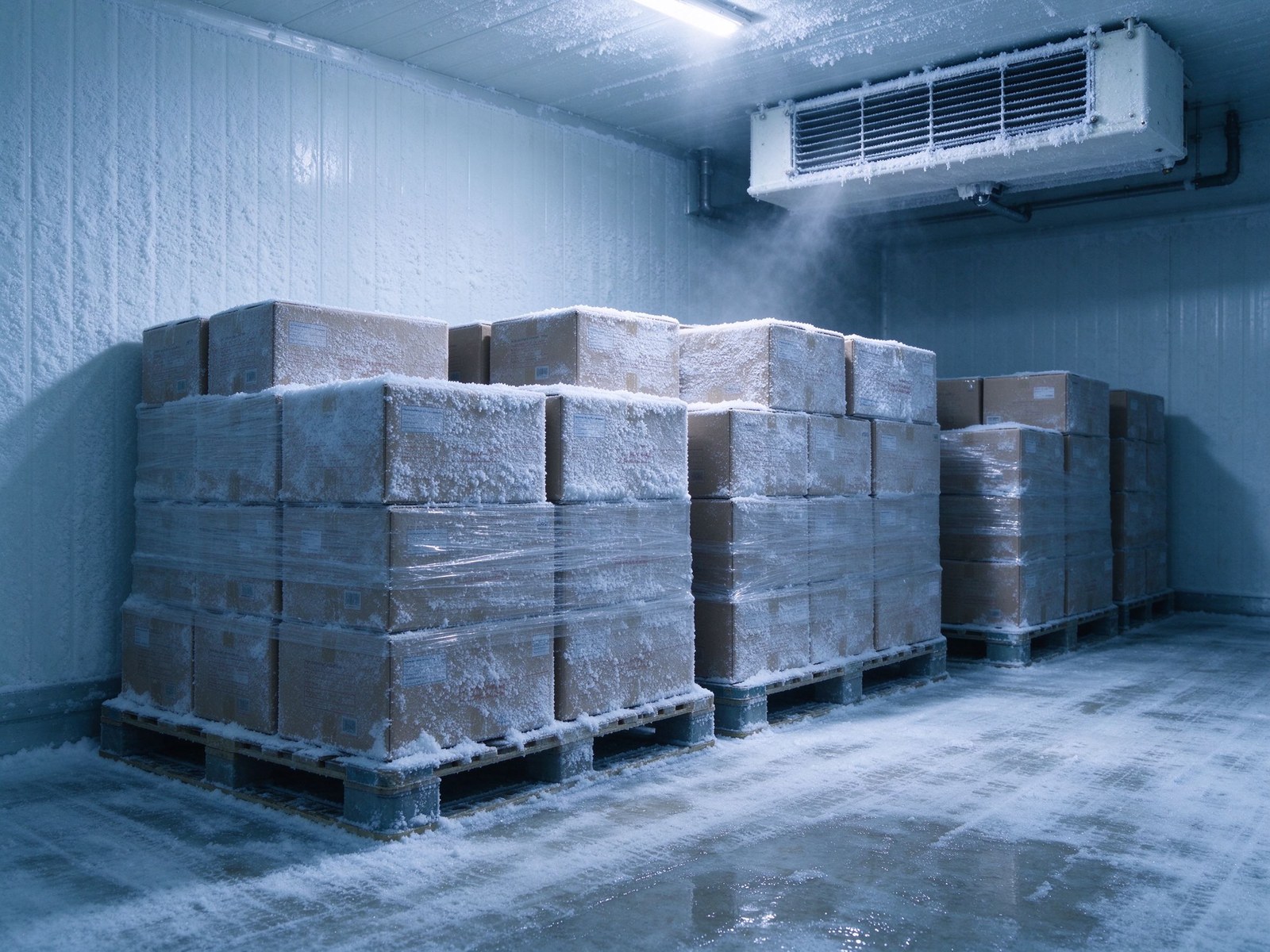
Frozen storage. A frozen storage room at -18 to -20 °C holds the product, but it cannot pull a warm pallet down. Product should enter at temperature or below, and the room should have enough coil capacity to recover after a full door opening, not just to hold a steady state.
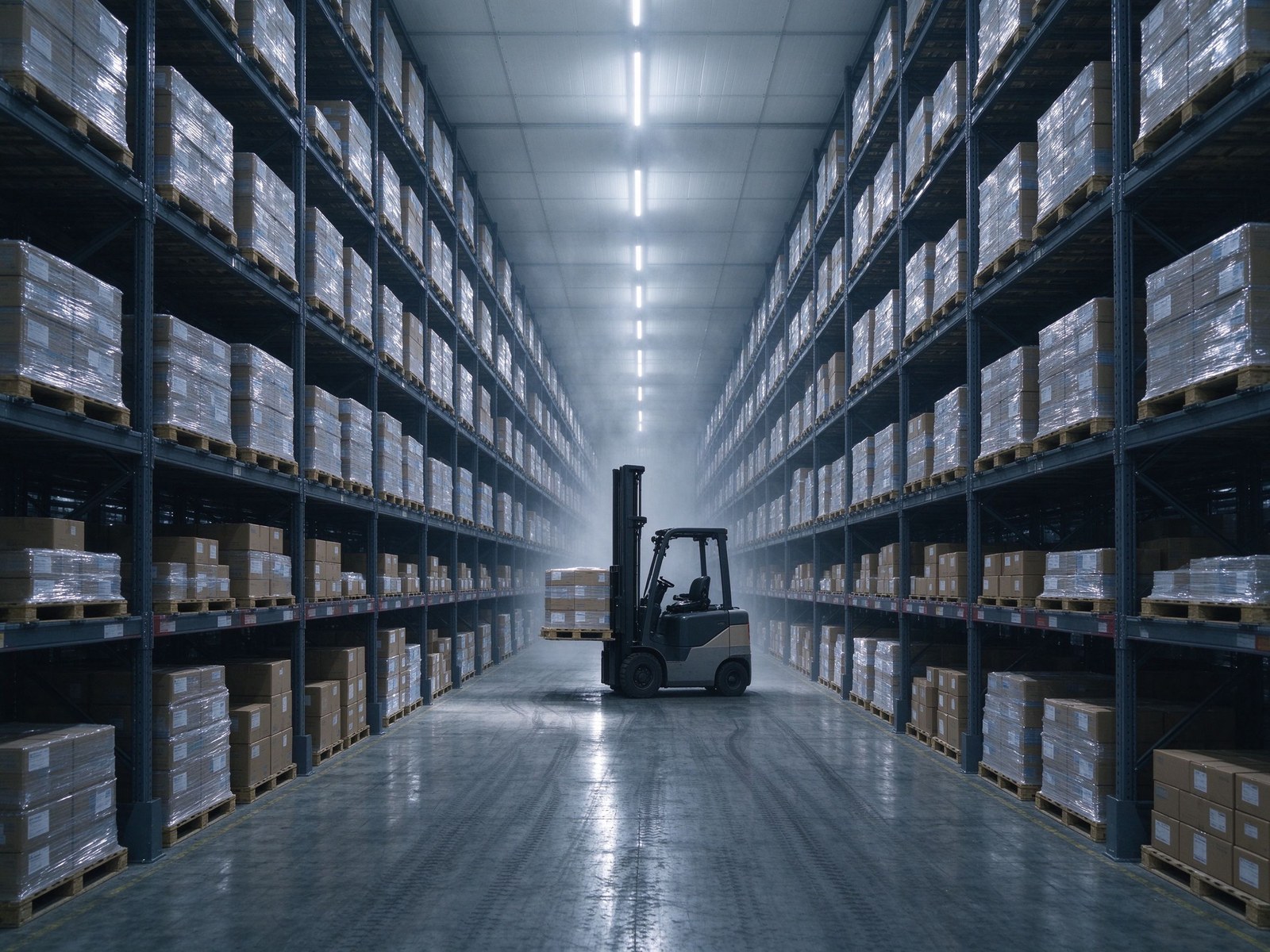
Packing and dispatch. Packing should happen in a cold area, not on a warm dock. Reefer containers are usually pre-cooled and set to the temperature in the shipping instruction; the loading bay, the fork truck time and the door opening all add heat. A cold chain logistics warehouse with a sealed dock and dock shelters removes most of that gain.
Monitoring. Temperature loggers in the room and in the container, a record of door openings and defrost cycles, and an alarm that reaches someone at night. Buyers ask for these records and auditors check them against the shipping documents.
Rules, records and buyer audits
Export paperwork is the buyer's world, but the cold store feeds it. EU buyers ask for catch certificates under the IUU regulation, Japanese and Korean buyers ask for plant approval and residue records, and most chains run their own supplier audit on top. The room needs to support the audit: calibrated sensors, cleaning records, a pest control plan, separate storage for rejected product, and traceability from batch to container.
Design choices that help at audit time include a room layout with clear zoning between raw and cooked product, a documented defrost and cleaning schedule, and a temperature record that can be exported as a file rather than photographed off a panel. Refrigeration controls with logging built in save hours of work later.
Rules change, and they differ by market and by port. Confirm the current requirements with your importer or local authority before shipment, and treat any summary, including this one, as a starting point for that conversation.
What to send us for a quotation
We are an engineering and supply company, not a factory. We design the room, select equipment across brands, and supply panels, doors, units, evaporators and controls from a network of vetted manufacturers. Our engineers can travel for installation and commissioning alongside your trusted installation teams, and we keep spare parts and technical support available after handover.
For a price indication on a seafood cold store, send us:
- Product list with species, pack format, piece or block thickness, and target core temperature
- Daily and peak tonnage, plus the hours in which product arrives
- Room sizes or a site plan, and the available height
- Chilled, frozen or both, and the holding temperatures your buyer requires
- Site ambient conditions (coastal sites are harder on coils and panels), power supply and voltage
- Whether the plant needs HACCP zoning, and which market audits it will face
- Container loading method and the dock arrangement
Those seven items are enough to size the freezing load, propose a room layout and give a budget you can compare with other quotes. Where a figure is missing we say so and mark it to be confirmed rather than filling the gap with an assumption.
Related reading: Where Cold Room Energy Actually Goes explains why a frozen store in a tropical port spends most of its power on door openings and defrost, and refrigeration units and condensing units lists the equipment families we supply for these rooms.
Frequently Asked Questions
What temperature should a seafood cold store run at?
Most frozen seafood for export is held at -18 to -20 °C, with shrimp and some premium lines held at -20 to -25 °C. Chilled fish sits at 0 to -1 °C on ice or in a chiller, and sashimi-grade tuna needs -55 to -60 °C. Your buyer's specification and your HACCP plan set the number, and the room should be designed around it rather than around a general range.
How much blast freezing capacity do we need per day?
Start from the peak tonnage arriving in a window, not the daily average. If 20 tonnes lands between 14:00 and 22:00 and each batch takes 4 hours, you need a freezing capacity that clears 20 tonnes in that window, which usually means two rooms or a tunnel rather than one room sized for the daily total. The piece thickness decides the cycle time and therefore the capacity.
Can a -20 °C storage room freeze product as well as hold it?
No. A storage room has coil capacity for holding a steady load and recovering after door openings. Pulling a warm pallet down to -18 °C core needs a blast freezer or tunnel with much higher air movement and a larger coil, and doing it in the store raises the room temperature for everything else inside.
Why does ice build up on the floor and doors in seafood rooms?
Warm humid air enters with every pallet and condenses on the cold surfaces. Water from melt ice and washing adds to it. An ante-room, fast-closing doors, a sealed threshold and drains with falls reduce the problem. If ice keeps forming on the floor, check the door detail and the sub-floor insulation before adding more defrost cycles.
Do seafood exporters in Southeast Asia need special certification?
It depends on the destination market. EU buyers ask for catch certificates under the IUU regulation, Japan and Korea ask for plant approval and residue records, and retail chains run their own audits. Rules change and differ by port, so confirm the current requirements with your importer or local authority before shipment.
What information do you need to quote a seafood cold store?
Species and pack format, piece or block thickness, target core temperature, daily and peak tonnage with arrival hours, room sizes or site plan, required holding temperatures, site ambient and power supply, and the market audits the plant will face. With those we can size the freezing load, propose a layout and give a budget, marking anything missing as to be confirmed.