Date cold storage is the temperature and humidity controlled holding of dates after harvest, from the palm garden through packing, treatment and container loading, with room conditions set by the stage of the fruit: khalal near 0 C, rutab at 0 C for short holding or -18 C for freezing, and tamar at 5 to 10 C for quality and insect protection.
The Gulf harvest runs from June in the eastern oases to October for late varieties, and most fruit reaches a packhouse within hours of picking in 40 C to 48 C air.
This guide covers what a date packhouse in the Gulf or Saudi Arabia needs from a cold store: the three fruit stages, pre-cooling capacity, humidity and airflow, freezing for year-round supply, and the treatment steps that decide whether a container is accepted at destination.
Three stages of the fruit need three different rooms
Dates are not one product. The same palm gives khalal dates that are crisp, rutab dates that are soft and moist, and tamar dates that are semi-dry and shelf stable. Each stage has its own optimum, and one room for all three forces a compromise.
Khalal: crisp fruit, near freezing
Khalal dates carry the highest water content and the shortest window. Holding them at 0 C to 2 C with 85% to 90% relative humidity keeps the crunch and slows the change to rutab. Cool them on the day of harvest. A slow pull down over two days softens the skin, and the difference shows on the shelf.
Rutab: soft fruit, weeks not months
Rutab dates soften quickly and take handling damage easily. Chilled holding at 0 C buys weeks, not a season. For programmes outside the harvest window, freezing is the practical route, covered further down.
Tamar: dry fruit, cool and protected
Tamar dates tolerate ambient storage but not the Gulf summer. At 5 C to 10 C they hold colour and texture far longer, and cool storage slows the insect activity that ruins a bag from inside. Tamar also crystallises sugar faster at high temperature, which shows as white spots on the skin.
| Stage | Indicative moisture | Holding temperature | Relative humidity | Practical holding time | Main risk |
|---|---|---|---|---|---|
| Khalal (crisp) | 60% to 80% | 0 C to 2 C | 85% to 90% | Up to several months | Softening, skin browning, condensation on the fruit |
| Rutab (soft) | 40% to 60% | 0 C, or -18 C for freezing | 85% to 90% chilled | Weeks chilled, up to a year frozen | Mould, collapse, handling damage |
| Tamar (semi-dry) | 15% to 25% | 5 C to 10 C | 65% to 75% | Months | Insect activity, sugar crystallisation, colour loss |
The figures are indicative ranges from common practice and published postharvest guidance. Your variety, region and customer specification will move them, and the buyer's specification wins. Treat this as the start of a conversation, not a certificate.
Pre-cooling capacity decides the season, not room volume
The mistake we see most often in date projects is a room sized on total tonnes stored instead of tonnes arriving per day at peak. Harvest compresses into six to ten weeks, and daily intake can be ten times the average. A room with the right volume and too little cooling capacity runs warm every afternoon of that window.
Three numbers set the capacity:
- Field heat to remove. Fruit picked at 40 C or more has to reach holding temperature within hours. Removing field heat from one tonne of khalal dates takes far more refrigeration than holding that tonne for a week afterwards.
- Arrival pattern. Trucks land in clusters in the morning, and the plant has to pull down one cluster before the next arrives. The peak hour, not the daily total, sets the compressor and evaporator selection.
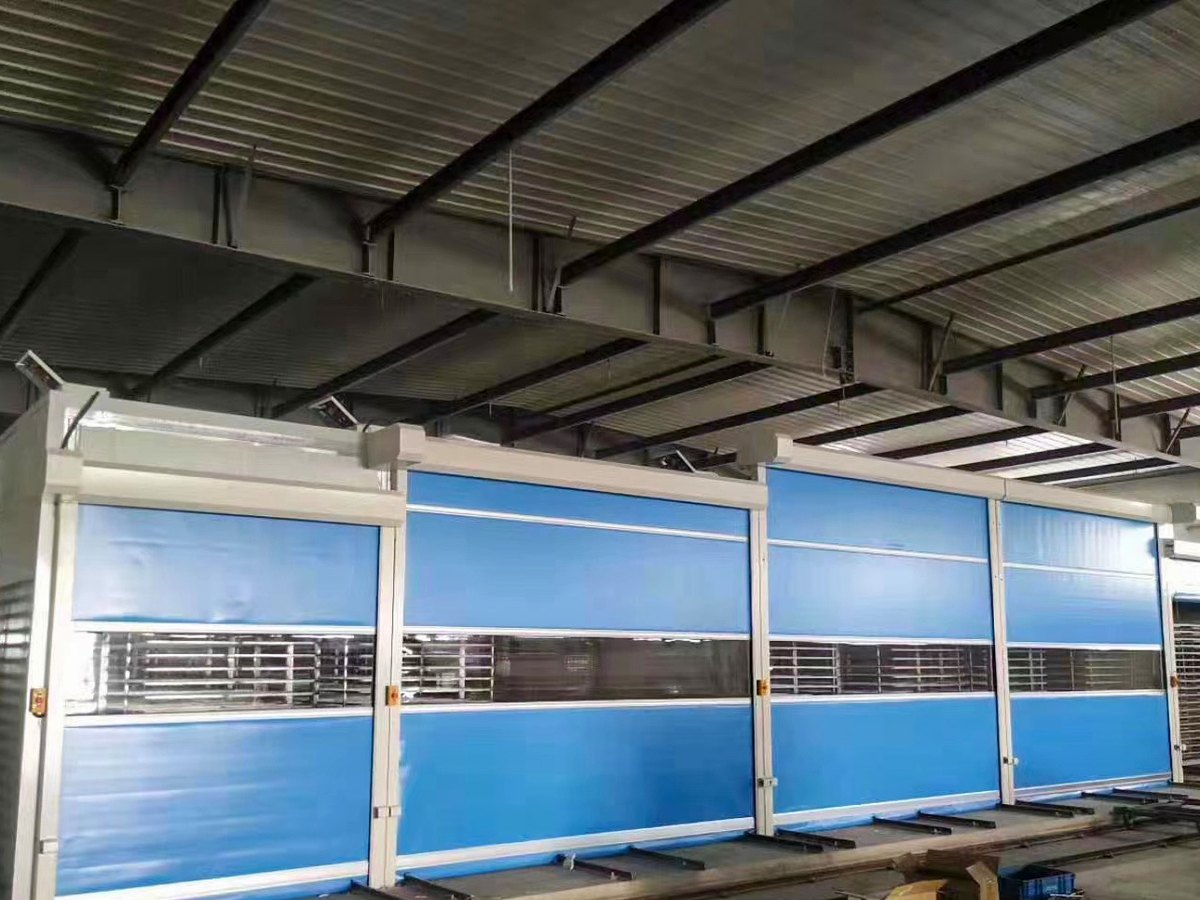
- Door openings at dispatch. The dispatch door is the busiest opening in the building. Each opening swaps cold dry air for warm humid air, and the coil pays for it in frost. A high-speed roll-up door cut to the traffic pattern shortens the exchange. Door logic is covered in cold room door selection.
For khalal and rutab, forced air pre-cooling in a dedicated tunnel beats cooling fruit inside a storage room, because still air around stacked cartons insulates the fruit from the coil. The tunnel discharges into the storage room once pulp temperature is down, and the two rooms then carry separate loads and separate controls. Cooling capacity in a 45 C summer also depends on how the plant rejects heat, and the same principles apply in hot climates.
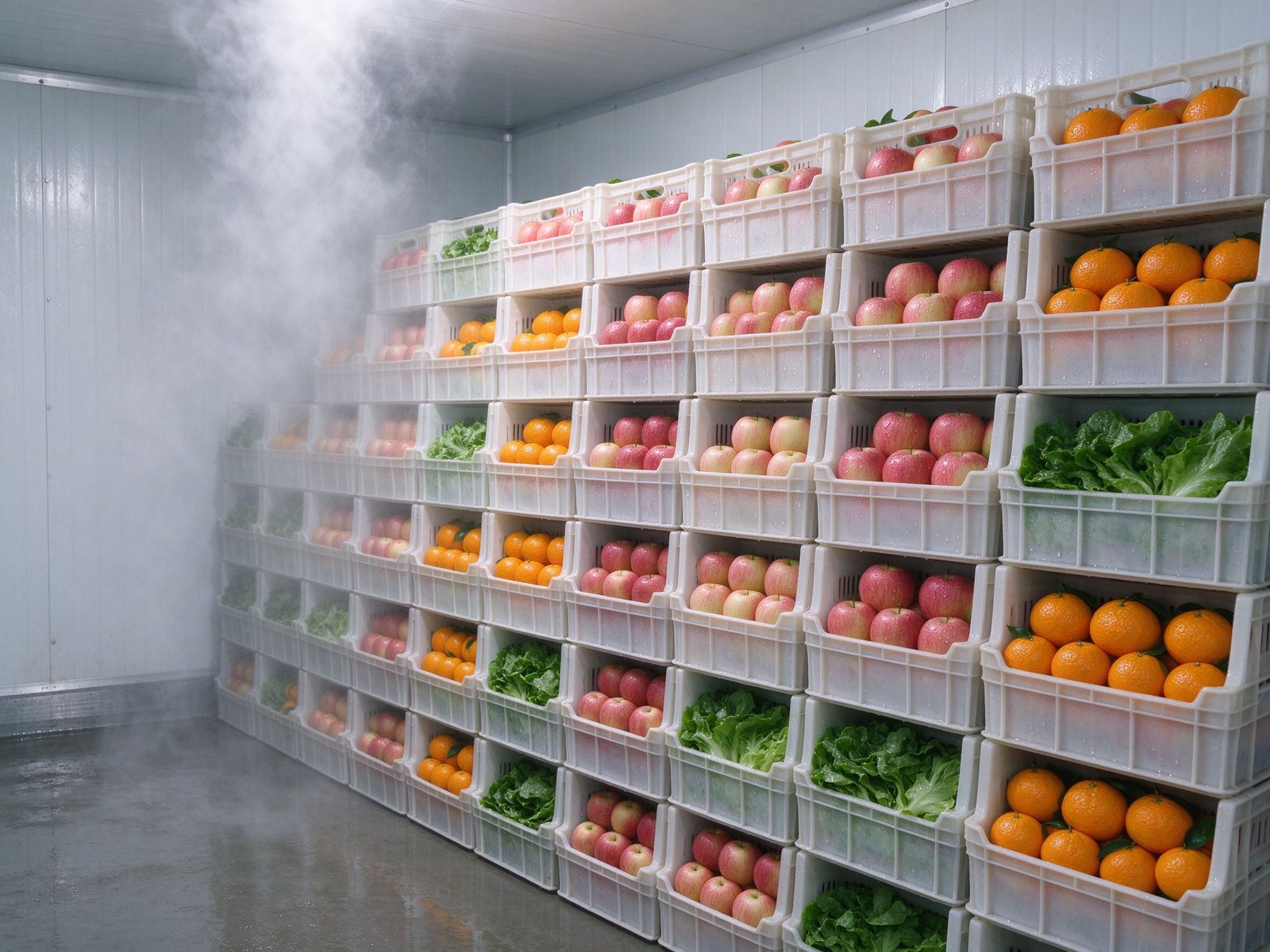
Our fruit and vegetable fresh-keeping cold store is configured around this split, with the tunnel sized on peak day intake rather than total capacity. For a packhouse shipping whole pallets rather than punnets, the large cold chain logistics warehouse layout fits better, with dock doors, racking and a frozen section under one roof.
Humidity, airflow and condensation
Relative humidity in a khalal room sits around 85% to 90%. Below that the skin loses water and looks dull at retail. Above it, water condenses on cold fruit when a warm box is opened, and condensation is the entry point for mould.
- Keep the coil temperature close to room temperature. A large gap between coil and room pulls moisture out of the air and drops it on the coil as frost, which leaves the room dry. A wider coil surface running a smaller gap holds humidity with less defrost.
- Move air over the fruit, not through carton gaps at high speed. Soft rutab bruises and dries at the corners when velocity is too high, so direct discharge along walls and above the stack.
- Stage packed cartons in an ante-room before dispatch. A carton that leaves a 2 C room into 42 C air collects water in minutes, and the box goes soft before it reaches the aircraft.
Defrost follows the same logic. In a date room with steady traffic the coil ices slowly, and demand defrost saves more than a fixed timer, because every cycle adds heat while the fans keep running. We select electric, water or hot gas defrost on the coil and the room, not on a catalogue default.
Freezing rutab for supply outside the harvest window
Freezing is how Gulf packhouses hold soft dates for twelve months and ship in any season. The chain matches any frozen product, with one difference: rutab is soft before it freezes, so handling marks appear after thawing as dark patches and drip loss.
- Pre-cool to about 5 C before the freezer, so the freezer carries the phase change and not the field heat.
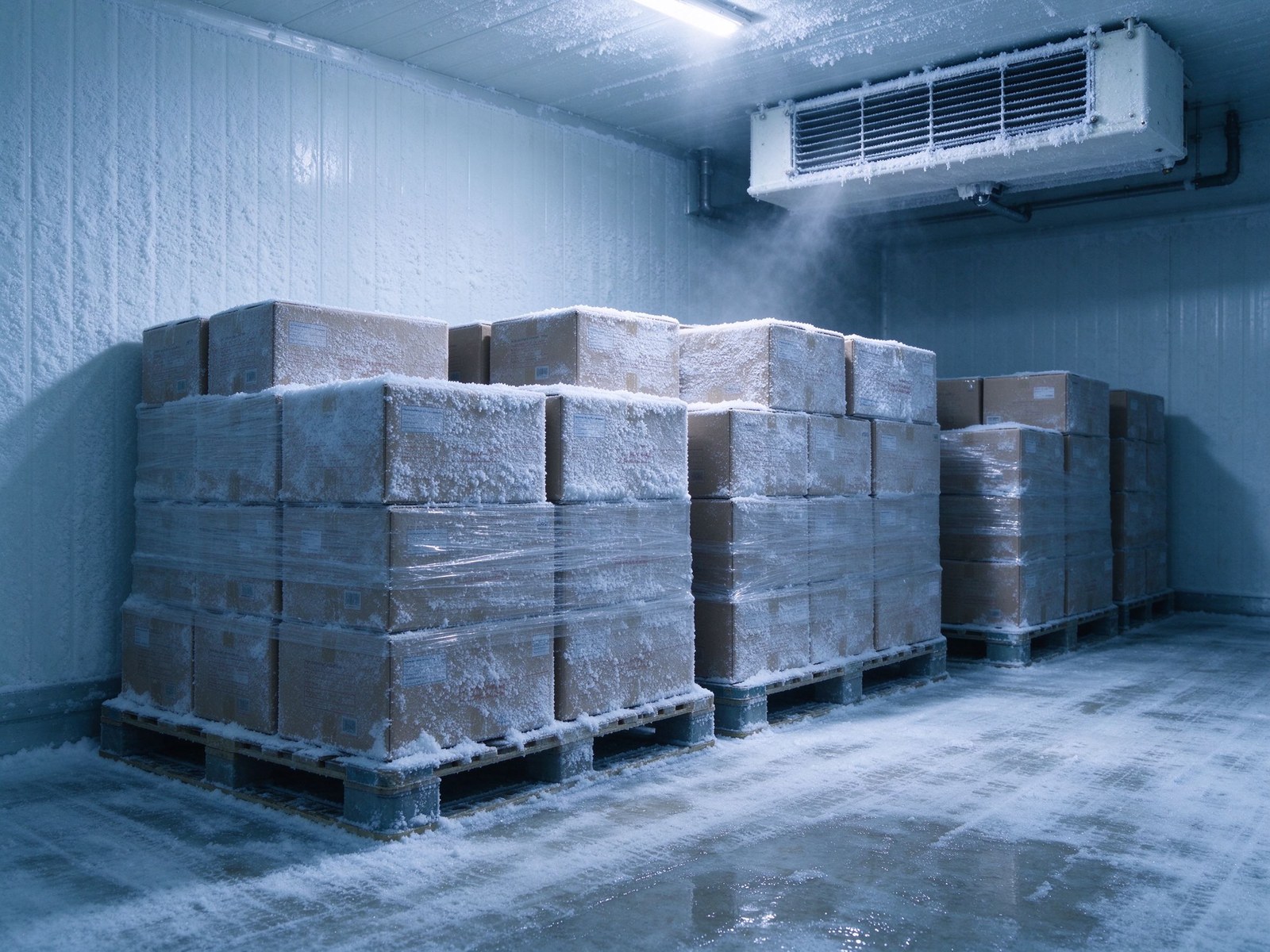
- Freeze in a blast freezer at -35 C to -40 C air until the core reaches -18 C, then move to a frozen storage room held at -18 C or below.
- Stack on pallets with air gaps at the sides and keep the tunnel load even. Uneven loading is the main reason core temperatures never reach target.
- Label each pallet with the freeze date. First in, first out protects texture, and buyers ask for freeze dates more often than suppliers expect.
Freezing changes texture on thaw. Some markets accept it for paste, syrup and confectionery, while some retail programmes will not. Confirm the customer specification before you design the room around freezing.
Treatment and rules before the container leaves
Phytosanitary requirements differ by destination and change often. Many markets require an export permit, a phytosanitary certificate from the national plant protection organisation, and a treatment step for specific pests, such as fumigation or heat treatment, run by an approved facility. Some destinations also require cold treatment, either in a cold store before loading or in a reefer in transit, with calibrated data loggers and a documented temperature profile.
In the Gulf, the authorities include the Ministry of Climate Change and Environment in the UAE, the Saudi Food and Drug Authority in Saudi Arabia, and the Gulf Standardization Organization for shared standards. Rules change, so confirm the current requirement with your importer and the local authority before you commit a container, and build treatment capacity into the store instead of renting it per shipment.
Two design consequences follow. Treated stock needs a segregated room or bay with its own air path, so gas or heat does not reach untreated fruit. Cold treatment needs space and logging, and a room shared with the packing hall cannot hold a stable profile while forklifts work inside it.
What to send us for a quotation
We are an engineering and supply company, not a panel factory. We design the room around your process, supply panels, doors, units, evaporators and controls from a network of vetted manufacturers, and send installation teams when the site needs them.
To quote a date cold store we need:
- Daily intake at peak in tonnes, and the variety mix with khalal, rutab and tamar shares.
- Holding time per stage, and whether freezing is in scope.
- Product temperature on arrival, and the time allowed to reach holding temperature.
- Pallet size and stack height, plus carton dimensions if you ship punnets.
- Room footprint and height, and the ambient design condition for the site.
- Door count, openings per shift, and dock height if you load containers.
- Power supply available, and whether the site needs a standby set.
- Destination markets, so treatment and cold treatment space can be sized in.
Send those numbers and we return a layout, a capacity calculation and a quotation itemised by panel, door, unit, evaporator and control. Where a figure is still open we mark it to be confirmed rather than guess. The energy side shifts with Gulf conditions, covered in where cold room energy actually goes.
Frequently Asked Questions
What temperature should dates be stored at?
It depends on the stage of the fruit. Khalal dates hold best at 0 C to 2 C with 85% to 90% relative humidity. Rutab dates are chilled at about 0 C for short holding, or frozen at -18 C for long storage. Tamar dates keep well at 5 C to 10 C with 65% to 75% relative humidity. Your buyer specification overrides these general ranges.
How long can dates stay in a cold room?
Khalal dates hold for several months near 0 C before texture changes. Rutab dates hold for weeks when chilled and up to about a year when frozen and kept at -18 C or below. Tamar dates hold for months at 5 C to 10 C. Actual life depends on variety, harvest maturity, packaging and how steady the room temperature stays.
Do dates need pre-cooling before storage?
Yes for khalal and rutab picked in Gulf summer heat. Fruit arriving at 40 C or more has to shed field heat within hours, and a forced air tunnel does it faster than a storage room because still air around stacked cartons insulates the fruit. Size the tunnel on peak day intake during the six to ten week harvest, not on total store capacity.
Can dates be frozen for export outside the harvest season?
Rutab dates can be frozen, and this is common practice for year round supply. Pre-cool to about 5 C, freeze in a blast freezer at -35 C to -40 C air until the core reaches -18 C, then hold in a -18 C store. Freezing changes texture on thaw, so confirm with the buyer whether the product will be sold as frozen, for processing, or thawed for retail.
What treatment is needed before a date container ships?
Most markets ask for a phytosanitary certificate from the national plant protection organisation, and some require fumigation, heat treatment or cold treatment for specific pests, carried out by an approved facility with logged data. Requirements differ by destination and change, so confirm the current rule with your importer and the local authority before booking a container.
What information is needed for a date cold store quotation?
Send peak daily intake in tonnes, the khalal, rutab and tamar mix, holding time per stage, whether freezing is in scope, arrival temperature, pallet and carton sizes, available footprint and height, site ambient design condition, door count and openings per shift, power available, and destination markets. With those we return a layout, a capacity calculation and an itemised quotation.