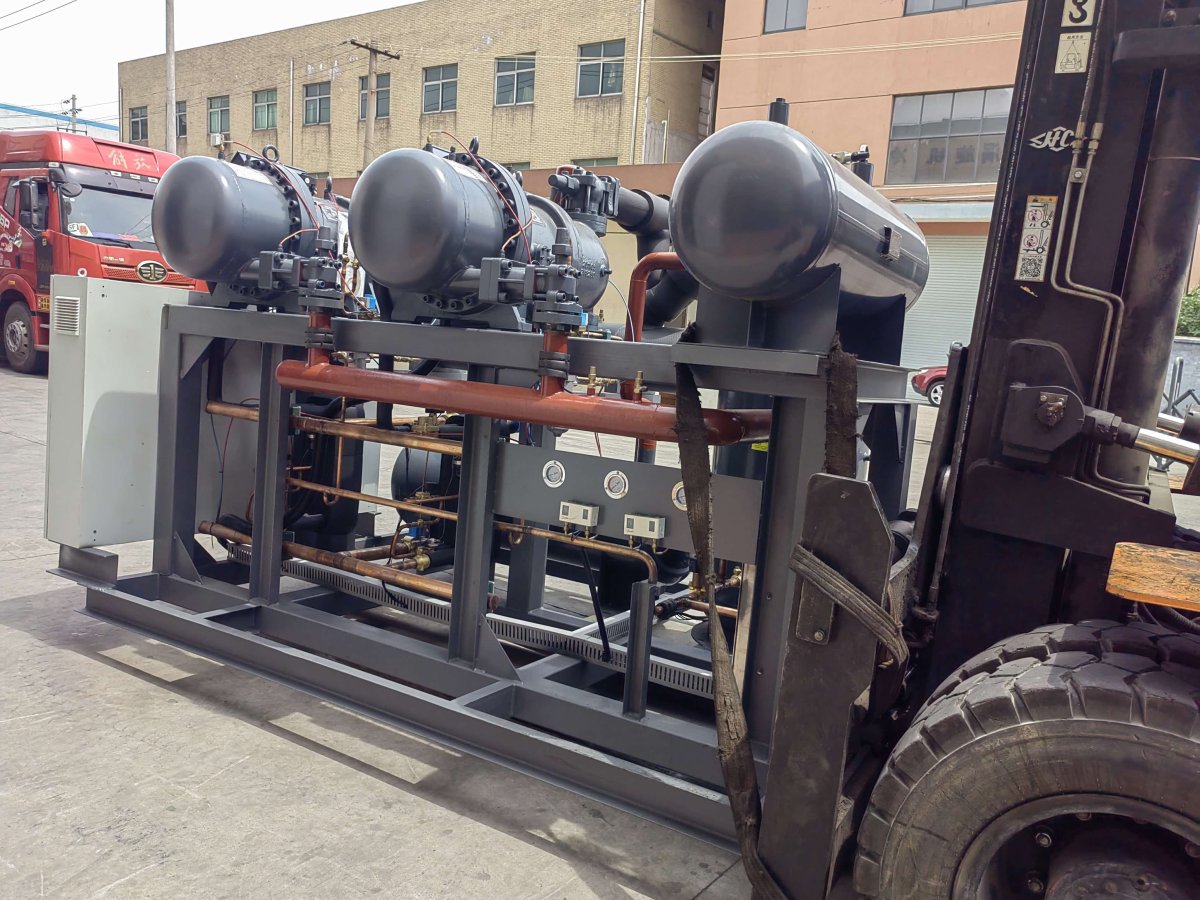
Refrigerant choice for a hot climate is the decision about which working fluid a cold room system will use, taken with the local summer ambient, the condenser pressure it creates, and the rules in that market considered together. In a 45 C plant room it sets the condensing pressure, the pressure ratio, the discharge temperature, the leak behaviour, and what your service team can buy locally five years from now.
ANCOLD supplies cold rooms for markets where 40 to 48 C daytime ambient is normal for months: the Gulf, the Red Sea coast, parts of Southeast Asia, and inland Saudi Arabia. This is the selection logic we use with buyers.
Why ambient changes the refrigerant question
A cold room moves heat from the room to the outside air, and the temperature of that air decides how hard the system works. At 45 C ambient a standard air cooled condenser needs a condensing temperature around 50 to 55 C to reject heat at a useful rate. At 32 C ambient the same condenser can run at 40 to 45 C. The pressure ratio rises sharply, compressor capacity at the evaporator falls by roughly 15 to 25 percent, discharge temperature climbs, and the compressor spends more of its life near its high pressure cut out.
Every refrigerant responds differently. Some carry high pressure at moderate temperature. Some have a critical temperature close to the condensing point you need, which makes them inefficient or impossible to condense. Some have a large glide between bubble and dew point, so the coil behaves as if it runs at a different temperature than the gauge says. The right answer for a 45 C site is often not the cheapest gas or the supplier default.
The realistic shortlist
Synthetic HFCs and HFO blends
R404A and R507A are the classic low temperature workhorses: A1, non flammable, and rated in every compressor catalogue. R507A is near azeotropic, R404A has a glide under 1 K. Both have very high global warming potential, around 3900 to 4000 under AR4. They still sit in large installed bases across the Gulf, but new projects in regulated markets increasingly cannot use them.
R448A and R449A are the mainstream lower GWP replacements for R404A in commercial and medium sized industrial systems. GWP sits around 1400. They are A1 and zeotropic with 4 to 6 K glide, so they must be charged as liquid and the coil selection uses the mean temperature. In most retrofits the expansion valve setting or the valve changes and capacity drops a few percent. R452A has lower glide and a GWP near 2100.
R134a and R513A cover medium temperature rooms and chillers. R134a has a low pressure and a high critical temperature, which makes it comfortable in hot ambient, and its GWP of about 1430 is the reason R513A at roughly 630 exists.
Carbon dioxide
CO2 has a GWP of 1 and is not flammable. The catch in a hot climate is the critical temperature of 31 C. Above it the cycle goes transcritical: the gas cooler outlet temperature tracks the ambient, pressure runs to 90 bar or more, and efficiency falls exactly when the site is hottest. That does not make CO2 unusable. It means the design has to fit: a cascade with CO2 on the low stage and a HFC or ammonia high stage, a booster with parallel compression and an adiabatic gas cooler, or a subcritical system where ambient allows. A straight copy of a Northern European CO2 design will disappoint in Riyadh.
Ammonia
Ammonia has a GWP of 0, excellent efficiency at high condensing temperatures, and a cost per kW of cooling that few refrigerants can match in large plants. It is toxic and classified B2L, so it belongs in industrial rooms with ventilation, detection, and a written emergency procedure, not in a small shop. For a 500 m³ frozen store it is the wrong scale. For a 20,000 pallet distribution centre it is often right.
Propane and other hydrocarbons
R290 has a GWP of 3 and good hot climate performance. It is A3, flammable, and limited by charge size in occupied spaces. It suits small self contained cabinets and condensing units certified as a package, not a field assembled 300 m³ room.
Comparison at a glance
| Refrigerant | GWP (AR4) | Safety class | Glide | Typical role | Note for hot climates |
|---|---|---|---|---|---|
| R404A | 3922 | A1 | About 0.7 K | Low and medium temperature, legacy base | High discharge temperature at high ratio; phase down pressure in regulated markets |
| R507A | 3985 | A1 | Azeotropic, near 0 K | Low temperature, industrial | Same pressure behaviour as R404A, simple to charge, same GWP problem |
| R448A | 1387 | A1 | About 5 K | R404A replacement, commercial and industrial | Charge as liquid, set superheat with care, expect a small capacity change |
| R449A | 1397 | A1 | About 4 K | R404A replacement, wider compressor approvals | Similar to R448A; check compressor and valve approvals first |
| R134a | 1430 | A1 | 0 K | Medium temperature, chillers | Low pressure and high critical temperature, comfortable at 45 C ambient |
| R290 | 3 | A3 | 0 K | Small sealed packages | Good efficiency, charge limited, needs a certified package design |
| R744 (CO2) | 1 | A1 | 0 K | Cascade low stage, booster systems | Transcritical above 31 C; needs cascade, parallel compression or adiabatic cooling |
| R717 (ammonia) | 0 | B2L | 0 K | Large industrial plants | Best efficiency at high condensing temperature, needs industrial safety design |
The argument is rarely about GWP alone. A refrigerant with a perfect GWP number but the wrong pressure or safety class for your site is not a green choice, it is an expensive one.
What actually changes when you choose
Four things move together once the gas is fixed.
- Compressor and condenser sizing. Capacity tables are published at fixed condensing temperatures. At 45 C ambient you need the rating at 50 or 55 C condensing, not the headline figure at 40 C. A unit sold on its 40 C number will look undersized or trip on high pressure in July. That is why we size refrigeration units on site ambient, not room temperature alone.
- Piping and oil. Zeotropic blends need liquid charging and a correct oil return design. POE oil is hygroscopic, so the evacuation standard is stricter than with mineral oil. Ammonia uses mineral oil and different materials. CO2 runs at pressures that change pipe schedules and component ratings.
- Charge and leak strategy. A large HFC charge in a hot plant room with vibration and daily thermal cycling will leak. Leak detection, isolation valves and a service gas plan belong in the design, not in an afterthought.
- Controls and protection. High discharge temperature protection, oil cooling or liquid injection, and floating head pressure control all interact with the refrigerant. A condensing unit that works in Jakarta may need a different fan control strategy in Dammam.
Rules, supply and the final pick
Regulation moves faster than most equipment cycles. The EU F-gas Regulation 2024/573 tightens GWP limits on new commercial and industrial equipment, and the US EPA SNAP and AIM Act rules set their own thresholds. Gulf states and Southeast Asian countries sit at different stages of the same direction of travel. Rules change, and the version that applies is the one in force on the day your shipment clears customs, so confirm it with your importer or the local authority before ordering.
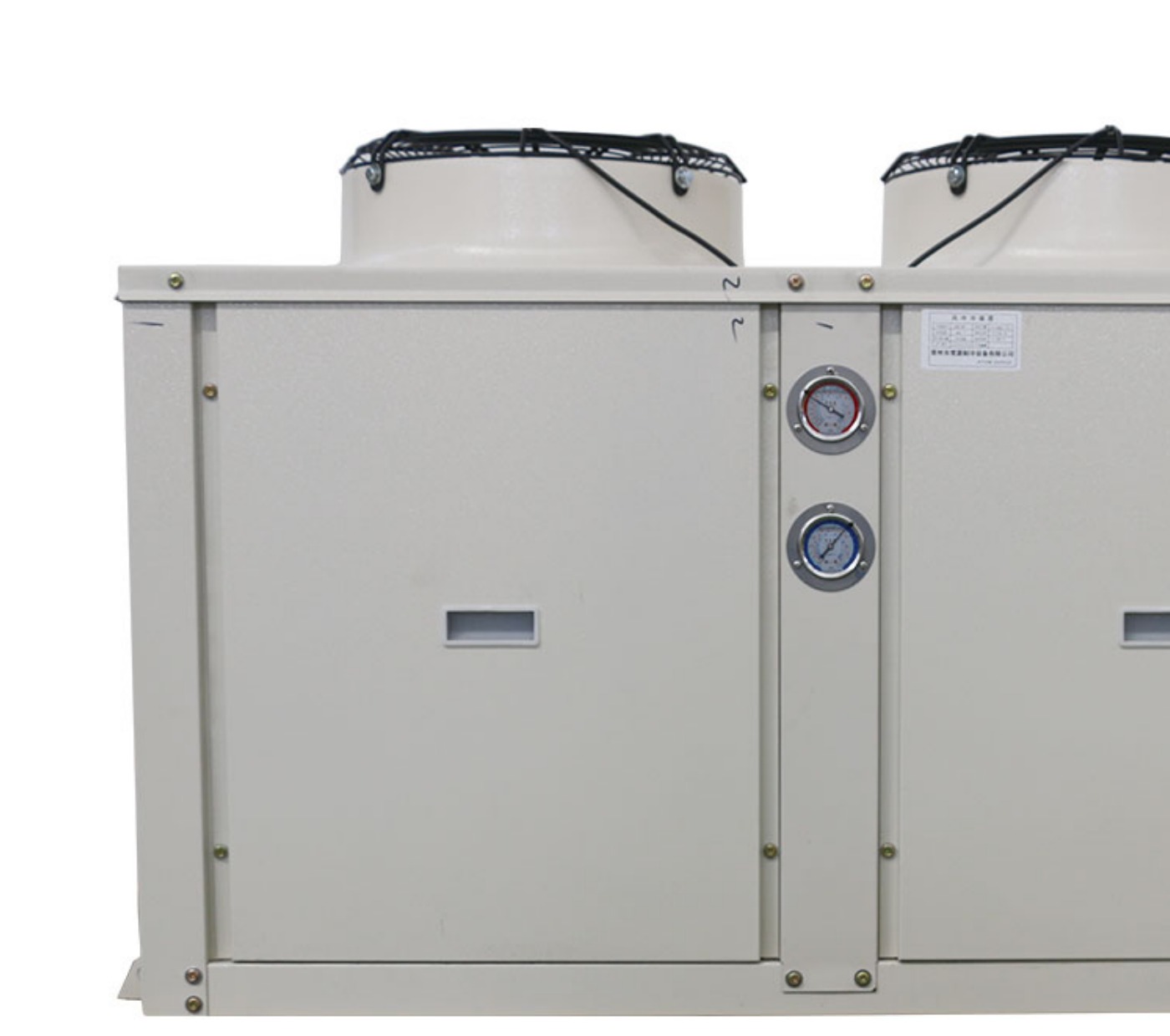
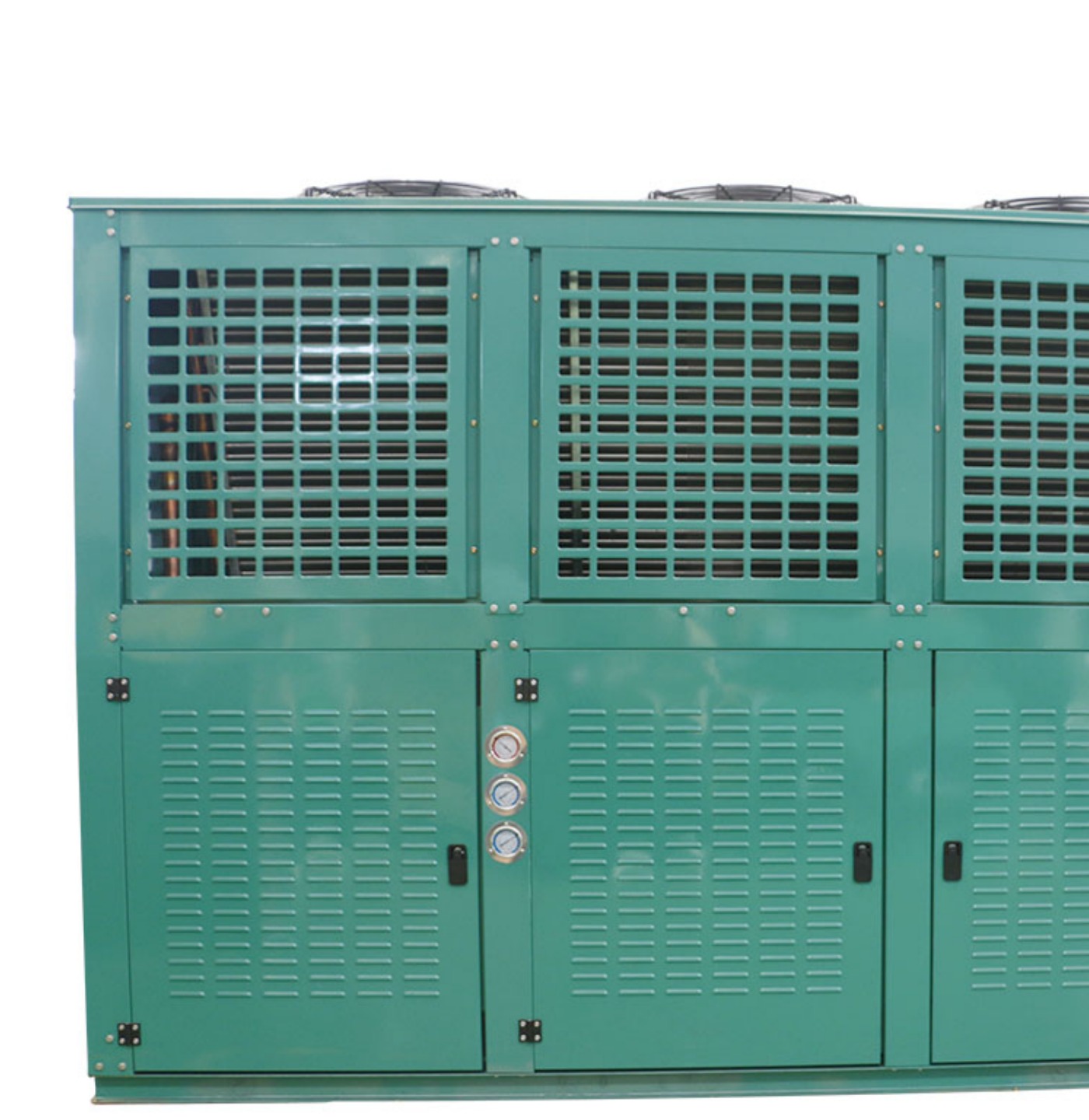
Supply matters as much as the rule. A legal refrigerant unavailable within 300 km is a maintenance risk. Ask who stocks it, what a service bottle costs, and which local contractors have trained on it. In the Gulf, R404A and R448A/R449A are well supported; CO2 and ammonia have a smaller but real industrial contractor base; R290 stays a sealed package product. Our V-shaped air cooled condensers and U-shaped condensers are rated for the gas you choose, and we confirm the rating point in writing.
Existing plants deserve a separate decision. If a room runs on R22, the honest options are keep it on reclaimed gas while it lasts, retrofit to a lower GWP blend with a documented capacity check, or replace at the next major failure. A retrofit without valve changes and a performance test is a guess.
How we would pick for a 45 C site
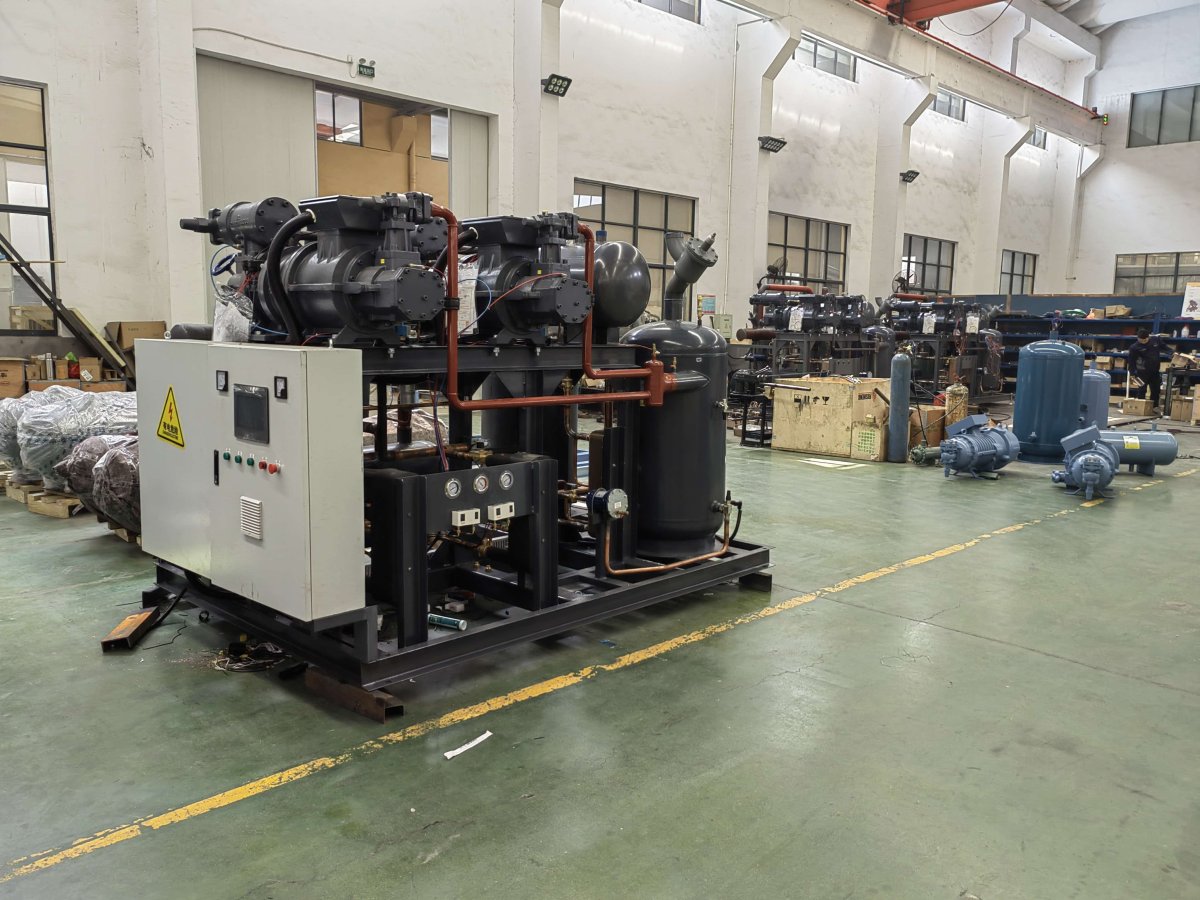
For a small to medium frozen room, we start from a low GWP A1 blend on an industrial condensing unit or a compact screw package, rated at the real ambient, with floating head pressure and a leak plan. For a medium temperature room, R134a or R513A on a unit with a generously sized condenser is hard to beat on stability. For a large distribution centre, ammonia or a CO2 cascade gets serious, because the charge size and the load profile make the efficiency argument decisive. Propane stays in sealed packages.
No refrigerant wins everywhere. The fastest route is to send the site facts and let the selection follow.
For a refrigerant recommendation and a quotation, send us: room volume and internal dimensions, room temperature and product, product entry temperature and daily tonnage, site summer ambient (dry bulb, and whether the plant room is shaded), refrigerant already in use if this is a retrofit, compressor type and model if retained, evaporator count and spacing, power supply and voltage, water availability for a water cooled or adiabatic option, local rules or customer standards that apply, and any drawings or photos of the existing plant. If some of these are unknown, write to be confirmed and we will work with the range you give us.
Related reading: How to Choose a Refrigeration Unit and Condensing Units for 45 C Ambient.
Frequently Asked Questions
Which refrigerant is best for a cold room at 45 C ambient?
There is no single best gas. For a small or medium room, a low GWP A1 blend such as R448A or R449A on equipment rated at 50 to 55 C condensing is the practical choice. For a large distribution centre, ammonia or a CO2 cascade usually wins on efficiency and charge size. The decisive point is the capacity rating at your real ambient, not the headline rating at 40 C.
Can R448A or R449A replace R404A in an existing cold room?
Often yes, but not by a simple gas swap. The blend has 4 to 6 K glide, so it must be charged as liquid and the coil is selected on mean temperature. Expect a small capacity change, check the expansion valve setting or replace the valve, confirm compressor and elastomer approvals, and run a performance test after the retrofit.
Is CO2 practical for cold rooms in the Gulf?
Yes, if the system is designed for the climate. Above the 31 C critical point CO2 runs transcritical, pressure rises to 90 bar or more and efficiency drops. A cascade with CO2 on the low stage, a booster with parallel compression, or an adiabatic gas cooler makes it workable. A straight copy of a Northern European CO2 design will not perform in 45 C ambient.
Does a higher GWP refrigerant give more cooling?
No. Cooling capacity comes from latent heat, vapour density and pressure, not from GWP. GWP is an environmental measure of how much the gas warms the atmosphere if released. A high GWP gas can be an excellent refrigerant and still be the wrong choice under current rules.
What are the charging rules for zeotropic blends?
Charge as liquid from the cylinder, never as vapour, because the components boil at different rates and the charge composition would drift. Use the mean coil temperature for selection, allow for glide in the superheat setting, and if the system leaks badly, recover and recharge rather than top up.
What do you need from me to recommend a refrigerant?
Room volume and dimensions, room and product temperature, daily tonnage, site summer ambient and whether the plant room is shaded, the gas already in use for a retrofit, compressor model if retained, evaporator count and spacing, power supply, water availability, and any local rules or customer standards. Send drawings or photos where you have them; unknown items can be marked to be confirmed.