Door condensation is water vapour from the warm side of a cold room turning into water or ice on any surface that sits below the dew point. It shows up as a wet band across the door face, a puddle on the floor, a white edge of frost at the frame, or a sheet of ice on the threshold that nobody notices until a pallet truck slides. The door is usually where it happens first, because the door is the one part of the envelope that opens, closes, and carries a thermal bridge from the room to the outside air.
Most Gulf and Southeast Asian callbacks are not about the panel. They are about the door: the frame sweats, the gasket freezes, the threshold turns into a skating rink, and the room slowly loses temperature. Most of it is predictable and fixable without replacing the room.
Sweat outside and ice inside: one cause, two fixes
Condensation on the warm face and frost on the cold face share a cause, but they need different treatment.
Outside sweat. Air at 32 °C and 70% relative humidity has a dew point near 26 °C. If the outer skin of a door frame sits at 22 °C, moisture in the air condenses on it. A freezer room door in Dubai or Jeddah will sweat on almost any summer day if the frame has no heater and no thermal break.
Inside frost. On the cold side the surface is already below freezing. Water vapour that enters through an open door, a worn gasket, or a gap at the frame deposits as frost on the coldest surface it meets: the door leaf, the frame edge, the ceiling near the opening, and the floor slab. That frost melts during defrost or cleaning, refreezes at night, and after a few weeks you have ice at the threshold and a gasket that no longer closes.
The two often appear together: water that condenses outside runs down the frame, finds a joint, and freezes inside, and ice inside holds the door slightly open.
- Open time. Every opening exchanges room air with outside air. A 2 m x 2.4 m doorway held open for 30 seconds in a 30 °C, 70% RH ambient pulls in a large volume of moist air, and forklift traffic every few minutes keeps the surfaces near the opening below the dew point.
- Frame thermal bridge. A steel frame bolted straight through the panel, with no thermal break, conducts cold to the outside face. The frame becomes the coldest surface on the warm side, so it sweats first, whatever the leaf does.
- Gasket wear. Gaskets harden at low temperature and tear at the corners. Once a gasket stops sealing, the leaf becomes a cold surface fed by moist air, and frost builds along the hinge or the leading edge.
- Floor slab and threshold. The floor under the opening is the most exposed part of the envelope. With no insulation or heater under the threshold, the slab reaches below 0 °C and any water that lands there freezes. Ice at the threshold is almost always a floor problem, not a door problem.
- Wet cleaning, product and defrost water. Hosing the room or mopping with warm water adds vapour right at the surface, and rooms cleaned daily sweat most in the hour after. Warm product and wet cartons release moisture too, and a blocked drain pan or a long defrost cycle puts water on the floor near the door, where it refreezes.
Hardware that keeps a door dry
Condensation control on doors is a set of hardware decisions made at quotation. Retrofitting later costs more and works less well.
Heated frames. Anti-sweat heaters are low-wattage resistance elements inside the frame profile, sized to hold the outer face a few degrees above the dew point. On a freezer room in a hot climate they are standard, not optional. Draw is a few hundred watts per door, running continuously in summer.
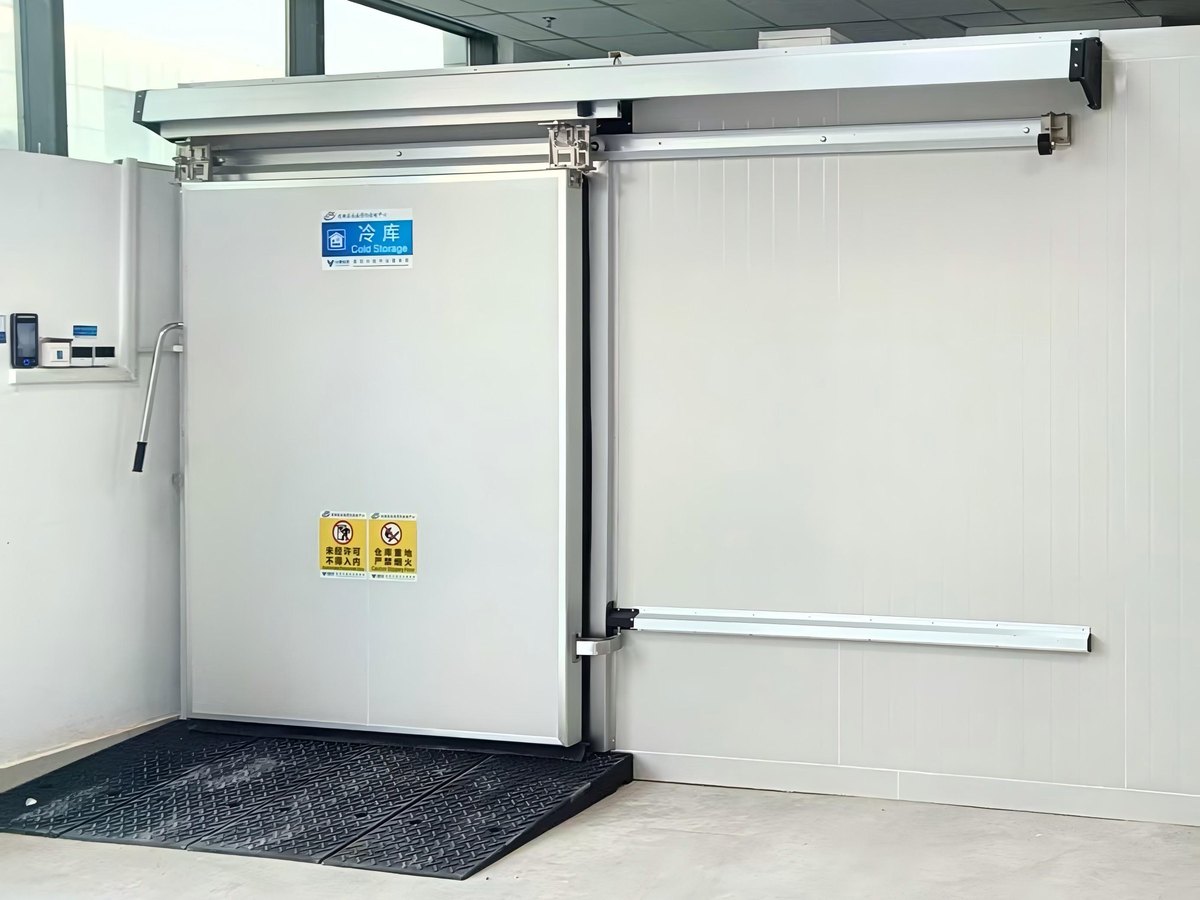
Thermal breaks. A frame with a proper thermal break keeps the outer profile near ambient so the heater has less work to do, and stops the cold bridge that frosts the inside edge. On electric sliding doors and heavy-duty sliding doors this detail sits in the frame section, so it has to be specified, not assumed.
Heated thresholds. A low-wattage cable or mat under the threshold keeps the floor at the door above freezing. This is the most effective fix for ice at a freezer doorway, and it is cheap compared with replacing a floor.
Gaskets that stay soft. EPDM or silicone holds its shape at -25 °C better than cheap PVC blends. Double gaskets on sliding leaves, with a gasket on both leaf and frame, cut the trickle of air that feeds frost.
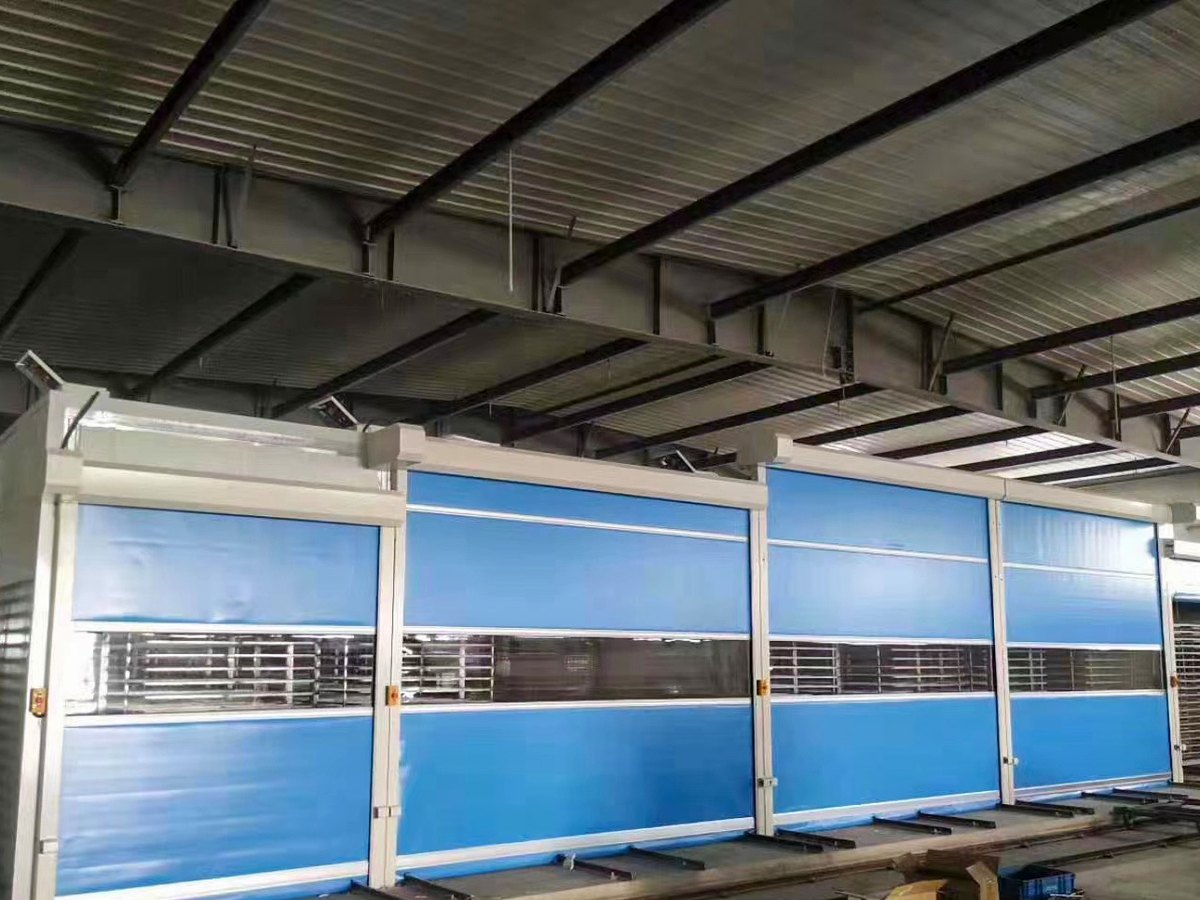
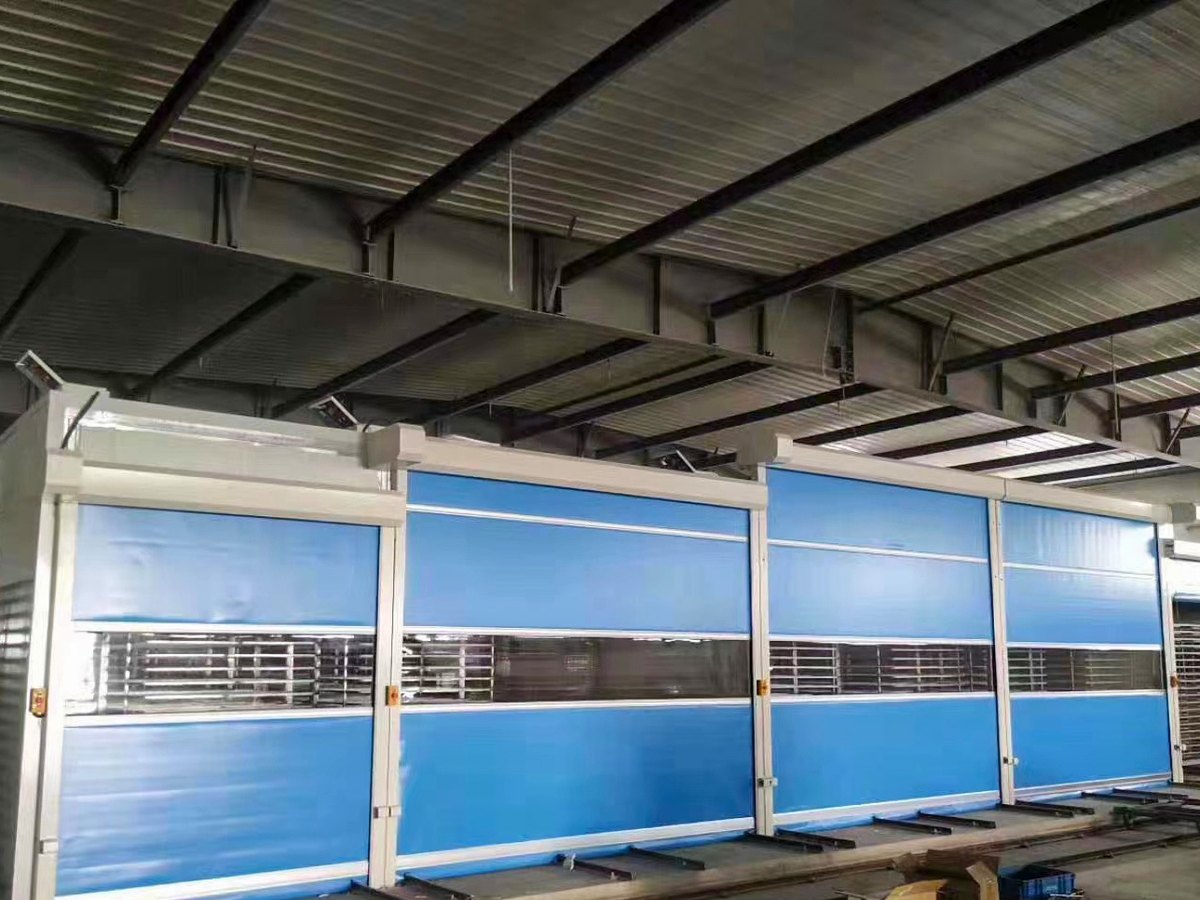
Fast doors. Opening time is the biggest single variable. A high-speed roll-up door that opens and closes in about two seconds exchanges far less air than a manual slider open for a minute.
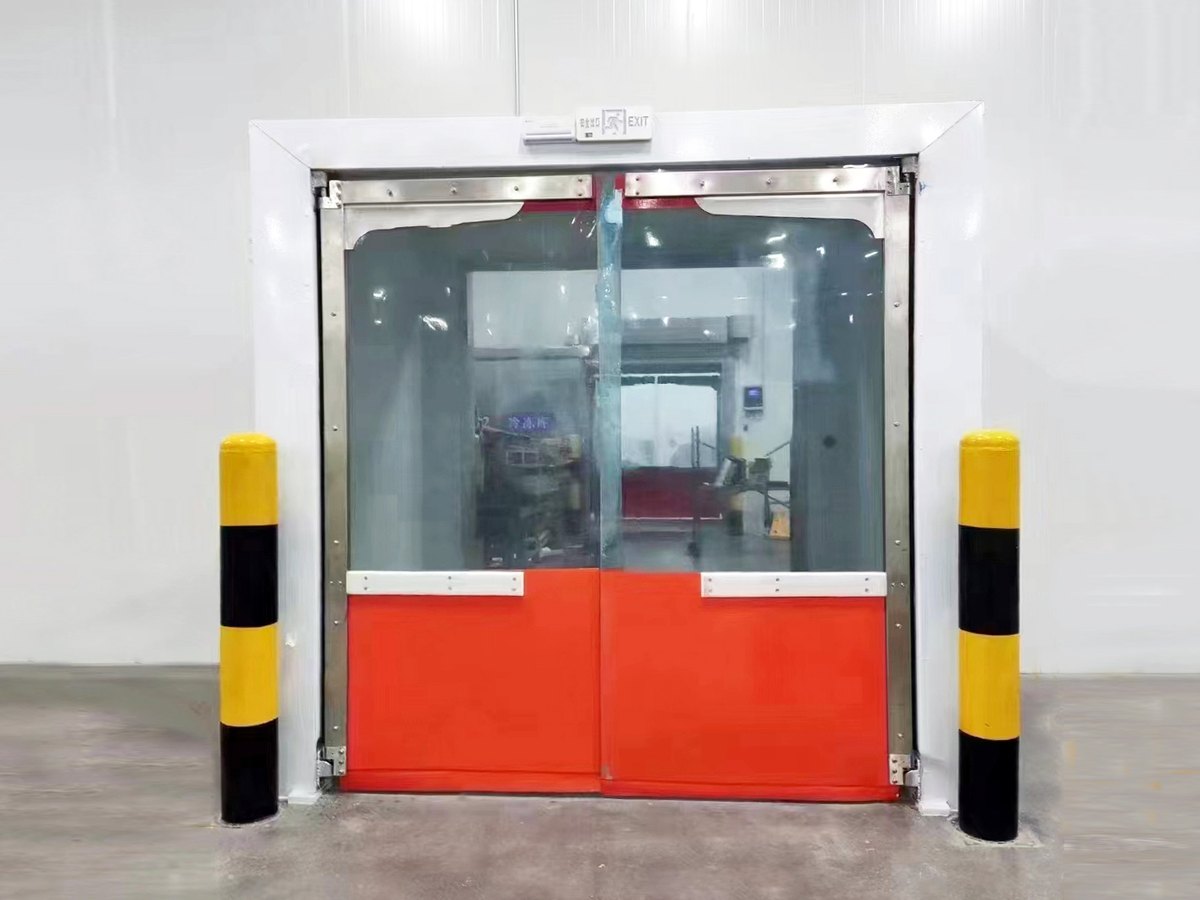
Strip and impact doors. Where doors are left open by habit, PVC impact doors give a partial barrier a truck can push through. They reduce infiltration but do not seal, so they suit doorways where traffic is constant and a hard door would be destroyed.
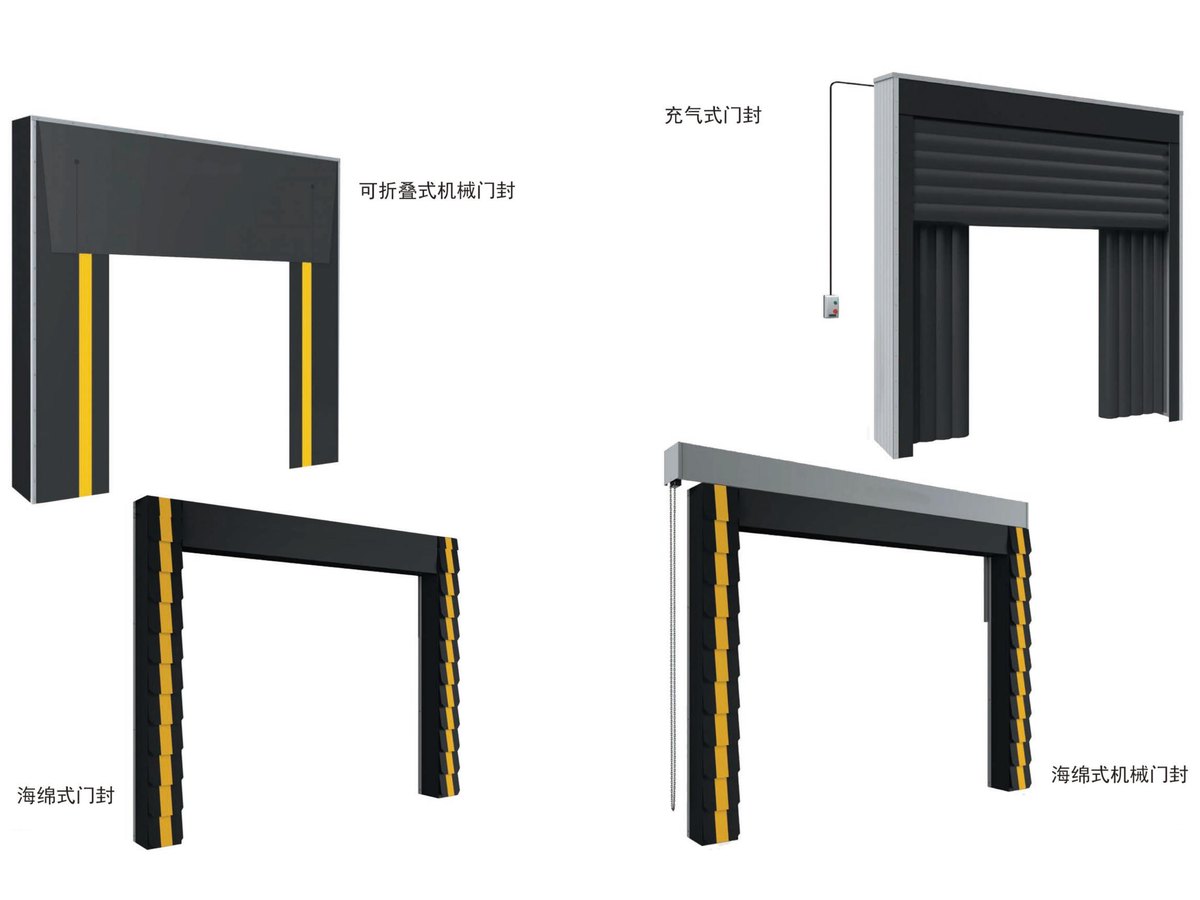
Dock seals. At a loading bay the trailer opening, not the door, is the leak. A dock shelter or seal closes the gap between trailer and wall, and a hydraulic dock leveller keeps the floor line tight enough that air does not pass under the pallet.
| Door type | Typical open time | Where condensation shows first | Heater needed | Best fit |
|---|---|---|---|---|
| Manual sliding | 20–60 s | Outer frame, gasket corners | Yes on freezer and chilled rooms in hot climates | Low traffic, wide openings, stores and processing rooms |
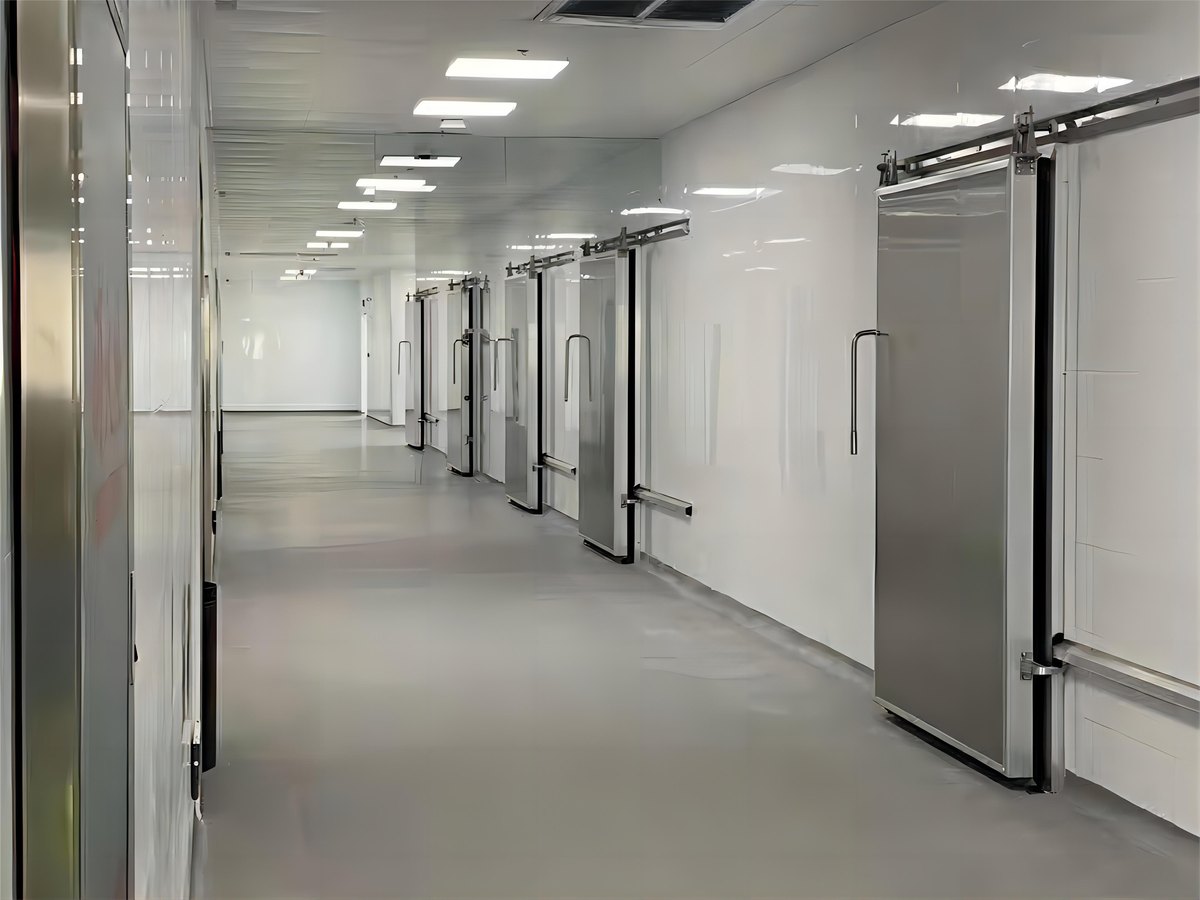
| Electric sliding | 4–10 s | Frame edge, threshold | Yes, plus heated threshold on freezer rooms | Medium traffic, cold store and freezer rooms |
| High-speed roll-up | 1–3 s | Side guides, floor line | Optional, mainly for the frame | High traffic, chilled distribution and packing rooms |
| Hinged | 10–30 s | Hinge side, bottom gasket | Usually on the frame only | Small rooms, personnel access, infrequent use |
| PVC strip or impact | Continuous | Floor, strip edges | No | Constant traffic where a hard door would be hit |
| Dock door with seal | Per trailer | Trailer gap, leveller pit | Rarely, seal quality matters more | Loading bays, dispatch, cross-dock |
Diagnosing a door that already ices up
Before ordering anything, spend an hour with an infrared thermometer and a torch. The pattern tells you which cause is active.
- Measure surface temperatures. Read the outer frame, the leaf centre, the threshold, and the room air. If the outer frame is more than about 5 °C below ambient, the thermal break or the heater is the problem.
- Check the heater circuit. A failed element or a tripped breaker looks exactly like a door with no heater. Measure continuity and current draw; a heater that draws nothing is dead.
- Look at the gasket line. Run a hand or a smoke pencil round the closed door. Frost in one band usually means a torn gasket or a leaf that is not sitting square. Ice at floor level points to an unheated slab; water that never freezes points to a drain or defrost problem.
- Time a traffic cycle. If the door stays open for minutes at shift change, no heater keeps up; the fix is a faster door or a traffic rule.
Fix gasket and alignment first, then heater and threshold, door type last. A high-speed door solves infiltration, but it will not fix a frame with no thermal break or a floor that freezes from below.
Specifying doors for hot, humid sites
In the Gulf the design ambient for a door is often 45 °C, with high humidity in coastal cities. In Southeast Asia it is 33 °C at 80% RH most of the year. Both push the dew point above any unheated surface, so the default specification changes.
For a freezer room at -18 °C or -25 °C, we normally propose a heated frame, a heated threshold, a thermal break in the frame, and double gaskets. For a chilled room at 0 to 4 °C the frame heater is still worth having in coastal Gulf sites, and a high-speed door is the stronger measure if traffic is heavy. Fruit and vegetable rooms at 8 to 12 °C see milder condensation, but the rules at the floor line stay the same.
Three details get missed in quotations. The clear height has to leave room for the heated threshold without a step. The power supply for heaters and the operator has to stay live during washdown. The frame has to be detailed at the panel joint, because that joint is where water finds its way in. Our door range covers sliding, hinged, high-speed, impact and dock types, and frame details are agreed per project rather than assumed.
Door and fire rating rules differ by market and they change. Confirm the requirement with the importer or the local authority before the order is placed.
What we need to quote a door that stays dry
Send these items and we can size the door, the heater and the threshold properly:
- Room type, operating temperature and defrost setpoint
- Design ambient temperature and relative humidity, summer and winter
- Clear opening width and height, plus panel thickness at the opening
- Traffic in pallets or carts per hour, peak and average, and whether the door is left open at shift change
- Floor finish and whether a step at the threshold is acceptable
- Power supply for heaters and operators, and whether it stays live during washdown
- Door type preference, or the constraint that decides it: headroom, wind, truck impact
- Any fire rating, hygiene or insurance requirement that applies on site
Photos of the doorway, especially the floor line and frame joint, help more than a description. On choosing between types, see Sliding, Hinged or High-Speed: Cold Room Door Selection. If the room is wet and not just the door, Electric, Water or Hot Gas Defrost for Cold Rooms covers where that moisture starts.
ANCOLD is a cold room engineering and supply company working with a network of vetted manufacturers. We design the envelope and door package, supply the equipment, and work with trusted installation teams on installation and commissioning, including outside China. Tell us the room, the climate and the traffic, and we will put the door detail on paper before anything is ordered.
Frequently Asked Questions
What causes condensation on a cold room door?
Warm, humid air meeting a surface colder than the dew point. On a cold room the door frame is usually the coldest surface on the warm side, because a steel frame without a thermal break conducts cold straight through the panel. Worn gaskets and long door opening times feed the same problem from the inside.
Why does ice build up at the bottom of a freezer door?
Water arrives at the threshold from cleaning, defrost or condensation, and the floor slab under the opening is below 0 C because it has no insulation or heater. The water freezes there and stays. Ice at floor level is usually a floor detail problem rather than a door leaf problem.
Does a cold room door need a heater?
On freezer rooms in hot climates, yes: a heated frame and a heated threshold are standard. On chilled rooms at 0 to 4 C a frame heater is still worth having in coastal Gulf sites. The heater holds the outer face above the dew point and keeps the floor at the doorway above freezing. Wattage is sized per door and per site.
Can a high-speed door reduce condensation?
It reduces the air exchange that drives condensation, because the door is open for about two seconds instead of twenty to sixty. That cuts how much moist air enters the room and how much cold air leaves. It does not fix a frame with no thermal break or a floor slab that freezes from below.
How do I stop the door frame from sweating?
Check three things in order: the frame needs a thermal break, the anti-sweat heater needs to be working, and the gasket needs to seal. An infrared thermometer on the outer frame tells you which one is missing. If the frame sits more than about 5 C below ambient, the heater or the thermal break is the problem.
What information do you need to quote a cold room door?
Room type and operating temperature, design ambient temperature and humidity, clear opening size, panel thickness, traffic per hour at peak and average, floor finish, power supply for heaters, door type preference and any fire or hygiene requirement. Photos of the existing doorway help, especially the floor line and frame joint.