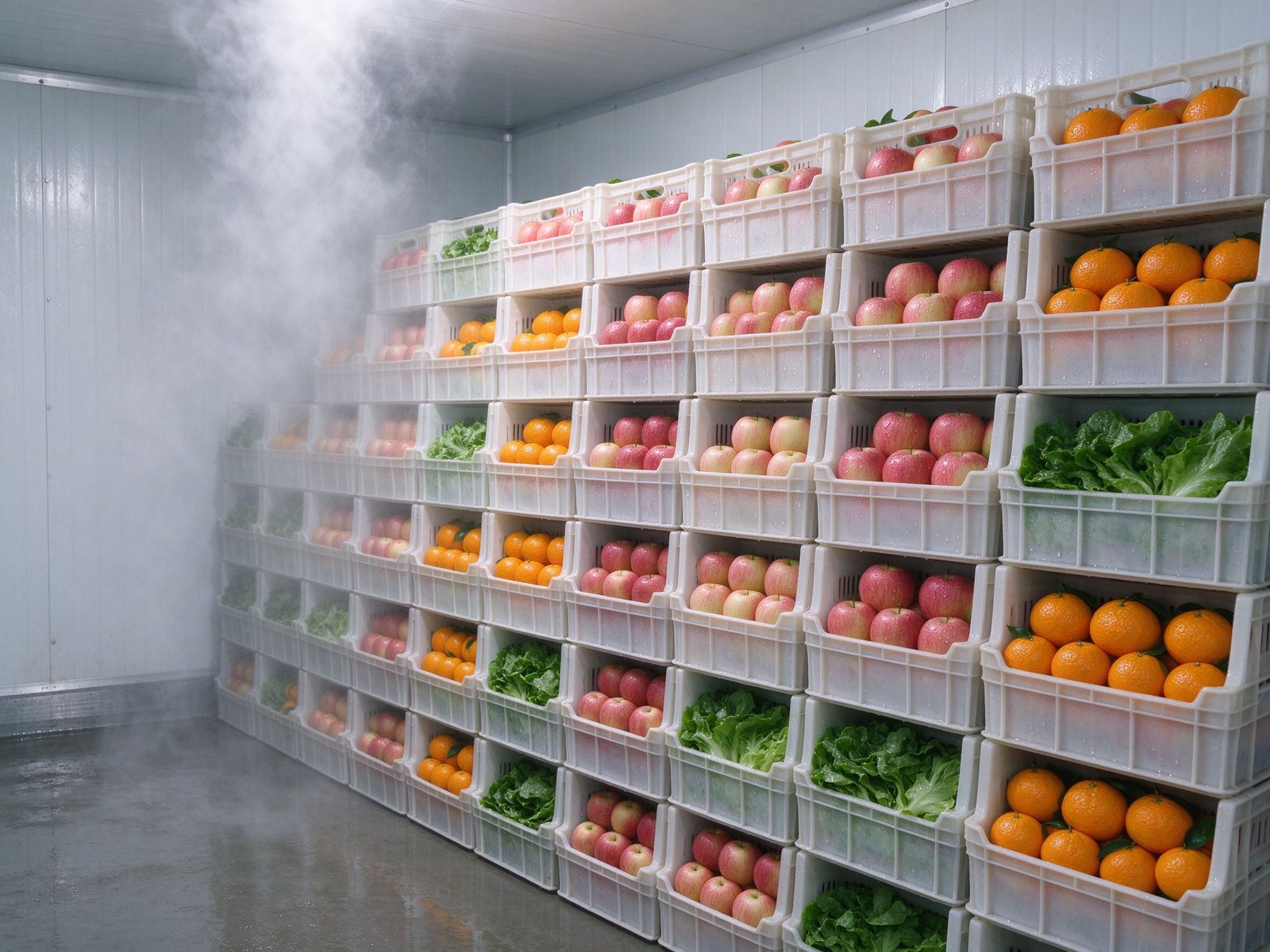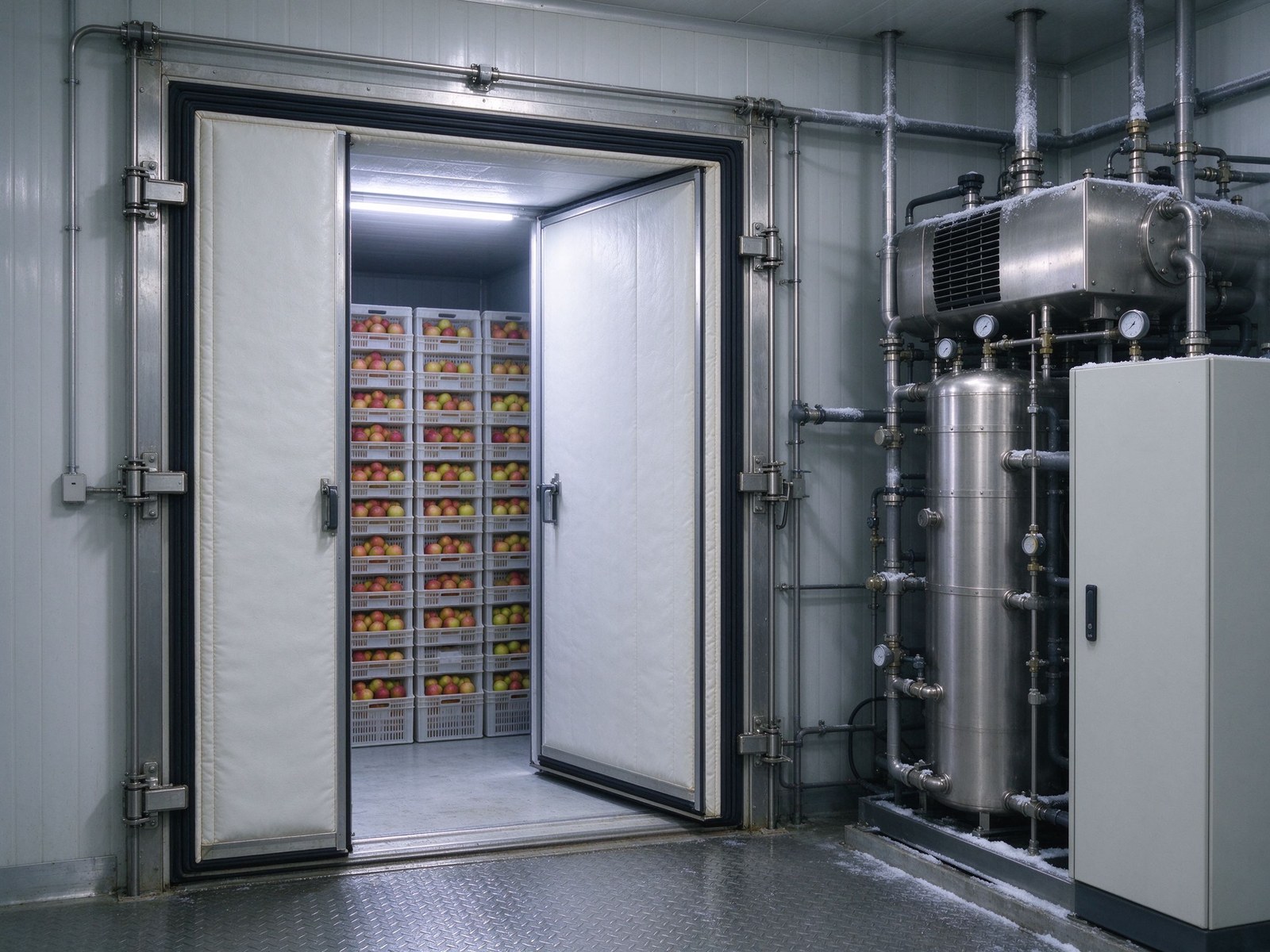
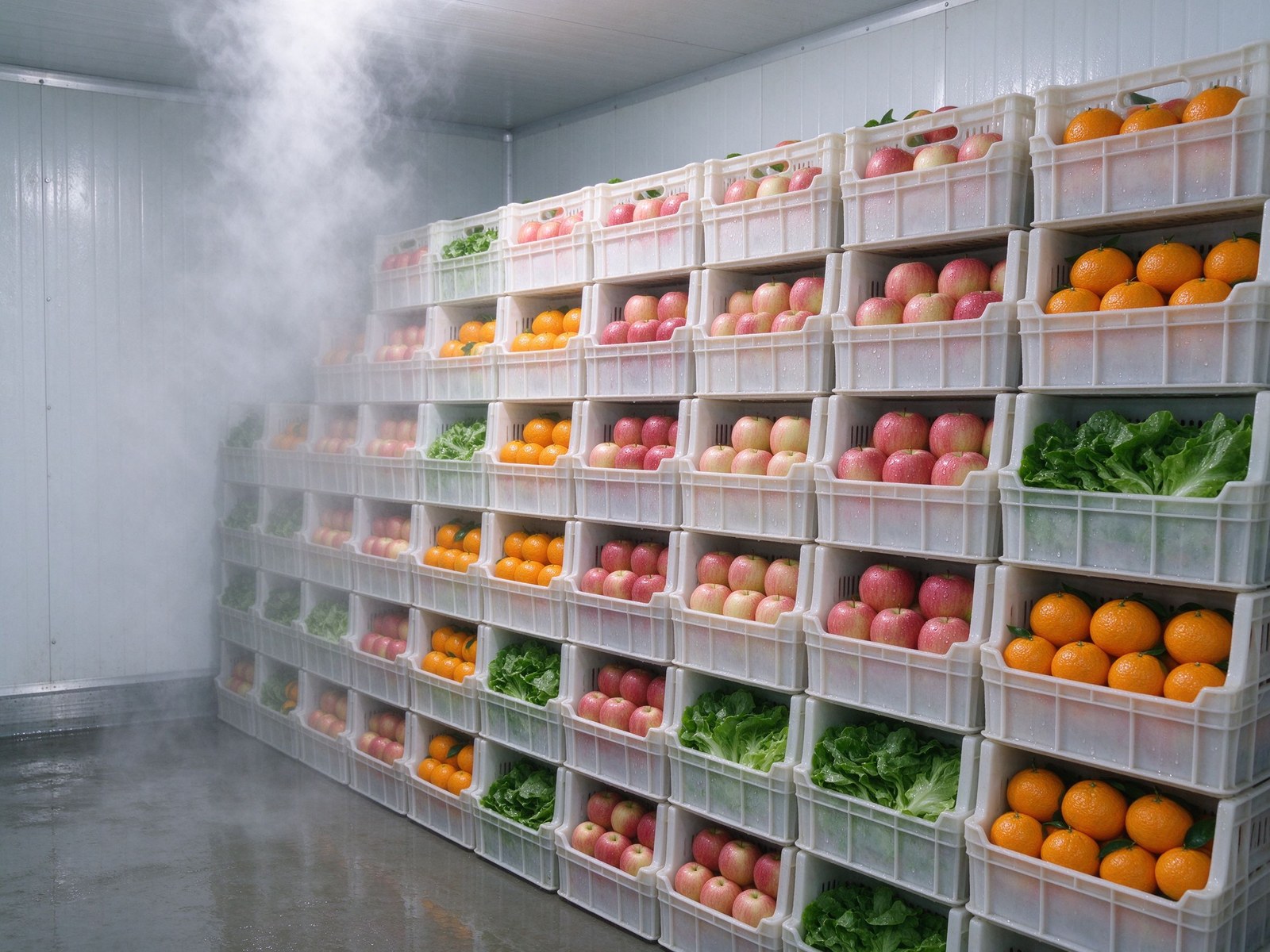
Pre-cooling is the removal of field heat from fruit in the first hours after harvest, before the crop goes into a cold store, a container or a truck. It is a separate step from cold storage: the store holds a temperature, the pre-cooler brings the fruit down to it fast enough to slow respiration, water loss and ripening.
Most of the shelf life a grower loses is lost on the day of harvest, not in the store. Fruit picked at 28 C and stacked in a shed until the afternoon can lose a week of marketable life before the compressor starts. A three-hour pull-down instead of twelve changes the outcome more than another 20 mm of panel in the store behind it.
Why field heat is the first problem to solve
Respiration rate roughly doubles for every 10 C rise in pulp temperature across the range that matters for most fruit. At 30 C a mango or a peach is burning sugar and water fast, and the heat it generates adds to the heat already in the flesh. Cooling the fruit early slows that reaction and removes the heat load the cold store would otherwise have to pull out of the product itself.
The practical target is not the store temperature. It is about seven eighths of the way there. If fruit is at 30 C and the cooling medium is at 4 C, the gap is 26 K; seven eighths of that is 22.75 K, so the target pulp temperature is about 7 C. Chasing the last degree takes as long as the first seven and delivers little. The seven-eighths rule is the number to design and measure against.
Cooling speed is set by three physical facts: the surface area of the fruit, the path the cold air or water takes to reach it, and the packaging in between. A pallet of loose oranges cools far faster than the same weight of berries in closed punnets inside a sealed carton. No amount of refrigeration capacity fixes a stack where air flows around the pallet instead of through it.
Water loss runs alongside. Most fruit is over 80% water, and every 1% of weight lost is 1% of saleable product. Forced-air cooling is effective and drying; hydrocooling is fast and adds water; vacuum cooling removes water on purpose.
Five pre-cooling methods compared
There is no single best method. The crop, the package, the water supply and the labour pattern decide it.
| Method | How it works | Typical time to seven-eighths | Good fit | Limits and watch points |
|---|---|---|---|---|
| Room cooling | Palletized fruit sits in a cold room with fans and natural or gentle forced air | 12–24 h, longer for dense stacks | Citrus, apples, onions, potatoes, crops that tolerate slow cooling | Slowest; hot spots in the middle of a stack; the room is occupied for a full day |
| Forced-air (pressure) cooling | A fan pulls cold air through the stack from one side, so air passes the fruit rather than around the pallet | 2–6 h for most berries, stone fruit and grapes | Berries, cherries, grapes, peaches, packed pallets | Dries the product; carton vents must line up; stack must be sealed to the plenum |
| Hydrocooling | Cold water is showered over or flowed through a bulk bin or packed carton | 10–40 min for spherical fruit | Sweet corn, melons, peaches, citrus, crops that tolerate free water | Water sanitation and pH control are critical; wet cartons weaken; not for berries or wet-sensitive packs |
| Vacuum cooling | Produce sits in a chamber at reduced pressure, water evaporates from the leaves and takes heat with it | 20–40 min for leafy crops | Lettuce, spinach, herbs, leafy greens, mushrooms | Costly per batch; weight loss of roughly 1–2% for a typical pull-down; bulky, wet product loads limit batch size |
| Package or top icing | Crushed ice is placed on or around the carton and melts against the product | 2–8 h, uneven | Sweet corn, broccoli, leafy crops on short runs | Meltwater, carton collapse, sanitation; hard to control and hard to record |
Two variants matter in practice. A forced-air tunnel is a batch cooler with a fan wall, a plenum and a curtain, cooling one or two rows of pallets at a time. A flow cooler moves product through a cooling zone on a belt or in a bin and suits a steady stream rather than batches.
Hydrocooling deserves its own caution. Water cools fast because its heat capacity and contact are high, but the same water spreads spoilage organisms from one bin to the next. Sanitiser dose, pH, turbidity and water change frequency belong in the operating procedure, not in a verbal instruction to the shift. Ice has the same problem: meltwater on a packhouse floor is a slip and microbial risk.
Sizing and designing a pre-cooler
The arithmetic that matters
Pre-cooling capacity is a heat removal sum, not a compressor catalogue number. The duty is the mass of fruit per batch, the specific heat of the product, and the drop from harvest temperature to target.
Take an 8 t batch of stone fruit harvested at 28 C, cooled to 6 C, with a specific heat around 3.6 kJ/kg·K. The heat to remove is 8,000 × 3.6 × 22, which is about 634,000 kJ or 176 kWh. Spread over a six-hour pull-down, that is an average of about 29 kW. Add fan power, heat leaking through the walls, door openings and a margin for a warm batch, and the refrigeration duty lands near 38 kW. The same batch cooled in three hours needs roughly double the duty, plus more air and a bigger coil.
Three numbers drive the design:
- Peak intake, not average. Harvest arrives in a two or three hour window. The cooler is sized for the peak day of the peak week, and the store is sized for the daily intake that follows.
- Batch size and turn time. One tunnel cooling 10 t in six hours is not the same as one cooling 5 t in three hours twice. Both need the same tonnes per day and very different air and refrigeration.
- Product load versus air load. A cooler that pulls air down quickly but leaves the centre of a pallet warm has cooled the air, not the fruit. Pulp temperature probes, inserted into representative fruit in the middle of the stack, are the only honest measurement.
Details that decide whether it works
Air path. In a forced-air cooler, the fan must see resistance through the stack. Curtains, a plenum, and sealed pallet faces force air through the vents. If half the air escapes around the pallet, the fruit cools at half the rate and the fan runs longer.
Stack layout. Carton vent holes must line up from pallet to pallet and row to row. Mixed pallets, closed punnets, or cartons stacked against the fan wall create bypasses.
Humidity and coil temperature. A coil that runs far below room temperature strips moisture from the air and from the fruit. A small coil temperature difference, typically 3–5 K, holds room humidity high and cuts weight loss. For leafy crops, a humidifier or a wet floor keeps the air near saturation.
Water quality for hydrocooling. Cold, clean water at a controlled pH, with sanitiser dose and turbidity checked each shift. Warm return water that is not re-cooled will stop cooling after the first hour.
Instrumentation. Air temperature is not pulp temperature. Use calibrated probes in the fruit, log every ten minutes, and keep the records with the batch. Buyers increasingly ask for them, and they settle arguments about whether a load was cooled.
Hygiene and drainage. Wet floors, condensate and meltwater need falls, drains and a cleaning routine.
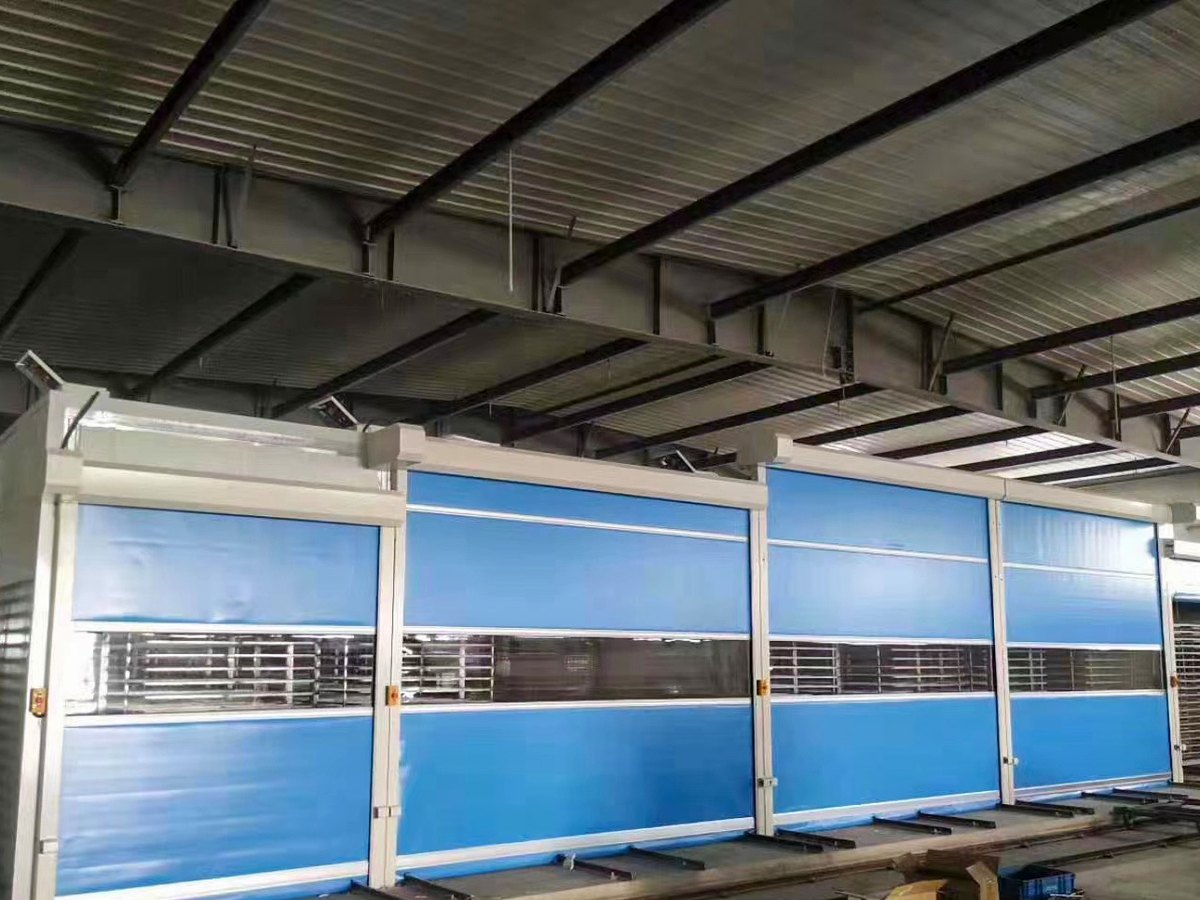
Layout and transfer. The cooler should sit between the receiving area and the store, so fruit moves once. Long transfers through open doors give back part of the cooling you just paid for. A high-speed door between cooler and store keeps the transfer short and the rooms apart.
Matching the pre-cooler to the cold store behind it
A pre-cooler is the front end of a chain: receiving, cooling, storage, dispatch. Each link has a different job and a different temperature.
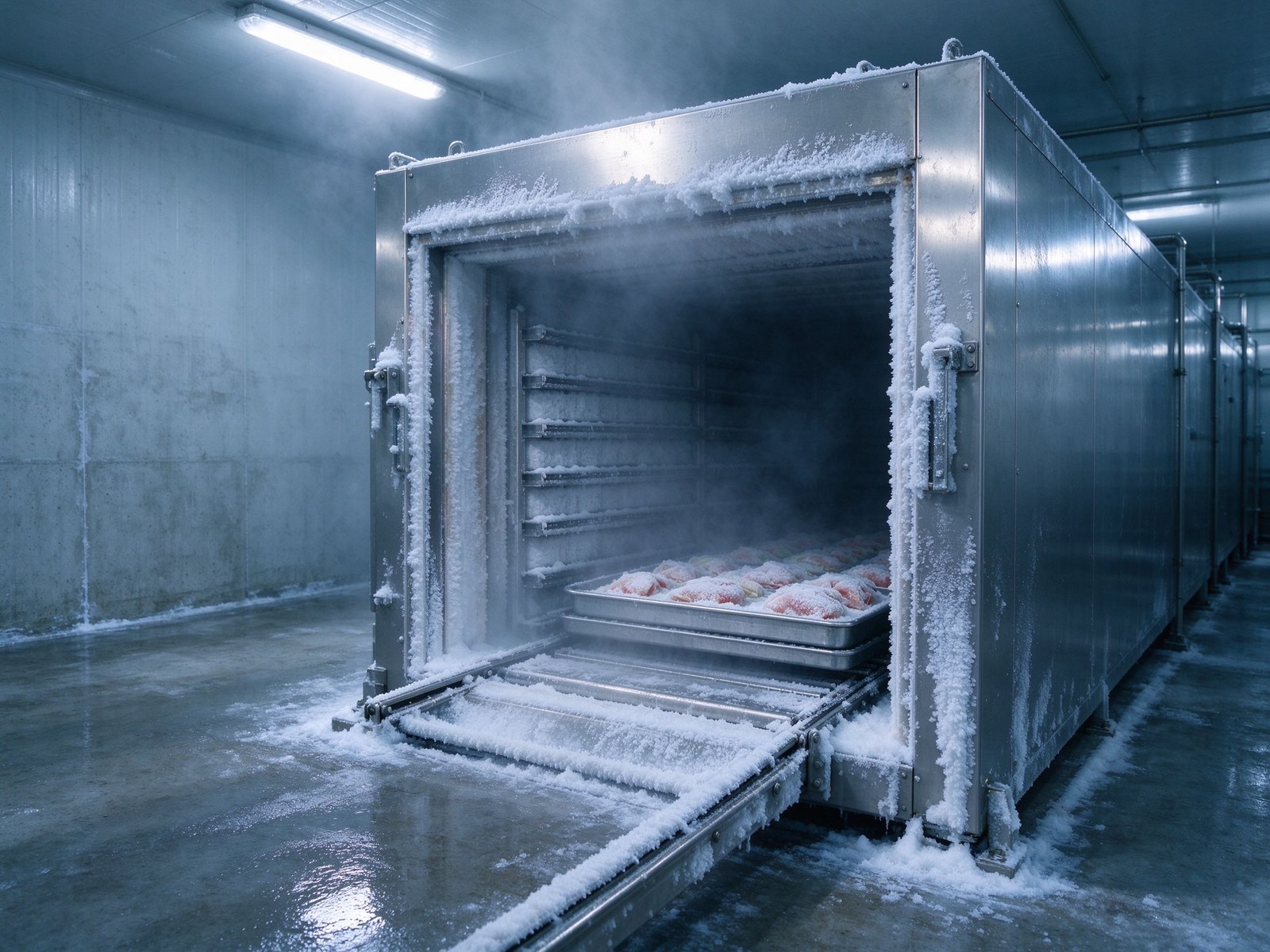
For most fresh fruit the store after pre-cooling is a fresh-keeping cold room held at 0 to 8 C depending on the crop, with high humidity and controlled air movement. Crops that respond to modified atmosphere, such as apples and some stone fruit, go into a controlled atmosphere room after cooling, where oxygen and carbon dioxide are held at set points. Where the same site also freezes or prepares product, a blast freezer covers the frozen side.
Design the three as one system. The pre-cooler determines how fast the store fills and how much heat it never has to remove. The store determines how long the fruit can wait, and therefore how much buffer the packhouse needs on a wet harvest day. The engineering package should show the mass flow from field to truck, not three separate rooms with three separate capacities.
Site conditions change the design more than the catalogue does. In a tropical packhouse at 33 C and 80% relative humidity, a forced-air cooler needs a bigger coil and a longer pull-down than the same tonnage in a dry climate, and the room needs a vapour barrier and a floor detail that survives daily washing. The tropical climate article covers the envelope side; this one covers the cooling step. Energy use across the chain is covered in where cold room energy actually goes.
One more decision sits outside the equipment: whether to cool before or after packing. Cooling packed cartons is slower and needs vented boxes. Cooling bulk bins is faster and needs a handling step afterwards. Packhouses with delicate berries often cool in the punnet and carton, which means the cooler must be designed around the package, not around loose fruit.
What we need to quote a pre-cooling system
Send these and the proposal comes back with a real duty, a real air volume and a real footprint, not a placeholder:
- Crop, variety and the temperature range you want to reach.
- Peak daily intake in tonnes, batch size, and how many hours the fruit waits before cooling.
- Harvest temperature in the warm season and the ambient condition at the site.
- Packaging: bulk bin, carton, punnet, box dimensions and vent pattern.
- Preferred method, or the constraints that rule methods out (water supply, power, floor space).
- Power supply, water supply and drainage available at the site.
- Whether the cooler connects to an existing store, and the distance and door type between them.
- Site layout drawings and the commissioning date.
ANCOLD is a cold room engineering and supply company set up in 2021 by three partners. We design the cooling and storage chain, specify the equipment, and supply it through a network of vetted manufacturers. Our trusted installation teams handle installation and commissioning at site, including overseas projects, and we support the system after handover with technical support and spare parts. Write to us with the list above and we will size the cooler against your harvest, not against a catalogue page.
Frequently Asked Questions
What is pre-cooling in a cold chain?
Pre-cooling is the fast removal of field heat from fruit after harvest and before storage or transport. It brings the pulp temperature down close to the storage target, which slows respiration, ripening and water loss. Cold storage then holds that temperature; the two are separate steps with separate equipment.
What is the seven-eighths cooling rule?
The rule says fruit is cooled when its temperature has covered seven eighths of the gap between its harvest temperature and the temperature of the cooling medium. Fruit at 30 C cooled by 4 C air targets about 7 C, not 4 C. The last degree takes as long as the first seven and adds little shelf life, so the rule is a practical stop point for design and for measuring a batch.
Which pre-cooling method is fastest?
Hydrocooling and vacuum cooling are the fastest for the crops they suit, typically minutes rather than hours. Hydrocooling works for sweet corn, melons and citrus; vacuum cooling works for leafy greens and lettuce. Forced-air cooling is the general-purpose method for berries, stone fruit and grapes, taking a few hours per batch.
Can I pre-cool fruit inside the cold store?
Sometimes, but a cold store is sized to hold a temperature, not to pull field heat out of a fresh harvest. Putting 28 C fruit into a store designed for 2 C puts a large heat load on the evaporators and warms the room, which affects produce already in storage. A separate pre-cooling room or tunnel with its own capacity is the safer design when daily intake is significant.
How do I know the fruit is actually cooled, not just the air?
Measure pulp temperature with calibrated probes placed in representative fruit at the centre of the stack, and log it every ten minutes. Air temperature in the room can drop long before the centre of a pallet does. Keep the batch records; buyers and auditors increasingly ask for them.
What information do you need to quote a pre-cooling system?
Crop and target temperature, peak daily intake and batch size, harvest temperature and site ambient, packaging type and vent pattern, preferred method or site constraints, power and water supply, drainage, the connection to the existing cold store, layout drawings and the commissioning date. With those we can size the duty, air volume and footprint against your harvest.